Endometriosis and Fertility: Can You Get Pregnant With Endometriosis?
Learn how endometriosis can affect fertility, whether pregnancy is possible with endometriosis, and the treatment options available to support conception.
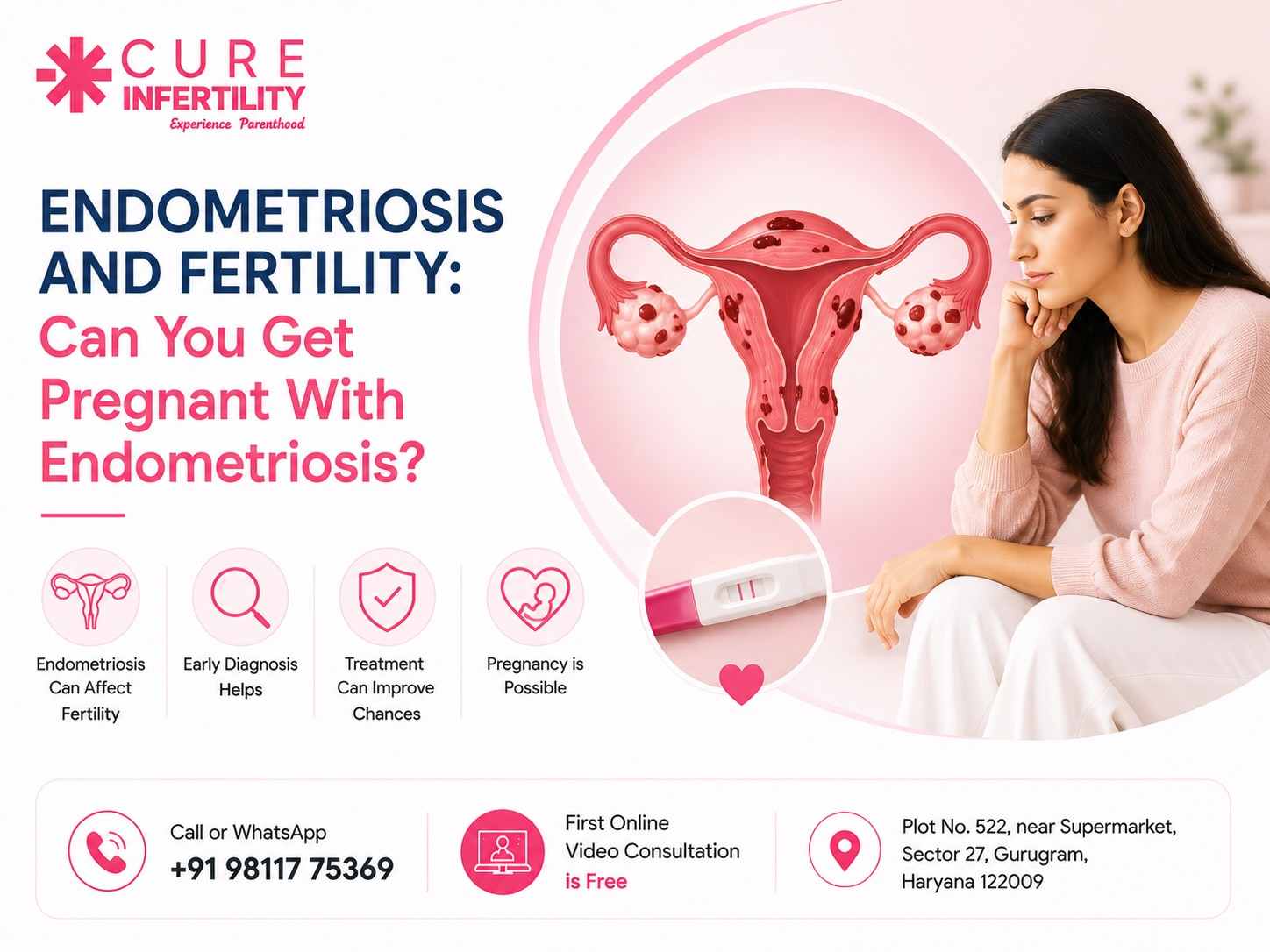
Yes, you can get pregnant with endometriosis. Plenty of women do, including without any treatment at all. But the condition does reduce fertility for many, and the extent depends heavily on how severe it is and where it sits. Here's an honest look at how endometriosis affects conception, and what your options actually are.
What Is Endometriosis?
Endometriosis is a condition in which tissue similar to the lining of the uterus grows outside the uterine cavity, most commonly on the ovaries, fallopian tubes, the pelvic peritoneum, and the tissue supporting the uterus.
This tissue responds to the same hormonal cycle as the uterine lining, thickening and bleeding each month. The difference is that it has nowhere to go. The result is chronic inflammation, scar tissue and adhesions that can distort pelvic anatomy over time.
Symptoms, and Why Diagnosis Is Often Delayed
Endometriosis is notoriously slow to diagnose, and the delay is measured in years for many women. The main reasons are that severe period pain gets normalised, and that the condition doesn't reliably show up on routine imaging.
Common symptoms include:
- Severe period pain that interferes with daily activity, not the ordinary kind
- Chronic pelvic pain, including between periods
- Pain during or after intercourse
- Painful bowel movements or urination, particularly around periods
- Heavy or irregular bleeding
- Fatigue
- Difficulty conceiving, which is sometimes the first and only sign
One point worth stressing: symptom severity does not track with disease severity. Some women with extensive endometriosis have almost no pain, and some with minimal disease have severe symptoms. Silent endometriosis discovered during a fertility workup is common.
How Endometriosis Affects Fertility
The mechanisms differ depending on the stage of disease, which is why the impact varies so much between individuals.
Anatomical distortion. Adhesions and scar tissue can block or kink the fallopian tubes, or fix the ovaries in position, preventing the egg from being picked up after ovulation. This is the dominant mechanism in more advanced disease.
Endometriomas. Also called chocolate cysts, these are endometriosis deposits within the ovary itself. They can reduce ovarian reserve, both through the disease process and through surgery to remove them, which is why the decision to operate needs careful thought rather than a reflexive yes.
Inflammation. The inflammatory environment in the pelvis can affect egg quality, sperm function and the fertilisation process, even where anatomy looks entirely normal. This is the most likely explanation for reduced fertility in minimal or mild disease.
Reduced endometrial receptivity. Endometriosis is associated with changes in the uterine lining that can make implantation less likely, which becomes relevant during IVF as well as natural conception.
The Staging System, and What It Doesn't Tell You
Endometriosis is staged from I to IV, from minimal to severe, based on the extent, location and depth of lesions and adhesions. Higher stages are associated with lower natural conception rates, largely through anatomical distortion.
But the staging system was designed to describe disease, not to predict fertility, and it does that imperfectly. Women with stage IV disease do conceive, and women with stage I disease sometimes struggle for years. Use the stage as one input, not as a forecast.
Getting Diagnosed
Clinical suspicion comes from history and examination. Ultrasound reliably picks up endometriomas but frequently misses peritoneal disease and adhesions, which is the crux of the diagnostic problem. MRI adds detail in deep infiltrating disease.
Definitive diagnosis is surgical. Hysteroscopy and laparoscopy allow direct visualisation of the pelvis, and the significant advantage is that lesions and adhesions can be treated in the same sitting rather than requiring a second procedure. For women trying to conceive with suspected endometriosis, this diagnostic-and-treatment-in-one approach is often the most efficient path.
Treatment When You're Trying to Conceive
This is where a lot of confusion arises, so it's worth being blunt about it.
Hormonal suppression does not treat infertility. Medications that suppress endometriosis work by suppressing ovulation, which manages pain effectively but makes conception impossible while you're on them. They have a role in symptom management, and no role while you're actively trying.
Surgery can improve natural conception chances, particularly in minimal to mild disease and in cases with significant adhesions. But there are trade-offs. Surgery on the ovary, especially for endometriomas, can reduce ovarian reserve, and repeat surgery compounds that. The decision needs to weigh your age, your ovarian reserve, your symptoms and how long you've been trying.
Ovulation induction with IUI is a reasonable option in minimal to mild disease with open tubes. Ovulation induction and cycle monitoring combined with IUI improves the odds over timed intercourse in this group, though the benefit falls away with more advanced disease.
IVF bypasses much of the problem. IVF removes the need for the egg to be picked up by the tube and for fertilisation to happen in an inflamed pelvic environment, which is why it's the most effective option in moderate to severe disease, in cases with tubal involvement, and where other approaches have failed. Where a male factor is also present, ICSI is typically used alongside it.
Where implantation is the issue. Endometriosis is associated with reduced endometrial receptivity, so in cases of repeated failed transfers with good embryos, an endometrial biopsy and ERA test can identify whether the implantation window is displaced. More on the wider picture in our article on what causes failed IVF and repeated implantation failure.
You can see the full range of treatment options here.
The Time Factor
Endometriosis is progressive in many women, and ovarian reserve declines with age regardless. Those two things compound, which makes waiting a more costly strategy here than in most other fertility scenarios.
If you have known or suspected endometriosis and you want children, the timeline conversation should happen early, even if you're not ready to start trying immediately. Age remains the strongest determinant of outcomes, as covered in our piece on IVF success rates by age. Egg freezing is worth discussing for women with endometriomas or reduced reserve who aren't ready to conceive yet.
When to See a Specialist
Get evaluated if you have severe period pain that disrupts your life, pain during intercourse, a known endometriosis diagnosis and plans to conceive, or if you've been trying without success for 12 months (6 months if you're 35 or over). With a known or strongly suspected diagnosis, don't wait out the full window.
You can book a free consultation with Dr. Rashmi Agrawal at the Sector 27, Gurugram clinic, read more about her background and approach, or check the FAQ page.
FAQs
Can you get pregnant naturally with endometriosis?
Yes. Many women with endometriosis conceive naturally, particularly with minimal to mild disease. Fertility is reduced on average, not eliminated, and the impact depends on severity and location.
Does endometriosis always cause infertility?
No. A substantial proportion of women with endometriosis have no difficulty conceiving. It's a risk factor, not a certainty.
Does surgery for endometriosis improve fertility?
It can, particularly in mild disease and where adhesions are distorting anatomy. But ovarian surgery carries a risk of reducing ovarian reserve, so the decision depends on your age, reserve, symptoms and how long you've been trying.
Should I remove an endometrioma before IVF?
Not automatically. Removing it can reduce ovarian reserve, and in some cases proceeding directly to IVF is the better choice. It depends on size, symptoms, your AMH and whether it's interfering with egg retrieval.
Do hormonal treatments for endometriosis help fertility?
No. They work by suppressing ovulation, so they manage pain but prevent conception while you're taking them. They have no role during active attempts to conceive.
Is IVF more successful than natural conception with endometriosis?
In moderate to severe disease, generally yes, because IVF bypasses the tubal and pelvic factors involved. In minimal disease, simpler options are often tried first.
Can endometriosis come back after treatment?
Yes. Endometriosis recurs in a meaningful proportion of women after surgery, which is one reason repeat operations are approached cautiously and why the timing of conception attempts after surgery matters.
Medically reviewed
Reviewed by Dr. Rashmi Agrawal — MBBS (Gold Medalist), MS OBGYN, FNB Reproductive Medicine. This article is general information, not a substitute for a consultation about your own reports.
Book Consultation