What Is PCOS? Symptoms, Causes and Treatment Options
Learn what PCOS is, its common symptoms and possible causes, along with diagnosis and treatment options to help manage the condition and support fertility.
PCOS is one of the most common hormonal conditions affecting women of reproductive age, and also one of the most misunderstood. It gets blamed for things it doesn't cause, and dismissed in cases where it genuinely matters. Here's a clear look at what PCOS actually is, how it's diagnosed, and what the treatment options are, particularly if you're trying to conceive.
What Is PCOS?
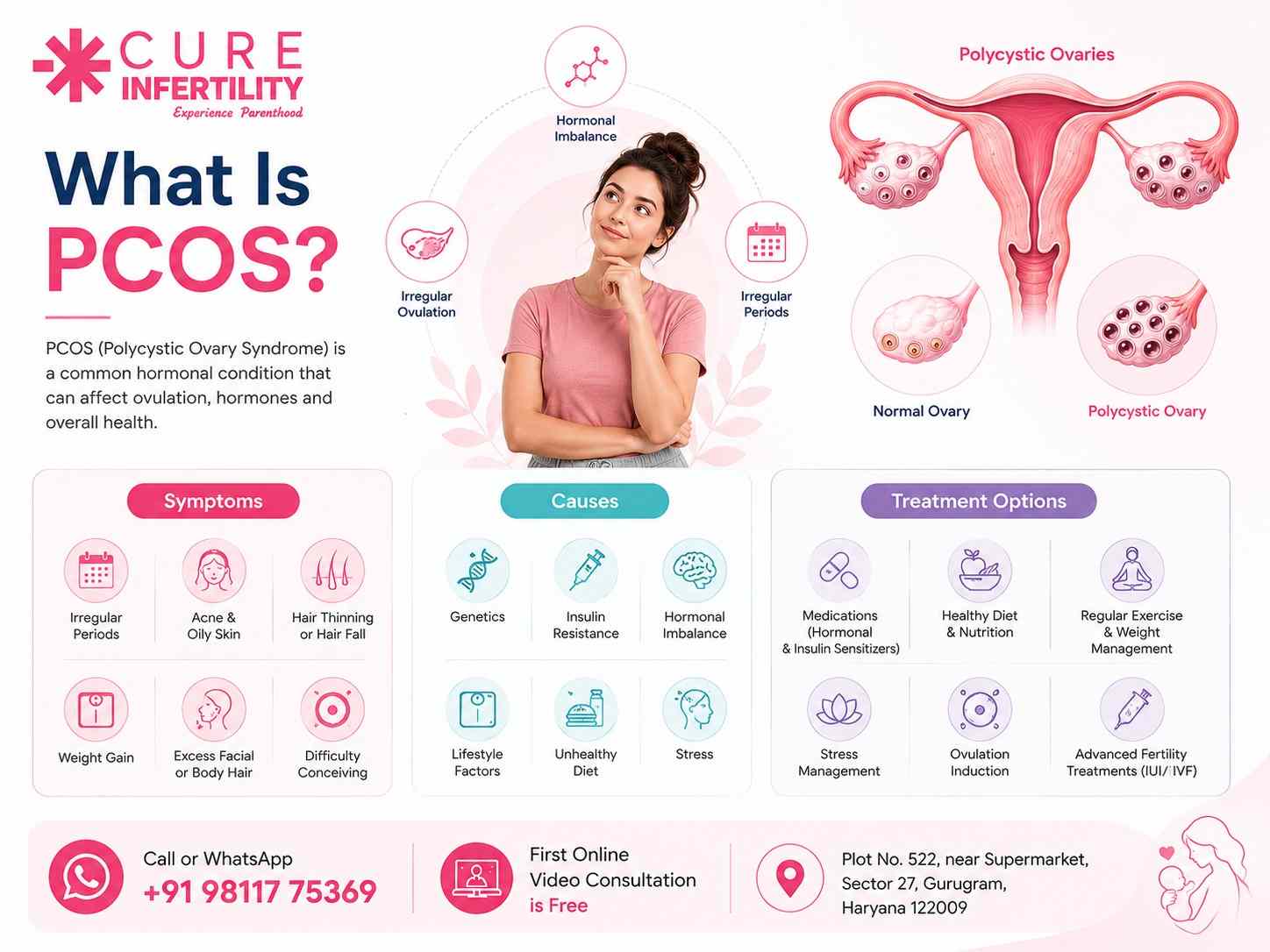
Polycystic Ovary Syndrome is a hormonal and metabolic condition characterised by irregular ovulation, elevated androgen levels, and a particular appearance of the ovaries on ultrasound. It affects a significant proportion of women of reproductive age worldwide.
The name itself causes confusion. The "cysts" seen on ultrasound aren't true cysts at all. They're small, immature follicles that stalled partway through development because ovulation didn't complete. Nothing needs to be drained or removed. Understanding this alone takes a lot of unnecessary fear out of the diagnosis.
Symptoms of PCOS
PCOS presents differently from person to person, which is part of why it's often missed or misdiagnosed. Common signs include:
- Irregular or absent periods: cycles longer than 35 days, or fewer than eight periods a year
- Difficulty conceiving: usually because ovulation is irregular or absent
- Hirsutism: excess hair growth on the face, chest or back
- Acne and oily skin, particularly along the jawline
- Hair thinning on the scalp, in a male-pattern distribution
- Weight gain or difficulty losing weight, though this is not universal
- Darkened skin patches (acanthosis nigricans) on the neck or in skin folds, often a sign of insulin resistance
An important point that gets missed: not everyone with PCOS is overweight. Lean PCOS is real, and women with a normal BMI can have the full hormonal picture. Being told "you can't have PCOS, you're not overweight" is a red flag for a diagnosis that wasn't done properly.
What Causes PCOS?
There's no single cause, but the mechanisms are reasonably well understood.
Insulin resistance is central for many women with PCOS. When cells respond poorly to insulin, the body produces more of it, and high insulin levels stimulate the ovaries to produce more androgens.
Excess androgen production interferes with the maturation and release of eggs, which is what drives the irregular ovulation.
Disrupted LH and FSH signalling means follicles start developing but don't complete the process, leaving those small follicles visible on ultrasound.
Genetics play a role too, since PCOS often runs in families, though no single gene explains it.
Worth clearing up: PCOS is not caused by anything you did. It isn't the result of diet choices, stress, or lifestyle alone, though these can influence how severe the symptoms are.
How PCOS Is Diagnosed
Diagnosis follows the Rotterdam criteria, which require at least two of these three features, with other conditions ruled out first:
- Irregular or absent ovulation
- Clinical or biochemical signs of excess androgens
- Polycystic ovarian morphology on ultrasound
The workup typically includes a menstrual and medical history, blood tests (LH, FSH, testosterone, AMH, TSH, prolactin, and often a fasting glucose and insulin panel), and a transvaginal ultrasound.
The "other conditions ruled out" part matters more than people realise. Thyroid disorders, elevated prolactin, and congenital adrenal hyperplasia can all mimic PCOS, and treating the wrong thing wastes time.
Treatment: It Depends on Your Goal
There's no cure for PCOS, and any source promising one is selling something. What exists is effective management, and the right approach depends entirely on whether you're currently trying to conceive.
If you're not trying to conceive
Management focuses on symptom control and long-term metabolic health. This typically includes lifestyle measures (regular exercise and a diet that supports stable blood sugar), hormonal contraception to regulate cycles and reduce androgen-driven symptoms like acne and excess hair, and in some cases insulin-sensitising medication. Even modest weight reduction, where relevant, can restore more regular cycles.
If you're trying to conceive
The goal shifts to restoring ovulation. Hormonal contraception is obviously off the table, and the treatment pathway is different.
PCOS and Fertility Treatment
PCOS is one of the most treatable causes of infertility, which is genuinely good news. The core problem is that eggs aren't being released reliably, not that they aren't there. In fact, women with PCOS often have a higher-than-average ovarian reserve.
First line: ovulation induction. Ovulation induction and cycle monitoring uses medication such as letrozole or clomiphene, combined with tracking scans, to help the ovaries release a mature egg on a predictable schedule. For a large share of couples with PCOS as the primary factor, this alone is enough.
Second line: IUI. If ovulation is restored but conception hasn't happened, or there's a mild male factor alongside, IUI places washed sperm directly into the uterus at the fertile window.
When IVF is considered. IVF comes into the picture when ovulation induction and IUI haven't worked, or where other factors are present, such as tubal issues or significant male factor infertility. Women with PCOS often respond strongly to stimulation, which means good egg numbers but also a higher risk of ovarian hyperstimulation syndrome (OHSS), so protocols need to be adjusted carefully. This is a case where the specifics of how your cycle is managed matter a great deal. Age still influences outcomes here as it does in any IVF cycle, and you can read more about how IVF success rates vary by age.
Ruling out other factors. PCOS being present doesn't mean it's the only thing going on. Endometriosis, fibroids or polyps can coexist, and where imaging suggests something structural, hysteroscopy and laparoscopy can diagnose and treat in a single sitting. A semen analysis for the male partner is part of any complete workup, and where severe male factor is found, ICSI is usually the appropriate route.
You can see the full range of treatment options here.
Long-Term Health Considerations
PCOS is a lifelong metabolic condition, not just a fertility issue, and it carries longer-term associations worth knowing about: increased risk of type 2 diabetes, cardiovascular risk factors, and, where periods are very infrequent, endometrial thickening from prolonged unopposed oestrogen. None of this is inevitable. It's a reason for ongoing monitoring rather than alarm, and it's why PCOS management continues to matter even after you've completed your family.
When to See a Specialist
See a doctor if your cycles are consistently irregular, if you've been trying to conceive for 12 months (or 6 months if you're 35 or over), or if you're experiencing symptoms like significant acne, hair changes or unexplained weight gain alongside irregular periods. With PCOS specifically, don't wait out the full 12 months if you already know your cycles are irregular, since irregular ovulation means you may simply not be getting the same number of real chances each year.
You can book a free consultation with Dr. Rashmi Agrawal at the Sector 27, Gurugram clinic, read more about her background and approach, or check the FAQ page for common questions.
FAQs
Can you get pregnant with PCOS?
Yes. PCOS is one of the more treatable causes of infertility, and many women conceive naturally or with ovulation induction alone. The core issue is irregular ovulation, not an absence of eggs.
Is PCOS curable?
No, but it's very manageable. Symptoms and fertility outcomes can both be improved significantly with the right treatment, and management approaches change depending on your goals at different life stages.
Does PCOS always cause weight gain?
No. Lean PCOS is well recognised, and women with a normal BMI can have the full hormonal and ovulatory picture. Weight is a common feature, not a required one.
Are the cysts in PCOS dangerous?
No. They aren't true cysts. They're small, immature follicles that stopped developing partway, and they don't need to be drained or surgically removed.
Does PCOS go away after pregnancy?
No. Symptoms sometimes shift or ease temporarily, but PCOS is a lifelong condition that needs ongoing management, particularly for its metabolic aspects.
Will I definitely need IVF if I have PCOS?
Not at all. Most women with PCOS as their primary fertility factor conceive with ovulation induction or IUI. IVF is reserved for cases where simpler approaches haven't worked or other factors are involved.
Can diet and exercise alone fix PCOS?
They help meaningfully, particularly where insulin resistance is involved, and can restore more regular cycles in some women. But they aren't a substitute for medical evaluation, especially if you're actively trying to conceive.
Medically reviewed
Reviewed by Dr. Rashmi Agrawal — MBBS (Gold Medalist), MS OBGYN, FNB Reproductive Medicine. This article is general information, not a substitute for a consultation about your own reports.
Book Consultation