Azoospermia: Can a Man With Zero Sperm Have a Biological Child?
Learn what azoospermia means, its possible causes, and how treatments such as surgical sperm retrieval and ICSI may help some men have a biological child.

Yes, in a large proportion of cases. Azoospermia means no sperm are found in the ejaculate. It does not mean no sperm are being produced, and those are two very different things. Many men given this diagnosis are told, wrongly, that donor sperm is their only option. For most, it is not. Here is what azoospermia actually means and what can be done about it.
What Azoospermia Means
Azoospermia is the complete absence of sperm in the ejaculate, confirmed after the sample has been centrifuged and the sediment examined. It affects roughly one percent of all men and a significantly higher proportion of men presenting with infertility.
Two points before going further.
A single result is not a diagnosis. Azoospermia must be confirmed on at least two separate samples, properly centrifuged and examined by an experienced laboratory. Poor collection technique, incomplete samples and laboratory error all produce false results. Do not accept a life-changing diagnosis from one report.
Azoospermia has no symptoms. Ejaculation is normal, volume is usually normal, and sexual function is unaffected. Sperm make up a tiny fraction of semen volume. Most men have no indication anything is wrong until a semen analysis is done.
The Critical Distinction: Obstructive or Non-Obstructive
Everything that follows depends on which of these applies, and establishing it is the first job of any proper evaluation.
Obstructive azoospermia means sperm production is normal, but the sperm cannot get out. The factory works; the pipeline is blocked. Causes include previous vasectomy, infection or inflammation of the reproductive tract, previous surgery in the groin or scrotum, and congenital bilateral absence of the vas deferens, which is linked to cystic fibrosis gene mutations.
Non-obstructive azoospermia means sperm production itself is impaired or absent. Causes include genetic conditions such as Klinefelter syndrome and Y chromosome microdeletions, undescended testes in childhood even after correction, previous chemotherapy or radiotherapy, severe varicocele, hormonal failure at the level of the pituitary, and testicular injury or torsion.
The distinction matters because the outlook differs substantially. In obstructive azoospermia, sperm retrieval succeeds in the overwhelming majority of men. In non-obstructive azoospermia, retrieval succeeds in a meaningful proportion but not all, and the technique used matters a great deal.
How the Cause Is Established
Repeat semen analysis, at least two samples, centrifuged and examined properly.
Semen volume and pH. Low volume with low pH can indicate ejaculatory duct obstruction or absent seminal vesicles, which points toward a specific type of obstruction.
Physical examination by a urologist. Testicular size and consistency give real information, and the vas deferens can be palpated. Absent vas deferens is diagnosed on examination, not on a scan.
Hormone profile, particularly FSH and testosterone. A raised FSH with small testes points strongly toward non-obstructive azoospermia, since the pituitary is working harder to drive a failing testis. Normal FSH with normal-sized testes suggests obstruction.
Genetic testing, specifically karyotype and Y chromosome microdeletion analysis. This is not optional in non-obstructive azoospermia, for reasons set out below.
Cystic fibrosis gene testing where the vas deferens is absent, for both the man and his partner.
Scrotal and transrectal ultrasound where indicated.
Diagnostic testicular biopsy, occasionally, where the picture remains unclear.
Why Genetic Testing Is Not a Formality
This section matters more than any other in the article.
Y chromosome microdeletions are passed to male offspring. A son conceived through ICSI using his father's sperm would inherit the same deletion and the same fertility problem. The specific region deleted also predicts whether retrieval is likely to succeed at all, with certain complete deletions making it very unlikely.
Klinefelter syndrome carries implications beyond fertility, including for long-term health, and affects retrieval prospects.
Cystic fibrosis carrier status matters where the vas deferens is congenitally absent. If both partners carry mutations, there is a real risk of a child with cystic fibrosis. The female partner must be tested before proceeding.
This is information a couple is entitled to have before treatment, not after. Any centre proceeding to sperm retrieval in non-obstructive azoospermia without genetic testing is cutting a corner that is not theirs to cut.
Retrieving Sperm Directly
Where sperm exist anywhere in the reproductive tract, they can usually be obtained. Surgical sperm retrieval covers several techniques, chosen according to the cause.
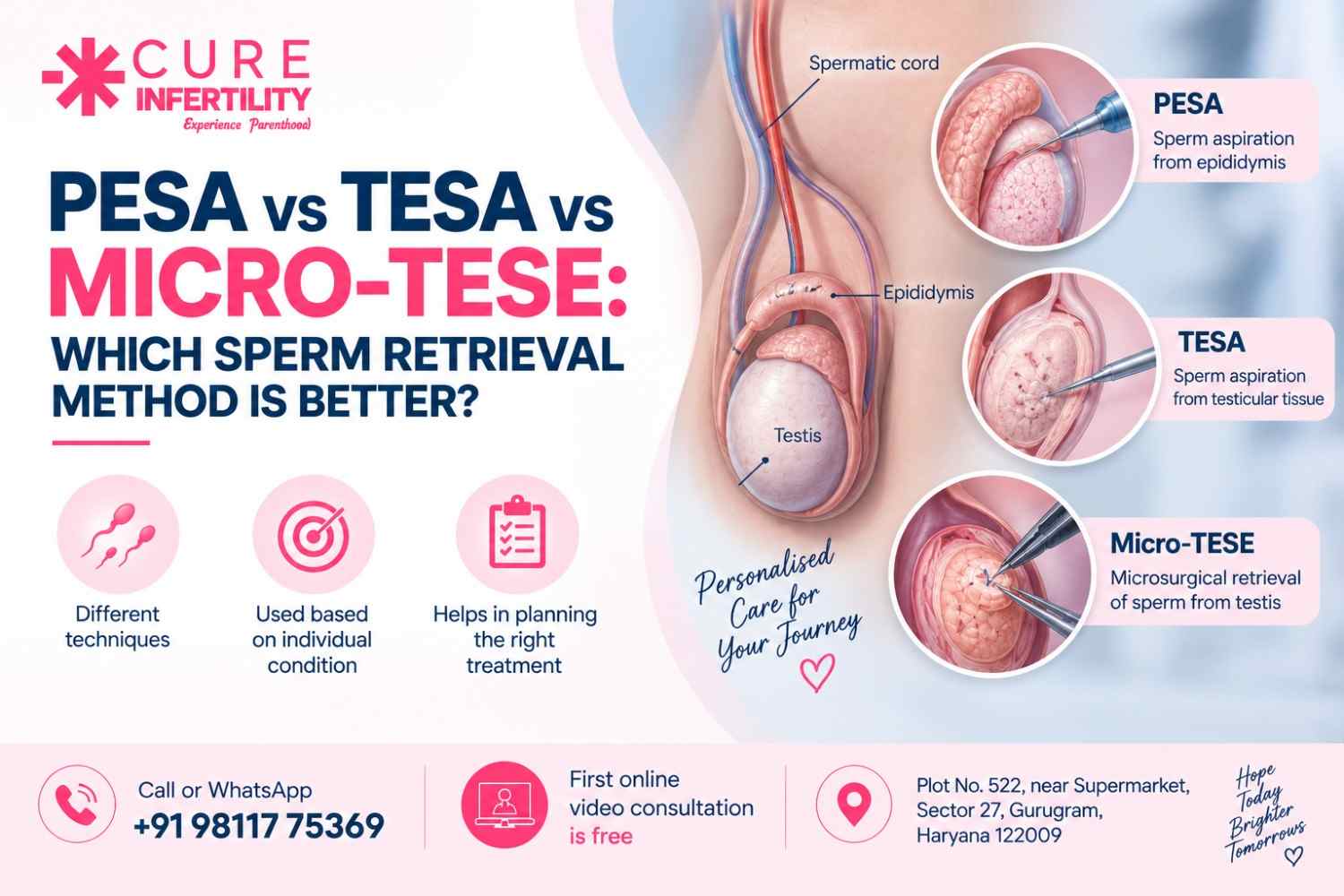
PESA aspirates sperm from the epididymis with a fine needle. Simple, minimally invasive, and highly effective in obstructive cases.
TESA aspirates tissue directly from the testis. Also straightforward, and used in obstructive azoospermia or as a first attempt in some non-obstructive cases.
TESE takes a small open biopsy of testicular tissue, sampling more thoroughly than needle aspiration.
Micro TESE uses an operating microscope to examine the testicular tubules directly, identifying the wider, more opaque tubules that are more likely to contain active sperm production. This is the technique of choice in non-obstructive azoospermia, because production may be confined to small isolated pockets that random sampling would miss entirely. It has a meaningfully better yield than conventional TESE in these men, and it removes less tissue.
For obstructive azoospermia, the simpler techniques usually suffice and success rates are high. For non-obstructive azoospermia, Micro TESE performed by an experienced surgeon is what gives the best chance, and the difference between centres is real.
Why Retrieved Sperm Always Needs ICSI
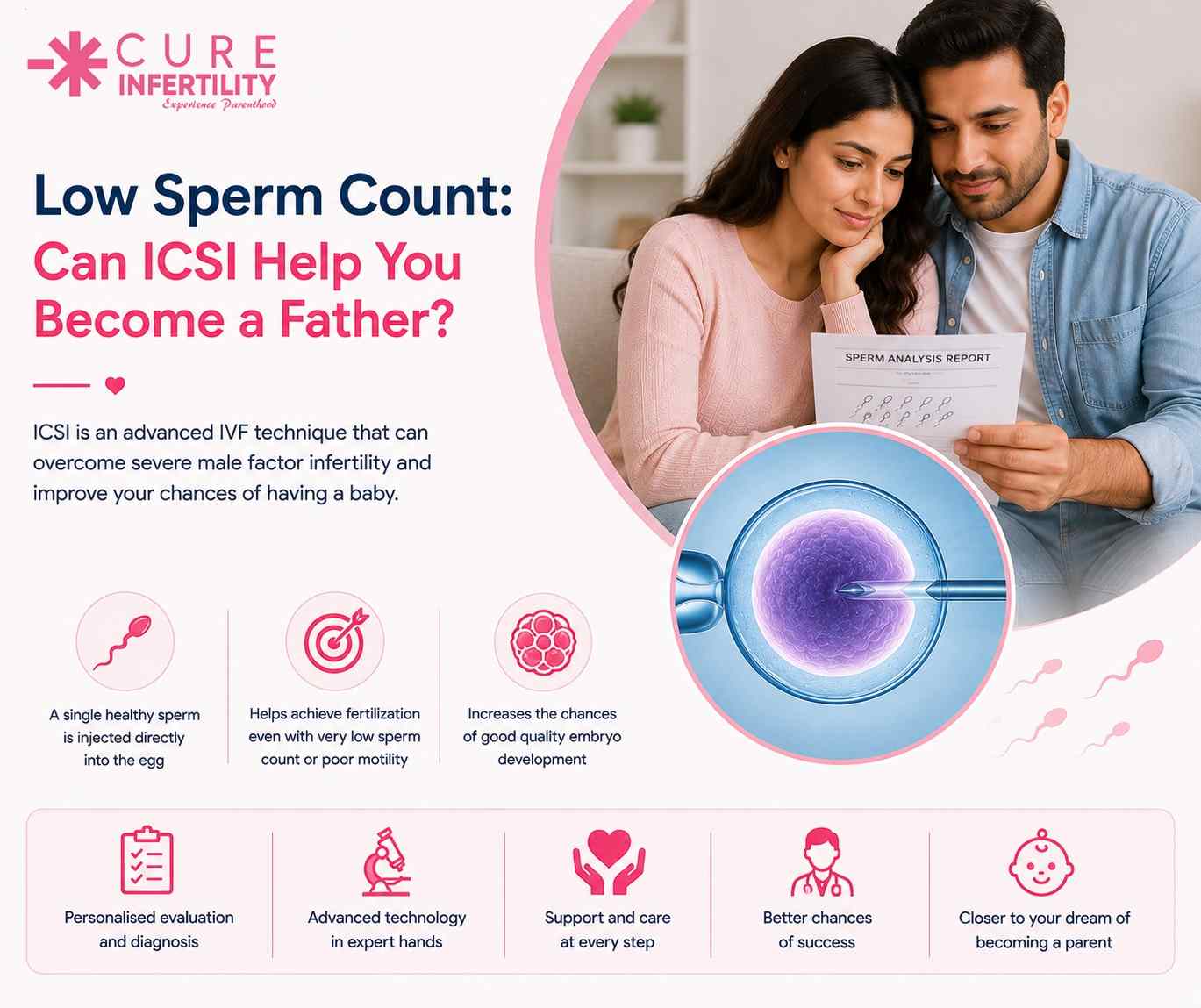
Sperm obtained surgically is present in very small numbers, is often immature, and frequently has little or no motility. It cannot fertilise an egg unaided, and there is nowhere near enough of it for conventional fertilisation or IUI.
ICSI solves this precisely. A single sperm is selected and injected directly into each mature egg, so it does not need to swim, bind or penetrate anything. One viable sperm per egg is sufficient. Our article on IVF vs ICSI explains the technique in more detail, and our article on low sperm count covers the wider male factor picture.
The Female Partner Matters Just as Much
This is consistently underweighted in azoospermia consultations, where attention naturally concentrates on the man.
Retrieved sperm must be used with IVF and ICSI, which means the female partner goes through a full stimulation and retrieval cycle. Her age and ovarian reserve will drive the outcome as much as the sperm retrieval does, as covered in our article on IVF success rates by age.
A complete workup for her, including ovarian reserve, tubal assessment and uterine cavity assessment, should run in parallel rather than being deferred until after the retrieval. Treating this as purely a male problem wastes time that matters for both of you.
Coordinating Retrieval and Egg Collection
Two approaches exist.
Synchronised, where retrieval is performed on the same day as egg collection and fresh sperm is used. The risk is that if no sperm is found, the eggs have already been retrieved and a decision must be made on the day.
Prior retrieval with freezing, where sperm is obtained in advance and frozen. This confirms sperm is available before the female partner undergoes stimulation, which spares her a cycle if retrieval fails. The trade-off is that frozen retrieved sperm may have slightly reduced viability after thawing.
In non-obstructive azoospermia, where success is not guaranteed, retrieving in advance is often the more considerate approach. It is worth discussing explicitly rather than leaving to clinic routine.
When Retrieval Does Not Succeed
It is honest to acknowledge this outcome, because it happens.
In some men with non-obstructive azoospermia, no sperm is found despite thorough Micro TESE. A second attempt at a specialist centre is sometimes reasonable, particularly if the first was a conventional TESE rather than a microdissection procedure.
Where no sperm can be found, donor sperm and adoption are the remaining routes to parenthood. These are significant decisions deserving proper counselling and time, not a hurried conversation at the end of a failed procedure.
What should not happen is being told donor sperm is the only option before a proper evaluation and a microdissection attempt have taken place. That conversation happens too often, and too early.
Can Azoospermia Be Treated Medically?
In a minority of cases, yes.
Where the cause is hormonal, specifically failure of pituitary signalling, hormone treatment can restore sperm production, sometimes dramatically. This is uncommon but genuinely correctable, which is why the hormone profile matters.
Where exogenous testosterone or anabolic steroids are the cause, this is entirely reversible in many men after stopping. Testosterone suppresses the body's own sperm production, and recovery typically takes months rather than weeks. This cause is more common than most men realise and is frequently not volunteered in consultation, so it is worth raising directly.
Varicocele repair improves parameters in some men with non-obstructive azoospermia, occasionally enough for sperm to appear in the ejaculate. Obstruction from vasectomy can sometimes be reversed surgically, with the choice between reversal and retrieval with ICSI depending on the time since vasectomy and the female partner's age.
What does not work: supplements marketed for azoospermia. Where there is no production, nothing taken orally creates it.
The Emotional Reality
Being told there is no sperm in your sample lands harder than almost any other fertility finding, and it is often delivered without adequate explanation or follow-up. Many men interpret it as a verdict on their masculinity, which the biology in no way supports. Sperm production and sexual function are separate systems, and azoospermia affects neither libido nor performance.
It is also, as this article sets out, frequently solvable. The gap between how the diagnosis feels and what it actually means is wider here than almost anywhere else in fertility medicine.
What to Do Next
If you have been told you have azoospermia, the sequence is: confirm it on a second properly processed sample, establish whether it is obstructive or non-obstructive through examination and hormone profile, complete genetic testing before any retrieval is planned, ensure your partner's workup runs alongside rather than after, and where retrieval is needed, have it done by a centre that performs Micro TESE regularly.
You can see the full range of treatment options here.
You can book a free consultation with Dr. Rashmi Agrawal at the Sector 27, Gurugram clinic to review your reports, read more about her background and approach, or check the FAQ page.
FAQs
Can a man with zero sperm count have a biological child?
In many cases, yes. Azoospermia means no sperm in the ejaculate, not necessarily no sperm production. Surgical retrieval combined with ICSI allows many men with azoospermia to father a genetic child.
What is the difference between obstructive and non-obstructive azoospermia?
In obstructive azoospermia production is normal but the passage is blocked, and retrieval succeeds in the large majority. In non-obstructive azoospermia production itself is impaired, and retrieval succeeds in a meaningful proportion but not all.
Does azoospermia affect sexual function?
No. Sperm production and sexual function are separate. Azoospermia causes no symptoms and does not affect libido, erectile function or ejaculation.
What is Micro TESE and why does it matter?
It is a microsurgical retrieval technique using an operating microscope to identify tubules more likely to contain sperm. It gives a better yield than conventional approaches in non-obstructive azoospermia, where production may be confined to small pockets.
Is genetic testing necessary before treatment?
Yes, in non-obstructive azoospermia. Y chromosome microdeletions are passed to sons, some predict whether retrieval will succeed, and where the vas deferens is absent, cystic fibrosis testing is needed for both partners.
Can azoospermia be cured with medication?
Occasionally. Hormonal causes can respond to treatment, and azoospermia caused by testosterone or anabolic steroid use is often reversible after stopping, though recovery takes months. Most other causes require surgical retrieval.
Can azoospermia come back after successful treatment?
Where the cause was reversible, such as steroid use, production usually recovers and remains. Where retrieval is needed, sperm can often be frozen at the time for use in future cycles, avoiding a repeat procedure.
Does a vasectomy cause permanent azoospermia?
It causes obstructive azoospermia, which is usually addressable either by surgical reversal or by retrieval with ICSI. Which route makes more sense depends on time since the vasectomy and the female partner's age.
Medically reviewed
Reviewed by Dr. Rashmi Agrawal — MBBS (Gold Medalist), MS OBGYN, FNB Reproductive Medicine, DMC Reg. No. 76953 (2016). This article is general information, not a substitute for a consultation about your own reports.
Book Consultation