Low Sperm Count: Can ICSI Help You Become a Father?
Learn how low sperm count can affect male fertility and how ICSI may help couples conceive when sperm count or quality makes natural fertilisation difficult.
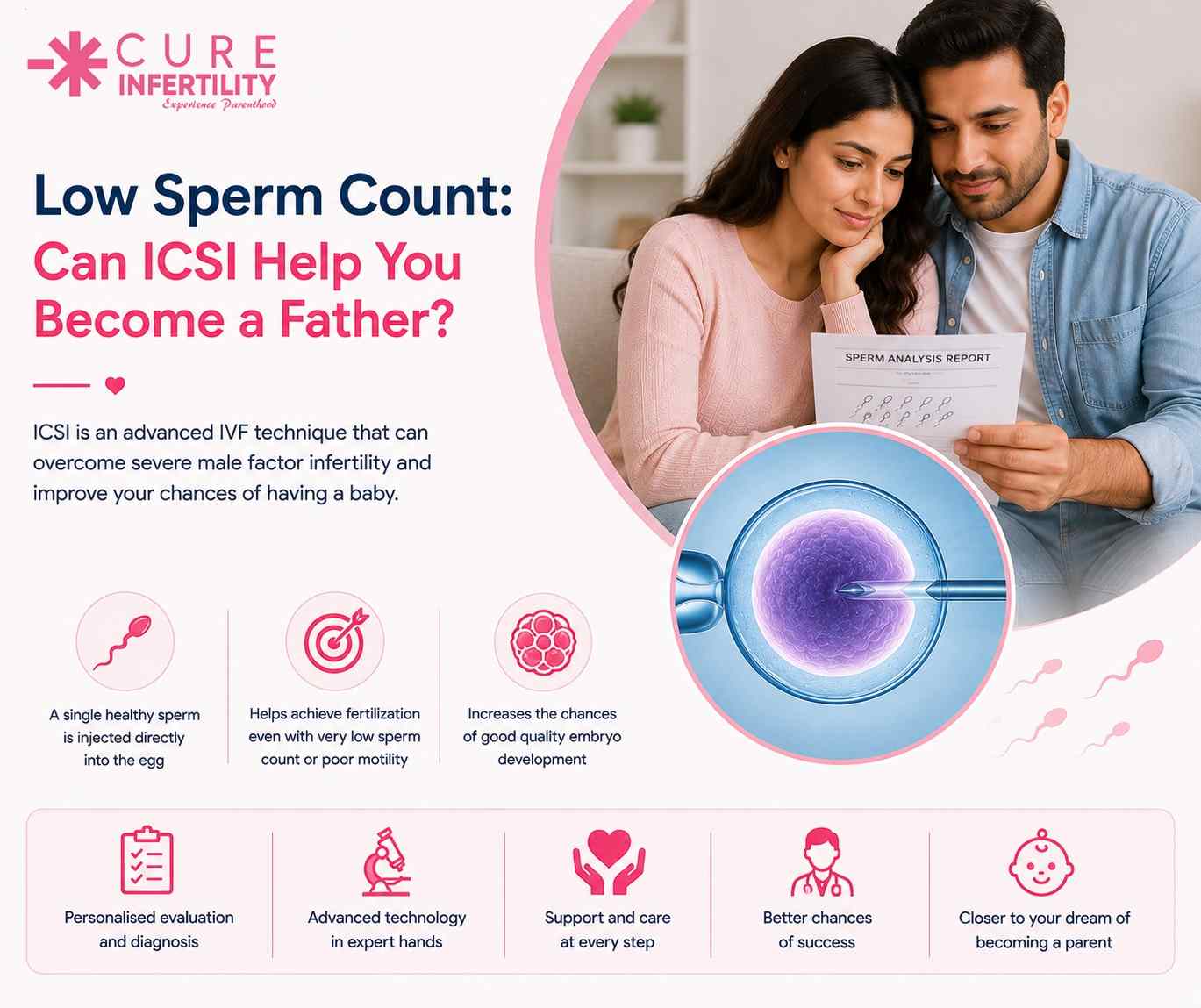
Yes, in most cases. Low sperm count is one of the more solvable causes of infertility, because ICSI needs only a single viable sperm per egg rather than the millions natural conception requires. That single fact changes the outlook for the large majority of men who receive this diagnosis. Here is what the numbers actually mean, what should be investigated before treatment, and where ICSI helps most.
What Counts as a Low Sperm Count?
The World Health Organization reference values define the lower limits of what is considered typical. A count below these thresholds is termed oligozoospermia.
The terms that appear on a semen analysis report are worth decoding, because they sound far more alarming than they often are:
- Normozoospermia: all parameters within the reference range
- Oligozoospermia: sperm concentration below the reference threshold
- Severe oligozoospermia: very low concentration, typically under 5 million per ml
- Cryptozoospermia: sperm found only after the sample is centrifuged
- Azoospermia: no sperm found in the ejaculate at all
- Asthenozoospermia: reduced motility
- Teratozoospermia: abnormal morphology
- Oligoasthenoteratozoospermia (OAT): all three parameters affected together
Two points that matter more than the label itself.
First, reference values describe a population, not a verdict on you. Men with counts below the threshold conceive naturally, and men well within range sometimes do not.
Second, a single abnormal result means very little. Sperm parameters fluctuate considerably between samples, and are affected by recent illness, fever, abstinence interval and even the collection conditions. A diagnosis should never rest on one test. Insist on a repeat analysis, usually a few weeks apart, before accepting any conclusion.
What Causes Low Sperm Count
Some causes are treatable, which is precisely why investigation should come before assuming ICSI is the only route.
Varicocele. Enlarged veins in the scrotum, one of the most common identifiable and correctable causes. Surgical repair improves parameters in a meaningful proportion of men.
Hormonal causes. Low testosterone, elevated prolactin, thyroid dysfunction, or problems with pituitary signalling. Many are treatable medically.
Infection or inflammation of the reproductive tract, often treatable with antibiotics.
Obstruction, where sperm production is normal but the passage is blocked, whether from previous surgery, infection or congenital absence of the vas deferens.
Genetic causes, including Klinefelter syndrome and Y chromosome microdeletions, which are important to identify before treatment for reasons covered below.
Undescended testes in childhood, even after correction.
Medications and treatments, including chemotherapy, radiotherapy, some anti-androgens, and notably anabolic steroids and exogenous testosterone.
Lifestyle factors: smoking, heavy alcohol use, obesity, heat exposure, and recreational drug use.
One that deserves special mention: testosterone supplementation suppresses sperm production. Men on testosterone for gym or wellbeing reasons are frequently unaware of this. It is often reversible after stopping, but recovery takes months, and this is worth raising directly if it applies.
What Should Be Investigated Before Jumping to ICSI
This is the part most often skipped, and it matters because some men can improve their parameters enough to conceive naturally or with simpler treatment.
A proper male workup should include:
- Repeat semen analysis, at least two samples
- Physical examination by a urologist, which is how varicocele and vas deferens abnormalities are found
- Hormone profile: FSH, LH, testosterone, prolactin, and thyroid function
- Scrotal ultrasound where examination suggests it
- Genetic testing, specifically karyotype and Y chromosome microdeletion analysis, in severe oligozoospermia or azoospermia
- Sperm DNA fragmentation testing in selected cases, particularly after failed cycles
The genetic testing point is not a formality. Y chromosome microdeletions are passed to male offspring, meaning a son conceived through ICSI would inherit the same fertility problem. That is information a couple is entitled to have before treatment, not after.
How ICSI Works With Low Sperm Count
Natural conception requires millions of sperm, because the vast majority are lost on the journey and the successful one must still penetrate the egg unaided. ICSI removes almost all of that requirement.
An embryologist selects a single sperm under high magnification, immobilises it, and injects it directly into the egg. The sperm does not need to swim, survive the journey, bind to the egg or penetrate it.
The practical consequence: one viable sperm per mature egg is enough. A man producing a few thousand sperm in a sample, or even a handful found only after centrifugation, can usually father a genetic child.
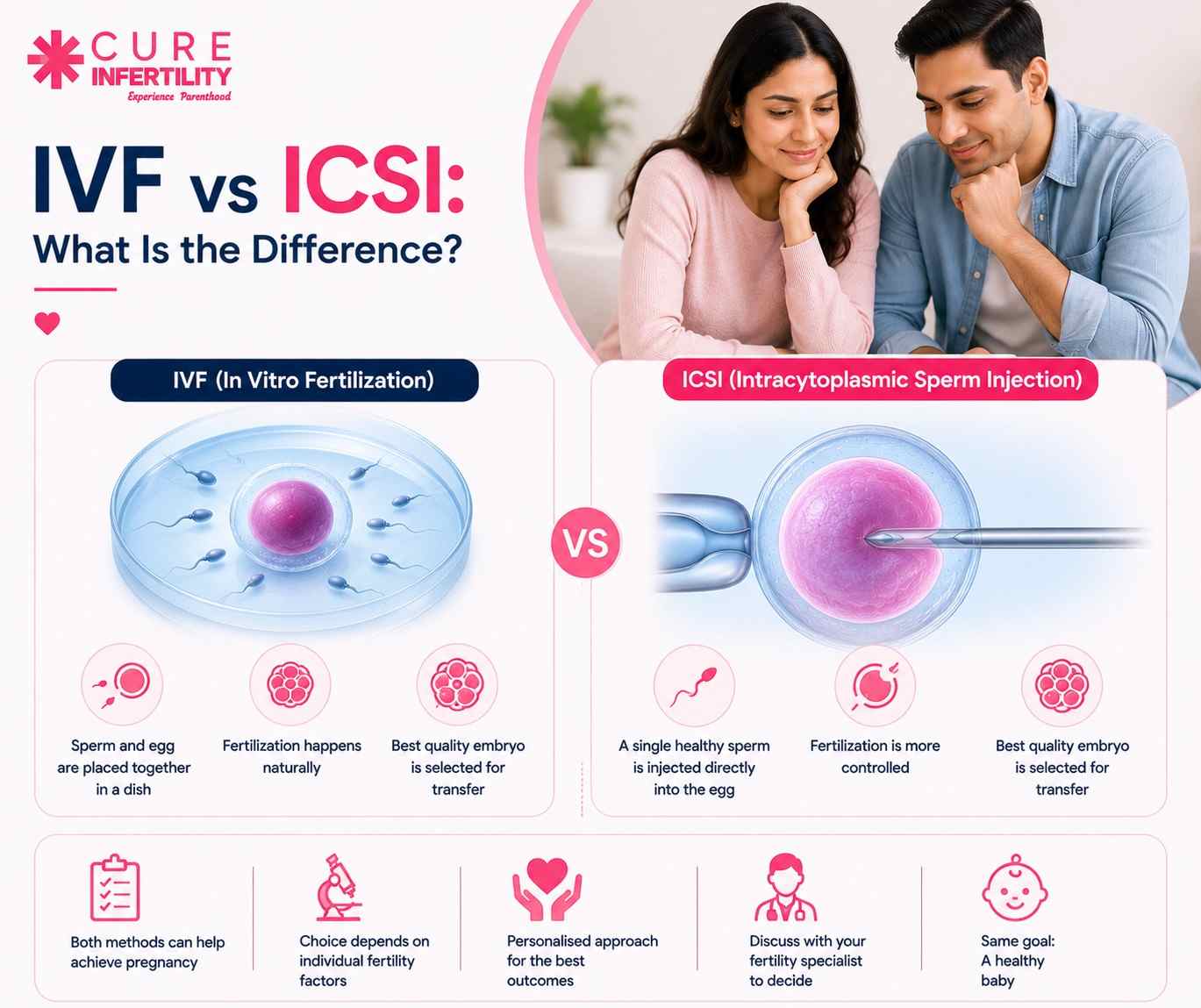
Put simply, natural conception needs millions of sperm, all of which must swim the full distance and one of which must penetrate the egg unaided. IUI shortens the journey by placing washed sperm directly into the uterus, but it still requires several million motile sperm and still asks them to fertilise the egg on their own, which is why it is only suitable where the reduction is mild. ICSI removes both requirements entirely, which is what makes it viable in severe oligozoospermia, and in azoospermia when combined with surgical retrieval.
The wider distinction between conventional IVF and ICSI is covered in our article on IVF vs ICSI.
When There Is No Sperm in the Ejaculate
Azoospermia is not the end of the road, and this is worth stating clearly because many men are told it is.
Obstructive azoospermia means production is normal but the passage is blocked. Sperm retrieval succeeds in the overwhelming majority of these cases.
Non-obstructive azoospermia means production is impaired. Even here, small pockets of sperm production often exist within the testis, and can be found in a substantial proportion of men.
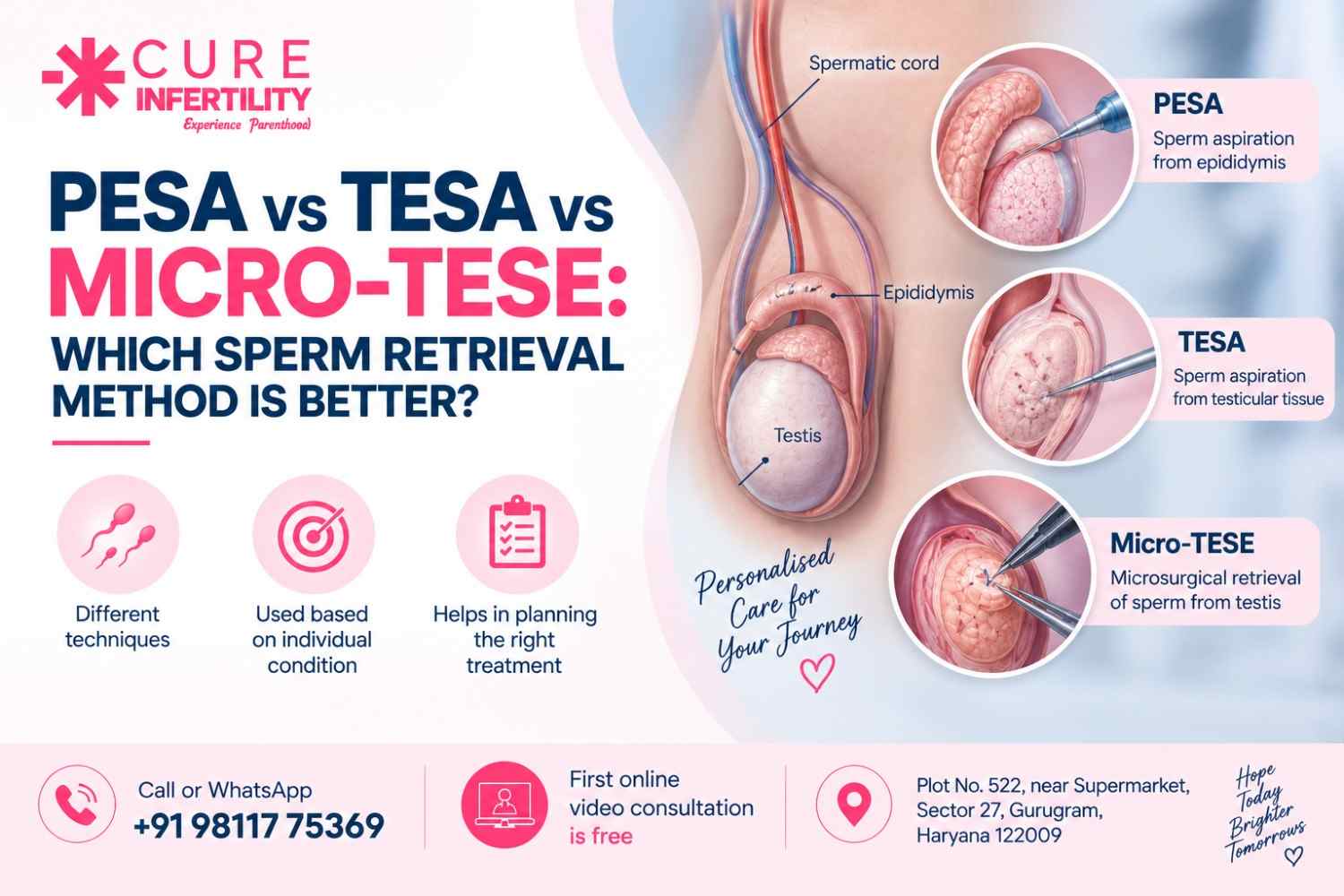
Surgical sperm retrieval techniques (PESA, TESA and Micro TESE) obtain sperm directly from the epididymis or testis. Micro TESE, which uses an operating microscope to identify areas of active production, has the best yield in non-obstructive cases. Retrieved sperm is always used with ICSI, since the numbers are small and the sperm often immature and non-motile.
What ICSI Does Not Fix
Being honest about the limits matters as much as the reassurance.
ICSI solves a fertilisation problem. It does not improve the genetic quality of the sperm. Sperm DNA fragmentation in particular is not addressed by ICSI: a sperm with damaged DNA can be injected successfully, fertilise the egg, and the resulting embryo may still arrest or fail to implant. Routine semen analysis does not measure this. If cycles have failed despite apparently good fertilisation, this is one of the things to investigate, as covered in our article on tests to consider after repeated IVF failure.
ICSI also does nothing about egg quality, which is driven overwhelmingly by female age. A couple with severe male factor and a female partner in her early thirties has a very different outlook from the same male factor with a female partner at forty. Our article on IVF success rates by age covers why.
And it does not address the underlying cause. If a varicocele or hormonal problem is treatable, treating it may improve parameters enough to allow a simpler route, and may benefit future attempts.
Can Sperm Count Be Improved?
In some cases, meaningfully. Sperm production takes roughly 72 to 90 days, so any intervention needs at least three months before a repeat analysis is worth doing.
What actually helps, and by how much:
- Stopping testosterone or anabolic steroids: often a substantial improvement, though recovery takes months
- Varicocele repair: improves parameters in a meaningful proportion of men
- Treating infection: effective where an infection is actually present
- Correcting a hormonal abnormality: effective where a specific abnormality has been identified
- Stopping smoking: modest but real
- Weight reduction where obesity is a factor: modest
- Reducing heat exposure and alcohol: modest
- Antioxidant supplements: modest at best, and the evidence is mixed
Be sceptical of products marketed to "boost" sperm count. Supplements have a limited role and are not a substitute for identifying a treatable cause.
The Emotional Side
Male factor infertility carries a weight that is rarely discussed, partly because infertility is still culturally framed as a female issue. Many men receive the diagnosis with a sense of personal failure that the biology in no way supports.
Low sperm count is a medical finding, no different in kind from any other. It says nothing about masculinity, virility or sexual function, and the two are entirely unrelated. It is also, as this article sets out, one of the more effectively treatable causes of infertility.
Where to Start
The first step is a proper male evaluation, not an immediate treatment decision. That means at least two semen analyses, a hormone profile, a physical examination, and genetic testing where the count is severely low. What that workup finds determines whether the route is treating a correctable cause, IUI where parameters are only mildly reduced, or IVF with ICSI.
You can see the full range of treatment options here.
You can book a free consultation with Dr. Rashmi Agrawal at the Sector 27, Gurugram clinic, read more about her background and approach, or check the FAQ page.
FAQs
Can I have a baby with a very low sperm count?
In most cases, yes. ICSI requires only one viable sperm per egg, so even severely reduced counts are usually workable. Outcomes also depend on female age and egg quality.
How low is too low for ICSI?
There is no fixed cut-off. ICSI can work with a handful of sperm, and where none are present in the ejaculate, surgical retrieval often finds sperm within the testis.
Can low sperm count be cured?
Sometimes. Varicocele, infection, hormonal abnormalities and testosterone use are all potentially reversible causes. Others, particularly genetic ones, are not, and ICSI is the appropriate route in those cases.
Does low sperm count affect sexual function?
No. Sperm production and sexual function are separate. Low count causes no symptoms and is unrelated to libido, erectile function or masculinity.
How long does it take to improve sperm count?
Sperm production takes around three months, so any repeat analysis after a lifestyle change or treatment should wait at least that long to be meaningful.
Is IUI an option with low sperm count?
Only where the reduction is mild and motility is reasonable. IUI still requires sperm to reach and fertilise the egg unaided, so it is not suitable for severe cases.
Will my son inherit my low sperm count?
Possibly, where the cause is genetic. Y chromosome microdeletions in particular are passed to male offspring, which is why genetic testing before ICSI is important in severe cases.
Does testosterone therapy affect fertility?
Yes, significantly. Exogenous testosterone suppresses the body's own sperm production. It is often reversible after stopping, but recovery takes several months and should be discussed with a doctor rather than managed alone.
Medically reviewed
Reviewed by Dr. Rashmi Agrawal — MBBS (Gold Medalist), MS OBGYN, FNB Reproductive Medicine. This article is general information, not a substitute for a consultation about your own reports.
Book Consultation