High Prolactin and Pregnancy: Can You Get Pregnant?
A high prolactin result may affect ovulation, but it does not automatically mean you cannot conceive. Learn what causes it, which checks matter, and when treatment may help.
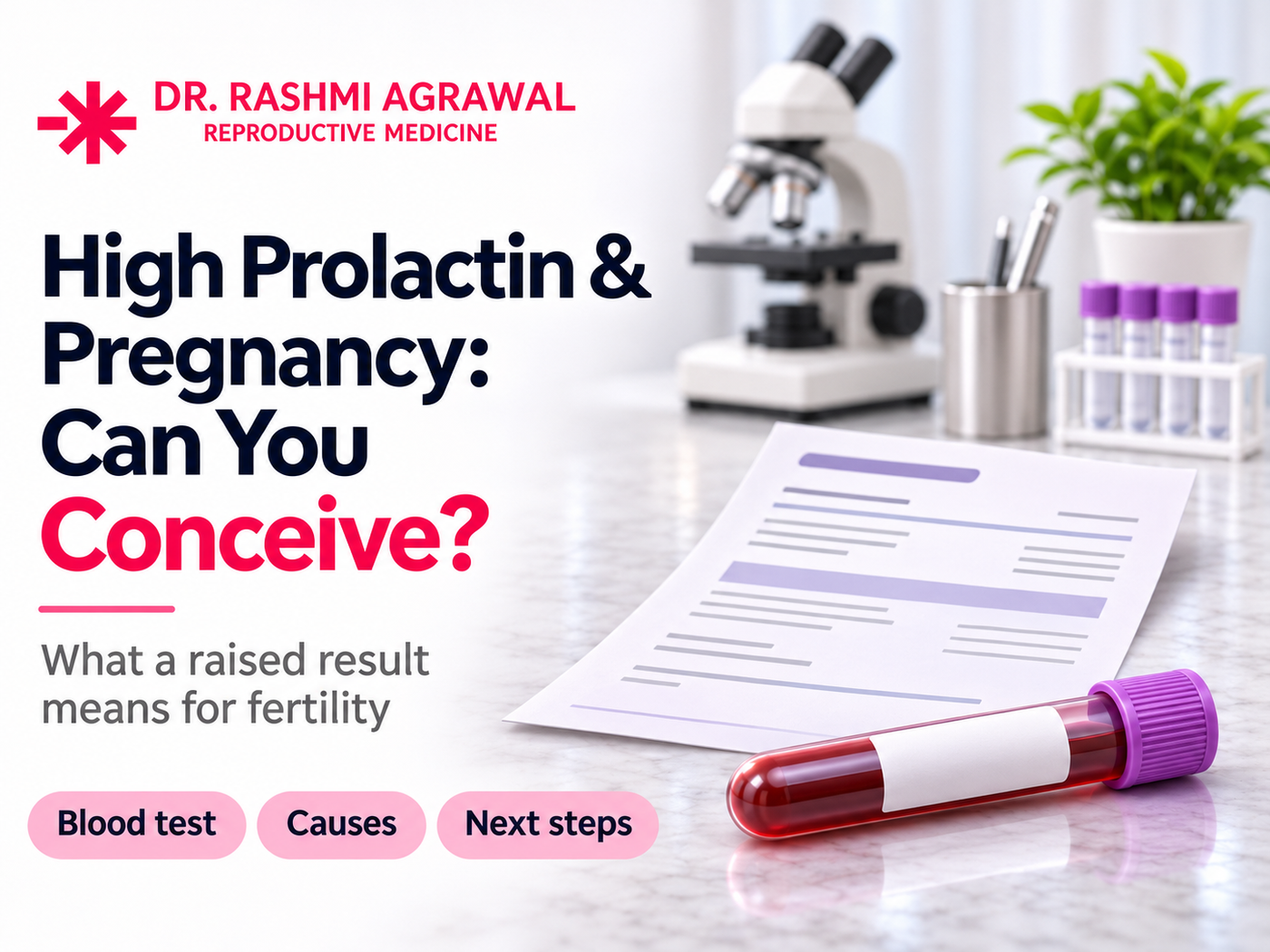
A prolactin result marked “high” can be worrying when you are trying to conceive. It may be relevant to ovulation, but one blood test cannot tell you whether pregnancy is possible or whether you need IVF.
Short answer: yes, many people can get pregnant with high prolactin. Prolactin can interfere with the hormones that regulate ovulation, so persistent elevation may make conception harder. The cause and your cycle pattern matter. Some raised results need only a repeat test and assessment; others improve when the underlying cause is treated.
What is prolactin, and how can it affect fertility?
Prolactin is a hormone made by the pituitary gland. It rises naturally during pregnancy and breastfeeding. Outside those settings, a persistently high level can reduce the signals that support ovulation. Periods may become irregular or stop, and some women notice milky nipple discharge. Others have no obvious symptoms.
A raised prolactin result is one possible part of a fertility assessment, not a diagnosis of infertility by itself. Age, ovulation, sperm, tubes and other factors still matter.
Can you still ovulate and get pregnant with high prolactin?
Yes. A mildly raised result does not automatically mean ovulation has stopped. The chance of conception depends on whether you are releasing an egg, why prolactin is high, and whether another fertility factor is present. A regular period can be reassuring, but it does not answer every question about ovulation.
If your cycles are difficult to interpret, read our guide to ovulation disorders.
Why might a prolactin test be high?
The first step is to interpret the number in context. Pregnancy and breastfeeding normally raise prolactin. Stress around the blood draw and some other temporary factors can affect a result. Other causes include an underactive thyroid, certain prescribed medicines and a prolactin-producing pituitary growth, called a prolactinoma. A high result does not mean you have a tumour.
Do not stop a prescribed medicine because of a prolactin result. Tell the clinician which medicines and supplements you take so they can decide whether any could be relevant. The laboratory range and your symptoms also matter; a number copied from someone else’s report is not a useful comparison.
What should you do after a high result?
Bring the full report to your clinician, including the unit and the laboratory reference range. Depending on the result and your history, they may suggest:
- Repeating the prolactin blood test, especially if the elevation is mild or the first sample was taken under stressful conditions.
- Checking for pregnancy and thyroid problems, and reviewing medicines that can raise prolactin.
- Considering a macroprolactin test when the result is high but symptoms do not fit. Macroprolactin can raise a laboratory reading without the usual biological effects.
- Discussing further assessment, which may include pituitary imaging when the pattern of results and symptoms warrants it.
A clinician may also check whether you are ovulating and review the wider fertility picture. The next test should answer a specific question rather than simply adding another panel.
Does treating high prolactin improve the chance of pregnancy?
It can, when high prolactin is disrupting ovulation. Treatment depends on the cause. Correcting an underactive thyroid may bring prolactin down. For a prolactinoma or some other cases of persistent symptomatic elevation, a clinician may prescribe a dopamine agonist such as cabergoline or bromocriptine. These medicines can lower prolactin and often restore ovulation, but the plan and monitoring are individual.
Not everyone with a raised result needs medication. If you are planning pregnancy, tell your treating team before starting or changing treatment. Once pregnant, follow their advice about whether to continue or stop medicine; the answer depends on your clinical situation.
When should you seek help sooner?
Arrange a clinical review if your periods have stopped or become irregular, you have milky nipple discharge outside pregnancy or breastfeeding, or you have been trying to conceive without success. A new severe headache or change in vision needs prompt medical assessment, particularly if prolactin is markedly elevated or a pituitary condition is already known.
Bring your prolactin result, previous tests, medication list and cycle dates. Dr Rashmi’s team in Gurugram can review the report alongside the rest of your fertility history rather than treating one number in isolation.
Frequently asked questions
Does high prolactin always mean infertility?
No. It can reduce fertility by interfering with ovulation, but the effect varies. Some women continue to ovulate and conceive. Your result needs to be interpreted with symptoms and cycle history.
Does a high prolactin result mean I need IVF?
No. If prolactin is the main reason ovulation is disrupted, treating the cause may be the appropriate first step. IVF is considered only in the context of the full fertility assessment.
Can stress cause a high prolactin result?
A temporary rise can occur, including around a stressful blood draw. That is one reason a clinician may repeat a mildly raised test before deciding what it means.
Should I start cabergoline myself?
No. The cause of the elevation should be assessed first, and medication choice, dose and pregnancy planning need clinical supervision.
Sources
Endocrine Society: Hyperprolactinemia patient guide
American Society for Reproductive Medicine: Hyperprolactinemia fact sheet
Medically reviewed
Reviewed by Dr. Rashmi Agrawal — MBBS (Gold Medalist), MS OBGYN, FNB Reproductive Medicine, DMC Reg. No. 76953 (2016). This article is general information, not a substitute for a consultation about your own reports.
Book Consultation