Pregnancy After Ectopic: When Can You Try Again?
When can you try again after an ectopic pregnancy? Learn how advice differs after surgery and methotrexate, and why your next pregnancy needs an early scan.
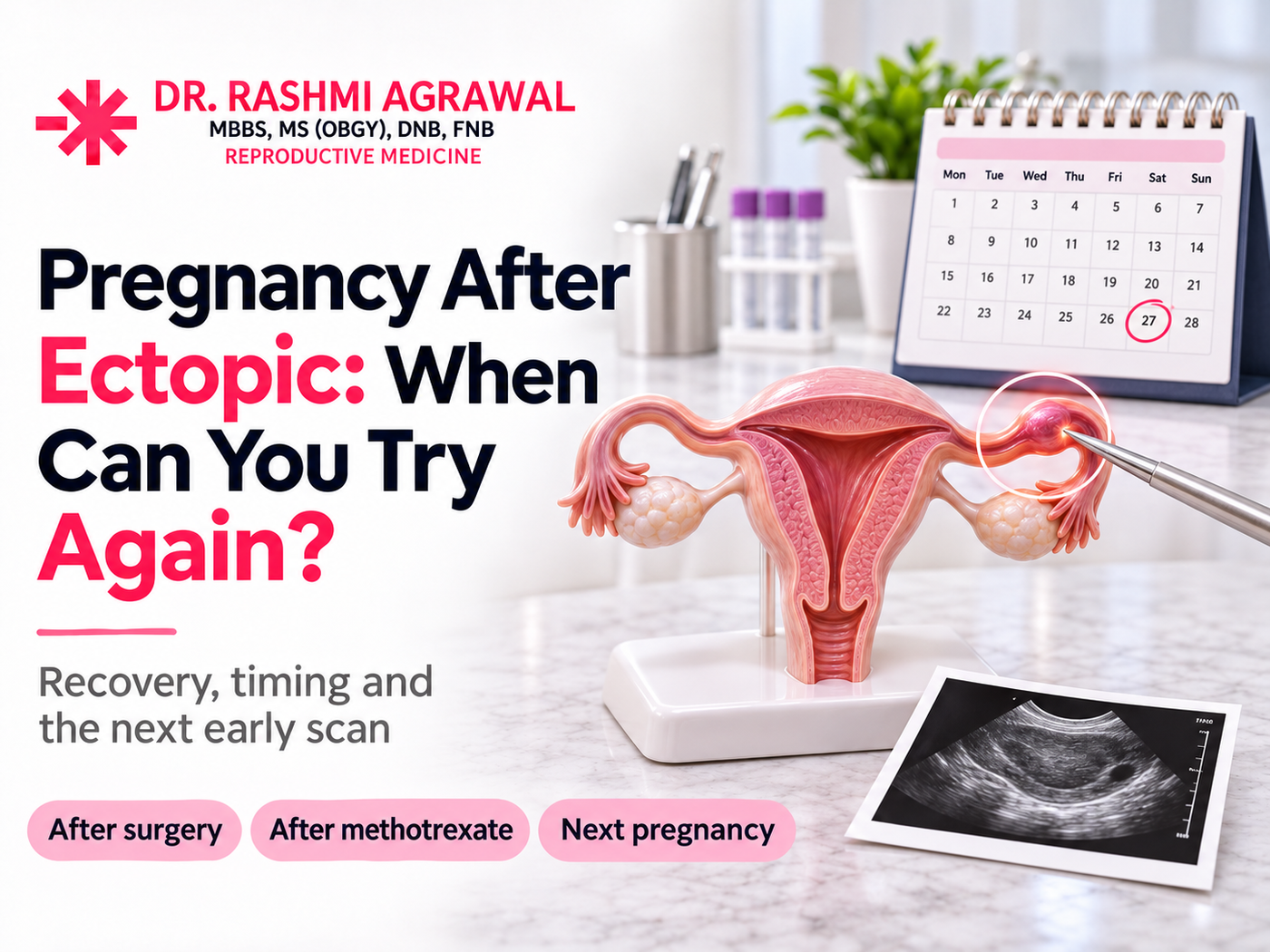
After an ectopic pregnancy, two questions often arrive together: “Will I be able to get pregnant again?” and “When can we safely try?” The answer depends on how the ectopic pregnancy was treated and whether follow-up has confirmed that it has resolved.
Short answer: Many people can have a future pregnancy after an ectopic pregnancy, including after removal of one fallopian tube. Do not start trying until your treating team confirms recovery and the required follow-up is complete. After methotrexate, major patient guidance advises waiting at least three months after the injection before trying. After surgery or expectant management, the timing is more individual; NHS guidance commonly suggests waiting until at least two periods have passed. In the next pregnancy, contact your clinician early for a scan to confirm that it is in the uterus.
This guide explains the different timelines and the first steps to take when you conceive again.
Why does the treatment change the waiting period?
An ectopic pregnancy develops outside the uterus, most often in a fallopian tube. Treatment may involve observation with repeated blood tests, methotrexate medicine or surgery. Follow-up is essential because an ectopic pregnancy can still cause serious problems until it has fully resolved.
| Treatment | What must happen before trying again | Typical timing to discuss |
|---|---|---|
| Expectant management | Pregnancy hormone follow-up confirms resolution; physical and emotional recovery | Individual advice from the treating team. |
| Surgery | Recovery from the operation and any required follow-up | Many are advised to wait until at least two periods have passed. |
| Methotrexate | Follow-up shows the pregnancy has resolved; use contraception during the wait | Wait at least three months after the injection, or longer if your team advises. |
These are guideposts, not a personal prescription. If you received more than one methotrexate dose, had complications, or needed further surgery, ask the team for your exact date. The RCOG stresses attending all follow-up appointments after treatment.
After methotrexate: why wait three months?
Methotrexate stops rapidly growing pregnancy tissue. The NHS and RCOG advise avoiding pregnancy for at least three months after the injection because the medicine could harm a developing baby if conception happens too soon. Use reliable contraception during this period and follow the clinic's blood-test plan until hCG has returned to the required level.
Ask your doctor when to restart folic acid and what dose is appropriate for you; advice after methotrexate is individual. Do not assume that a falling pregnancy test means all follow-up is finished. If you develop severe pain, dizziness, fainting or heavy bleeding during treatment, seek emergency care.
After surgery: can you conceive with one tube?
Yes, many people conceive with one healthy remaining fallopian tube. Removing a damaged tube does not automatically mean IVF is needed. Your chances also depend on the health of the other tube, age, previous fertility and other factors. The blocked fallopian tubes guide explains how tubal health affects the plan.
Healing after keyhole surgery is different from healing after an open operation. Discuss when bleeding has settled, whether the surgeon saw disease in the remaining tube, and when your team wants you to try again. If you were struggling to conceive before the ectopic pregnancy, an earlier fertility review may be sensible rather than waiting for many more months.
Is another ectopic pregnancy more likely?
Having had one ectopic pregnancy raises the risk of another, but it does not mean the next pregnancy will be ectopic. The RCOG and NHS advise contacting a clinician early when you next have a positive test. Blood hCG tests and an early ultrasound may be arranged to locate the pregnancy. A scan is often planned around six weeks, but the exact timing depends on symptoms and how far along you are.
Do not wait for a routine scan if you have one-sided pelvic pain, shoulder-tip pain, dizziness, fainting or heavy bleeding. Those symptoms need urgent assessment even when the pregnancy test is only faintly positive. An early scan may not locate a very early pregnancy, so the team may repeat it and check serial hCG rather than giving a definitive answer at once.
Should you have an HSG before trying again?
Not everyone needs a tubal test immediately after one ectopic pregnancy. A clinician may consider it if the remaining tube looked abnormal, there was prior pelvic infection or surgery, or you have difficulty conceiving again. An HSG shows whether dye passes through the tube, but it cannot guarantee normal tubal function in every cycle. What to expect during an HSG covers the procedure.
The right investigation depends on the operation notes, age, fertility history and your preferences. Do not order every possible fertility test simply because a previous pregnancy was ectopic.
Getting ready to try again
Bring your discharge summary, operation note if available, methotrexate dates and follow-up hCG results to a review. Ask when your team considers the ectopic resolved, when you can restart preconception supplements and whom to contact after your next positive test. Emotional recovery matters too; there is no obligation to try immediately when the medical waiting period ends.
For a personalised plan, book a consultation with Dr. Rashmi Agrawal.
Frequently Asked Questions
Can I get pregnant naturally after an ectopic pregnancy?
Often yes. Many people have a future intrauterine pregnancy, including with one remaining tube. The other tube's health and your overall fertility history matter.
How long must I wait after methotrexate?
At least three months after the injection is the usual advice in NHS and RCOG patient guidance. Follow your own team's instructions, especially after more than one dose.
How long should I wait after surgery?
NHS guidance commonly suggests at least two periods after treatment, but recovery and the type of operation vary. Ask the surgeon who treated you.
Will the next pregnancy also be ectopic?
Not necessarily. The risk is higher than for someone without a previous ectopic pregnancy, so arrange early contact and a scan to check the location.
Do I need IVF if one fallopian tube was removed?
Not automatically. IVF may be discussed if the remaining tube is damaged, conception is difficult, or other fertility factors are present.
What if I get pregnant before the recommended waiting period ends?
Contact your treating clinician promptly, especially if methotrexate was used. They can advise on medication exposure, follow-up and an early pregnancy assessment.
References
- Royal College of Obstetricians and Gynaecologists. Ectopic pregnancy: patient information. Follow-up, future fertility and methotrexate advice.
- NHS. Ectopic pregnancy. Recovery, trying again and early scans.
- NHS. Ectopic pregnancy treatment. Treatment-specific follow-up and methotrexate precautions.
Medically reviewed
Reviewed by Dr. Rashmi Agrawal — MBBS (Gold Medalist), MS OBGYN, FNB Reproductive Medicine, DMC Reg. No. 76953 (2016). This article is general information, not a substitute for a consultation about your own reports.
Book Consultation