Most women hear about the HSG test from someone who found it painful, and walk in expecting the worst. For the majority, the experience is a few minutes of strong period-like cramping that settles within the hour. For a minority it is genuinely uncomfortable, and that group is predictable in advance. Here is what the test involves, why it matters, how to prepare, and what your results actually mean.
What an HSG Test Is
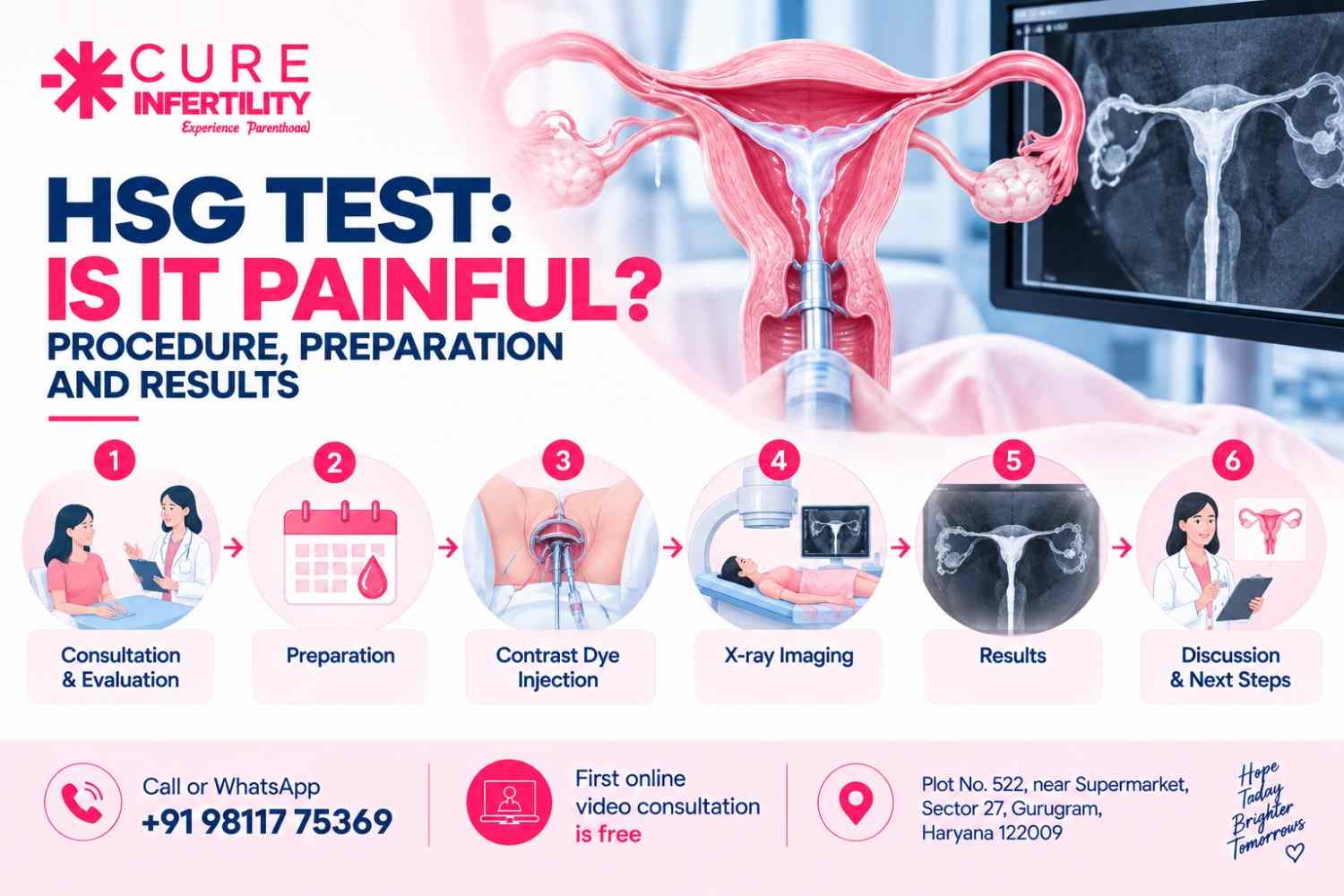
Hysterosalpingography, or HSG, is an X-ray test that checks two things at once: whether your fallopian tubes are open, and whether the inside of your uterus is a normal shape.
A thin catheter is passed through the cervix, a contrast dye is gently introduced into the uterus, and X-ray images are taken as the dye fills the cavity and flows out through the tubes. If the dye spills freely from the ends of both tubes into the pelvis, the tubes are open. If it stops, the point at which it stops shows where the blockage is.
It is one of the core tests in any fertility workup, because tubal blockage is a common cause of infertility that produces no symptoms at all. Most women with blocked tubes have normal periods and no pain. Our article on blocked fallopian tubes covers what a blockage means for your options.
Why the Result Matters So Much
The HSG result decides which treatments are even possible.
IUI only works if at least one tube is open, because fertilisation happens inside the tube. If both tubes are blocked, IUI cannot succeed, and IVF becomes the route. Starting IUI without knowing tubal status wastes months, which is why an HSG or equivalent tubal test should always come first. Our article on IUI vs IVF explains that decision in more detail.
Is the HSG Test Painful?
The honest answer is that it varies, and it is usually less painful than its reputation.
Most women describe strong cramping, similar to a bad period, that begins as the dye enters the uterus and peaks for a minute or two. It typically eases within minutes of the catheter being removed, though mild cramping can last a few hours.
Some women feel very little. A smaller group find it significantly painful.
Who tends to feel it more:
- Women with blocked tubes, because the dye builds up pressure in the uterus rather than flowing out freely
- Women with a narrow or tightly closed cervix, often those who have not had a vaginal delivery
- Women who are very anxious, since tension makes the cramping worse
- Women with a history of pelvic infection or endometriosis
The pain is short-lived because the test itself is short. The actual dye injection usually lasts only a few minutes.
How to Make It Less Painful
- Take a painkiller beforehand. An anti-inflammatory such as ibuprofen taken 30 to 60 minutes before the test reduces cramping for most women. Check with your doctor what is suitable for you.
- Ask for a slow injection of dye. Rapid filling increases pressure and cramping.
- Ask whether a smaller catheter or balloon catheter will be used, since technique affects comfort.
- Breathe slowly through the cramping rather than holding your breath, which tightens the pelvic muscles.
- Bring someone with you and arrange not to have anything demanding planned for the rest of the day.
- Tell the doctor if you have previously found pelvic examinations very painful, so they can plan accordingly.
When the Test Is Done
Timing is specific, and for good reason. The HSG is done after your period has completely stopped but before you ovulate, usually somewhere between day 6 and day 11 of a regular cycle.
Two reasons. First, it must be done before ovulation to avoid any chance of exposing an early pregnancy to X-rays and dye. Second, after bleeding stops the lining is thin, which gives a clearer picture of the cavity.
You may be asked to avoid unprotected intercourse between the start of your period and the test, or to take a pregnancy test on the day.
How to Prepare
- Call the clinic on the first day of your period to schedule the test in the correct window
- Avoid unprotected intercourse from the start of your period until the test
- Take a painkiller 30 to 60 minutes beforehand if advised
- Eat normally, since no fasting is usually needed
- Tell the clinic if you have an iodine or contrast allergy, a history of pelvic infection, or any chance you might be pregnant
- Some clinics give a short course of antibiotics, particularly if there is a history of pelvic infection
- Bring a sanitary pad, as there will be some sticky discharge and light spotting afterwards
- Wear comfortable, loose clothing
What Happens During the Test
You lie on an X-ray table in the same position as for a pelvic examination. A speculum is placed in the vagina, the cervix is cleaned, and a thin catheter is passed through the cervical opening. Some catheters have a small balloon that is inflated to hold the catheter in place.
Contrast dye is then introduced slowly, and X-ray images are taken as it fills the uterus and travels along the tubes. You may be asked to shift position slightly to help the dye flow. The doctor can often see the result on the screen immediately.
The whole procedure, including setup, typically takes 15 to 30 minutes. The part involving dye and X-rays is usually just a few minutes.
After the Test
Expect some cramping for a few hours, sticky discharge as the dye drains out, and light spotting for a day or two. Most women return to work the same day or the following day.
Contact the clinic promptly if you develop fever, worsening pelvic pain over the next few days, foul-smelling discharge, or heavy bleeding. These can indicate infection, which is uncommon but more likely in women with a history of pelvic infection or a hydrosalpinx.
Understanding Your Results
Both tubes open, normal cavity. The dye fills a normal uterine shape and spills freely from both tubes. Tubal blockage is ruled out as a cause, and treatments like IUI remain possible.
One tube blocked. Natural conception and IUI are still possible through the open side, though the chance per cycle is reduced. Age and the rest of your workup decide how long to try before moving on.
Both tubes blocked. Natural conception and IUI will not work. IVF bypasses the tubes entirely, and this is one of its original indications.
Hydrosalpinx. A blocked tube that has filled with fluid, often seen as a dilated tube on the X-ray. This matters a great deal, because the fluid can leak into the uterus and reduce IVF success. It usually needs treatment before an embryo transfer.
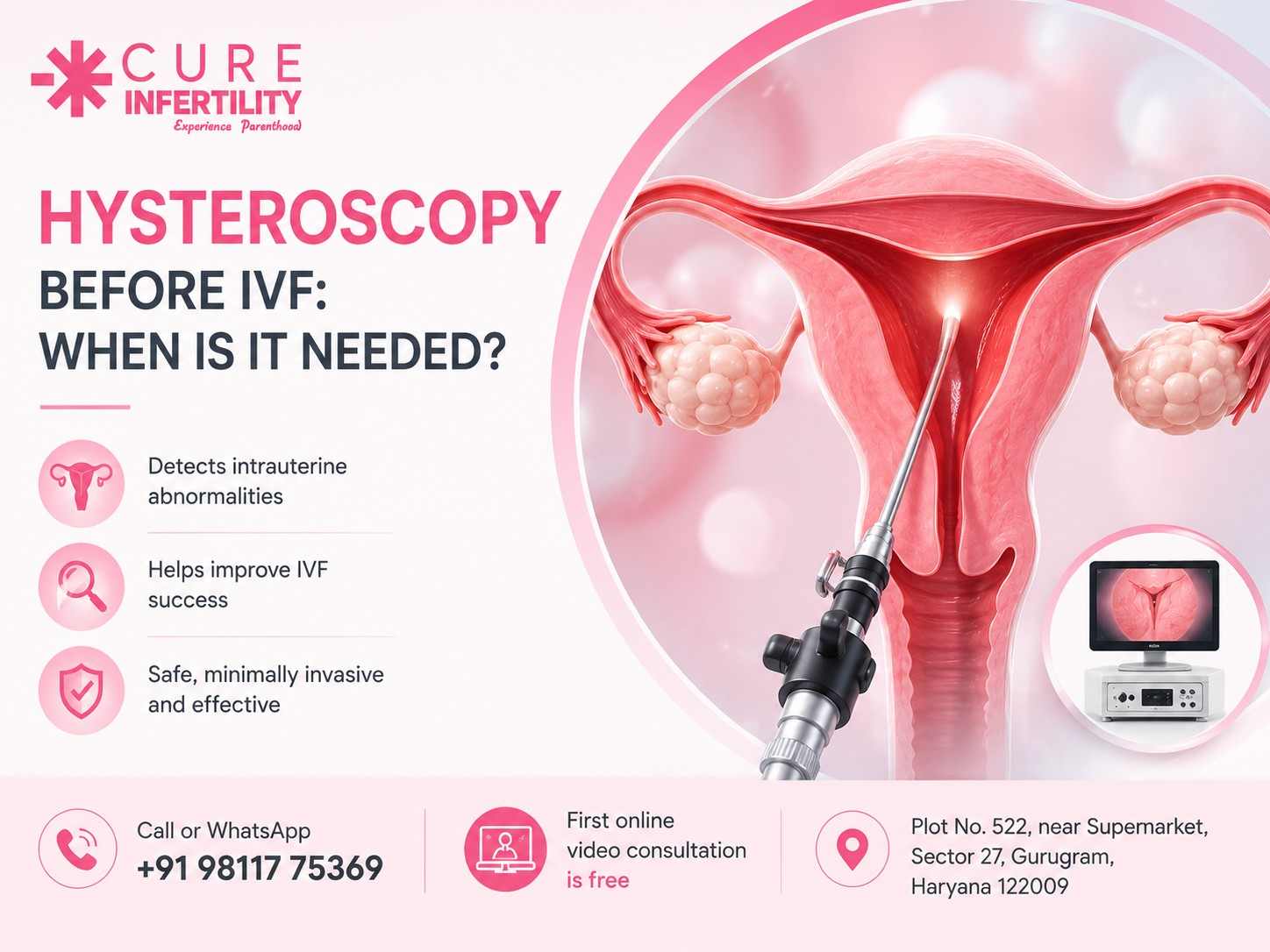
Abnormal uterine shape. The dye outline may suggest a polyp, fibroid, adhesions or a septum. These usually need confirming with hysteroscopy, which can often diagnose and treat in the same sitting. Our article on hysteroscopy before IVF covers when that is needed.
A Blocked Result Is Not Always a Blocked Tube
This is the single most important thing to know about reading an HSG.
The point where the tube joins the uterus can go into spasm during the test, particularly when a woman is in pain or anxious. Spasm stops the dye in exactly the same way a real blockage does, and the X-ray cannot tell the two apart. This is most relevant when both tubes appear blocked right at the uterine end.
A report of bilateral proximal blockage should therefore be confirmed before any major decision rests on it, either with a repeat test or with laparoscopy, which looks at the tubes directly. Accepting it at face value and moving straight to IVF without confirmation is a mistake that happens more often than it should.
Can an HSG Improve Your Chances of Pregnancy?
Possibly, and this is one of the more interesting findings in fertility research.
Some women conceive naturally in the months following an HSG. One explanation is that flushing the tubes clears minor debris or mucus plugs. A large randomised trial found that HSG using oil-based contrast led to a higher rate of ongoing pregnancy over the following six months than water-based contrast.
This is a genuine but modest effect, not a treatment for real tubal blockage. It is, however, a reason why some couples are advised to keep trying naturally for a few months after a normal HSG before escalating treatment.
HSG Compared With Other Tubal Tests
Sono-HSG or HyCoSy uses ultrasound with a contrast agent instead of X-ray. It avoids radiation, and accuracy is broadly similar in experienced hands.
Laparoscopy with dye is the reference standard. It sees the tubes directly, and also detects endometriosis and adhesions that an HSG cannot. But it is a surgical procedure under anaesthesia, so it is usually reserved for when HSG results are abnormal or unclear, or when other problems are suspected. Our article on endometriosis and fertility explains why that distinction matters.
For most women, HSG remains the sensible first test: quick, non-surgical, and informative.
Is HSG Safe?
Yes, for the large majority. The radiation dose is low and limited to a short exposure. The main risks are infection, which is uncommon, and allergic reaction to the contrast, which is rare. Fainting from the cramping happens occasionally and passes quickly.
You can read more on the HSG treatment page and see the full range of treatment options here.
You can book a free consultation with Dr. Rashmi Agrawal at the Sector 27, Gurugram clinic to plan your fertility workup or review an existing HSG report, read more about her background and approach, or check the FAQ page.
FAQs
Is the HSG test painful?
Most women feel strong period-like cramping for a few minutes during the dye injection, which settles soon after. It tends to be more uncomfortable if the tubes are blocked or the cervix is narrow. A painkiller taken beforehand helps.
How long does an HSG test take?
About 15 to 30 minutes including preparation. The dye and X-ray part usually takes only a few minutes.
When should an HSG be done in my cycle?
After your period has fully stopped but before ovulation, usually between day 6 and day 11 of a regular cycle.
Can I go to work after an HSG?
Most women can return to normal activity the same day or the next, though some prefer to rest for the remainder of the day.
Can HSG show a false blockage?
Yes. Spasm where the tube meets the uterus can mimic a blockage, especially when both tubes appear blocked at that point. A result like this should be confirmed before major decisions are made.
Can I get pregnant after an HSG?
Yes, and some women conceive in the months following a normal test. Flushing the tubes may have a modest fertility-enhancing effect, particularly with oil-based contrast.
Is HSG safe if I am trying to conceive?
Yes, provided it is done before ovulation in the cycle, which is why timing is specific.
What if my HSG shows a hydrosalpinx?
A fluid-filled blocked tube can reduce IVF success, so it usually needs treating before an embryo transfer. Your doctor will discuss whether removal or clipping of the tube is appropriate.
References
- Dreyer K, et al. Oil-based or water-based contrast for hysterosalpingography in infertile women. New England Journal of Medicine. https://www.nejm.org/doi/full/10.1056/NEJMoa1612337
- Diagnostic value of hysterosalpingography and laparoscopy for tubal patency in infertile women. https://pmc.ncbi.nlm.nih.gov/articles/PMC4228547/