IUI is the most common first fertility treatment, and also one of the most misunderstood. Some couples treat it as a minor procedure that barely counts. Others expect it to work like IVF. It is neither. Done in the right couple, at the right time, it is a sensible and genuinely effective first step. Done in the wrong couple, it wastes months. This article covers what IUI actually involves, what success rates to expect, and how to tell whether you are a good candidate.
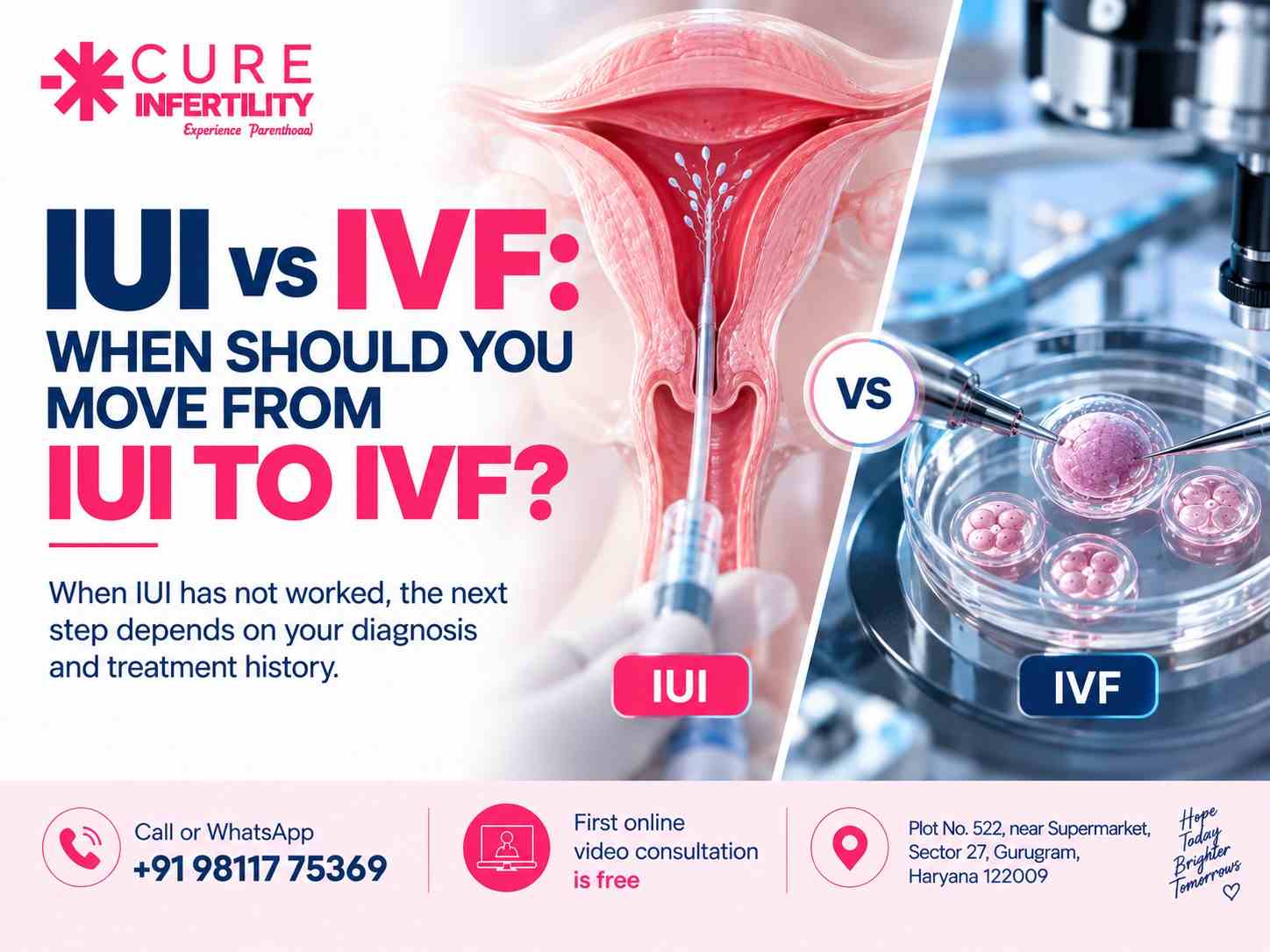
If you have already tried IUI and are wondering when to stop, our article on IUI vs IVF covers that decision specifically.
What IUI Is
Intrauterine insemination places washed, concentrated sperm directly into the uterus, timed to coincide with ovulation.
In natural conception, sperm deposited in the vagina must pass through the cervix and travel up through the uterus to reach the egg in the fallopian tube. Most never make it. IUI shortens that journey, bypasses the cervix entirely, and delivers a high concentration of the most motile sperm close to the egg at exactly the right time.
What IUI does not do is equally important. The egg still has to be released, picked up by the tube, and fertilised inside the tube. The embryo still has to travel to the uterus and implant. IUI assists a reproductive system that works. It does not replace parts that do not.
Who IUI Is Right For
IUI is a reasonable first-line treatment in these situations:
- Unexplained infertility, particularly in younger women with good ovarian reserve
- Ovulatory problems such as PCOS, combined with medication to trigger ovulation. Our article on PCOS explains why this group often responds well
- Mild male factor, where the post-wash motile sperm count remains adequate
- Cervical factor, where sperm cannot pass the cervix effectively
- Difficulty with intercourse, including erectile or ejaculatory problems or vaginismus
- Donor sperm use
- Mild endometriosis with open tubes
Two conditions must be met regardless of the reason: at least one open fallopian tube, and a sperm sample with enough motile sperm after washing.
Who IUI Is Not Right For
IUI is unlikely to work, and should usually be skipped, with:
- Both fallopian tubes blocked, since fertilisation cannot occur. Our article on blocked fallopian tubes covers the alternatives
- Severe male factor or azoospermia, where too few functional sperm are available. Our article on low sperm count explains why ICSI is usually the route
- Moderate to severe endometriosis, which distorts pelvic anatomy
- Significantly reduced ovarian reserve with advancing age, where time is better spent on more effective treatment
- Women aged 40 and over, in most cases, because per-cycle IUI success is low
Before You Start: The Essential Tests
IUI should never begin on guesswork. At minimum:
- A tubal test, usually HSG, to confirm at least one tube is open. Our article on the HSG test covers what it involves
- A current semen analysis, ideally including a trial wash to see the post-wash motile count
- Ovarian reserve testing, AMH and antral follicle count. Our article on the AMH test explains how to read them
- Confirmation of ovulation, or a plan to induce it
- Thyroid function and prolactin
Starting IUI without confirming tubal patency is a common and avoidable mistake. If both tubes turn out to be blocked months later, every cycle in between was wasted.
Natural Cycle or Stimulated Cycle?
Natural cycle IUI times insemination to your own ovulation, without fertility medication. It is used mainly with donor sperm, cervical factor, or difficulty with intercourse, where the woman ovulates normally.
Stimulated IUI uses medication to induce or enhance ovulation, usually oral tablets such as letrozole or clomiphene, and sometimes low-dose injections. For unexplained infertility, IUI combined with ovarian stimulation is the approach supported by major guidelines, because it improves the chance per cycle over natural-cycle IUI. Our ovulation induction and cycle monitoring page covers the medication side.
The trade-off with stimulation is the risk of multiple pregnancy, which is why monitoring matters.
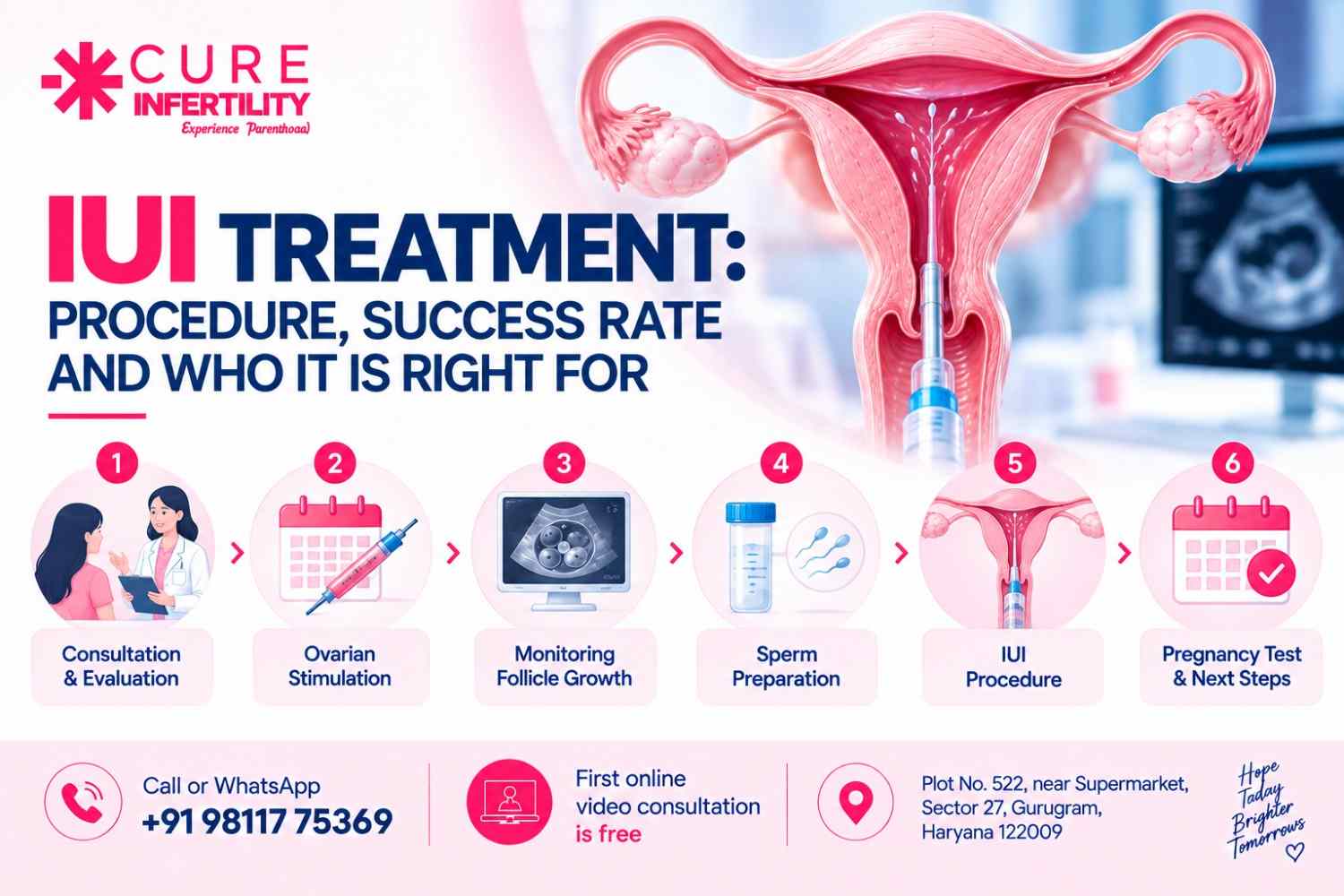
The IUI Procedure, Step by Step
Day 2 or 3 of your period. A baseline scan confirms the ovaries are quiet. If stimulation is planned, tablets usually start now for around five days.
Monitoring scans. From around day 9 to 12, ultrasound scans track follicle growth. Usually two or three scans are needed. If too many follicles develop, the cycle may be cancelled to avoid a high risk of triplets or more. This is a safety decision, not a failure.
The trigger. When a lead follicle reaches the right size, a trigger injection is given to time ovulation precisely. IUI is scheduled roughly 24 to 36 hours later. Some cycles instead rely on detecting your natural LH surge with a urine test.
The semen sample. On the morning of the IUI, the male partner provides a sample, usually after two to five days of abstinence. It can often be collected at home if it reaches the lab within the time the clinic specifies, or collected at the clinic.
Sperm washing. The laboratory processes the sample over one to two hours, separating the most motile sperm from the seminal fluid, dead sperm and debris. The result is a small, concentrated volume of high-quality sperm. This step is essential, since unwashed semen placed in the uterus causes severe cramping.
The insemination. You lie on the examination couch, a speculum is placed as for a smear test, and a thin flexible catheter passes through the cervix to deposit the sperm in the uterus. It takes a few minutes. Most women feel mild cramping or nothing at all. No anaesthesia is needed.
Afterwards. You may rest for 10 to 15 minutes, then go home. Most women return to work the same day. Light spotting is common.
The two-week wait. Some clinics prescribe progesterone support. A pregnancy test is usually done around 14 days after the IUI.
What Is the Success Rate of IUI?
In well-selected couples, the chance of pregnancy per IUI cycle is typically around 10 to 15 percent. It is higher in some groups, such as younger women whose main problem is irregular ovulation, and lower with advancing age, reduced ovarian reserve or significant male factor.
That figure sounds low, and compared with IVF it is. But it is several times higher than many couples with unexplained infertility achieve trying naturally each month, and it comes at a fraction of the cost and physical demand.
The factors that most influence success are:
Female age. The single biggest factor. Success falls steadily through the thirties and drops sharply after 40.
The reason for infertility. Ovulatory disorders tend to respond best. Unexplained infertility and mild male factor do reasonably well. Endometriosis and reduced ovarian reserve do less well.
Post-wash motile sperm count. Success falls as the motile count after washing drops. Studies vary on the exact threshold, but at very low counts the chance per cycle becomes small enough that IVF with ICSI is usually more sensible.
Stimulation. Stimulated cycles outperform natural cycles in unexplained infertility.
Number of follicles. Two follicles give a modestly higher chance than one, but each additional follicle raises the risk of multiple pregnancy, which is why more is not simply better.
Cycle number. Most IUI pregnancies occur within the first three cycles. Beyond the fourth, the chance per cycle falls for most couples.
How Many Cycles?
For most couples with unexplained infertility, guidance supports a course of three to four stimulated IUI cycles before moving to IVF. The right number for you depends heavily on your age, which our article on IUI vs IVF covers in detail. The essential point is to agree a stopping point before you start rather than repeating cycles indefinitely.
Risks of IUI
IUI is one of the safest fertility treatments, but it is not risk-free.
Multiple pregnancy is the main one, and it comes from the stimulation rather than the insemination. Twins carry higher risks for both mother and babies, and triplets considerably more. Careful monitoring and willingness to cancel an over-responding cycle are what keep this risk low.
Ovarian hyperstimulation is uncommon with oral medication and low-dose protocols, but possible with injections.
Infection is rare given sterile technique.
Cramping and spotting on the day are common and short-lived.
Common Myths
"Lying with your legs up afterwards improves the chance." Sperm are deposited directly into the uterus and are already where they need to be. Resting for 10 to 15 minutes is fine, but prolonged bed rest or unusual positions have not been shown to help.
"Two inseminations in one cycle are better than one." A double IUI has not consistently been shown to improve outcomes over a single well-timed insemination.
"IUI and IVF are basically the same." They are fundamentally different. IUI assists natural fertilisation inside the body. IVF fertilises eggs in the laboratory and bypasses the tubes entirely.
"If IUI fails, something is wrong." With a per-cycle chance of around one in eight, most individual cycles will not succeed even in couples who are good candidates. A single failed cycle is expected, not diagnostic.
The Honest Summary
IUI is a sensible, low-cost and low-risk first treatment for the right couples: younger women with open tubes, adequate sperm, and unexplained or ovulatory infertility. It is a poor choice when tubes are blocked, sperm counts are very low, or age makes time the main constraint.
The keys are confirming the basics before starting, using stimulation where appropriate, monitoring carefully to avoid multiple pregnancy, and agreeing in advance how many cycles you will try.
You can read more on the IUI treatment page and see the full range of treatment options here.
You can book a free consultation with Dr. Rashmi Agrawal at the Sector 27, Gurugram clinic to find out whether IUI suits your situation, read more about her background and approach, or check the FAQ page.
FAQs
Is IUI painful?
Most women feel mild cramping or nothing at all. It feels similar to a smear test and takes only a few minutes, with no anaesthesia needed.
What is the success rate of IUI?
Typically around 10 to 15 percent per cycle in well-selected couples, higher in some groups such as younger women with ovulatory problems, and lower with advancing age or significant male factor.
How long does the IUI procedure take?
The insemination itself takes a few minutes. Allow one to two hours on the day for sperm washing beforehand.
Can I go to work after IUI?
Yes. Most women return to normal activity the same day. Prolonged rest has not been shown to improve outcomes.
Do I need both fallopian tubes open for IUI?
At least one open tube is essential, because fertilisation happens inside the tube. With both blocked, IUI cannot work.
Does IUI work with low sperm count?
It can work with mildly reduced counts, provided enough motile sperm remain after washing. With severely low counts, success falls sharply and IVF with ICSI is usually the better route.
When should I take a pregnancy test after IUI?
Usually around 14 days after the insemination. Testing too early, especially after a trigger injection, can give a misleading result.
Can IUI cause twins?
Yes, mainly when fertility medication produces more than one mature follicle. Careful monitoring, and cancelling cycles where too many follicles develop, keeps this risk low.
References
- ESHRE Guideline Group on Unexplained Infertility. Evidence-based guideline: unexplained infertility. Human Reproduction, 2023. https://academic.oup.com/humrep/article/38/10/1881/7246182
- Practice Committee of the American Society for Reproductive Medicine. Evidence-based treatments for couples with unexplained infertility: a guideline (2020). https://www.asrm.org/practice-guidance/practice-committee-documents/evidence-based-treatments-for-couples-with-unexplained-infertility-a-guideline-2020/
- How low is too low? Postwash total motile sperm count effect on pregnancy outcomes in intrauterine insemination. https://pubmed.ncbi.nlm.nih.gov/36357350/