Low AMH and Pregnancy: Can You Get Pregnant With Low AMH?
Learn what low AMH means for fertility, whether pregnancy is possible with low AMH, and which factors doctors consider when assessing your chances of conception.
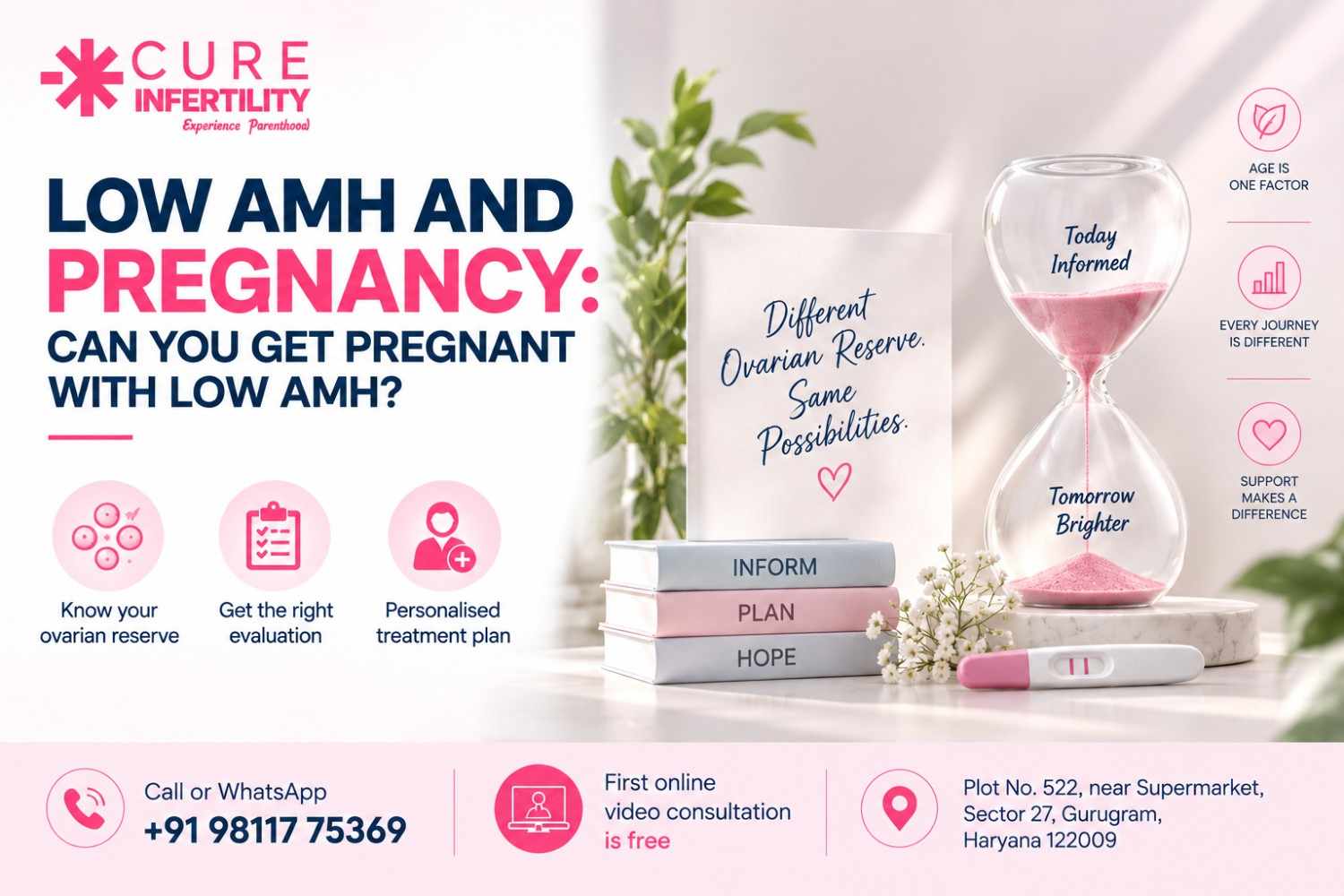
Yes. Women with low AMH get pregnant, both naturally and with treatment, and a great many do. The panic that follows a low AMH result comes from a widespread misunderstanding of what the test measures, and that misunderstanding costs women years of unnecessary fear. This article deals with the practical question of conception with low AMH. If you want the detail on what the test itself measures and how to read your report, our article on the AMH test explained covers that separately.
The One Sentence That Matters
Low AMH means fewer eggs. It does not mean worse eggs.
Egg quality is determined overwhelmingly by your age, not by your reserve. A woman of 31 with an AMH of 0.6 still has eggs of a 31-year-old's quality, which is to say a high proportion of chromosomally normal ones. Her problem is quantity per cycle, not viability.
This is why the outlook for a young woman with low AMH is generally far better than the outlook for an older woman with a normal AMH, even though the second report looks more reassuring on paper.
And pregnancy requires one good egg, not many.
Can You Conceive Naturally With Low AMH?
Yes, and the evidence on this is stronger than most people realise.
Studies looking at women without a known infertility diagnosis have found that low AMH does not meaningfully reduce the chance of conceiving naturally within a year of trying. AMH is a good predictor of how many eggs will be retrieved during stimulation. It is a poor predictor of natural conception.
The reason is straightforward. In a natural cycle, your body recruits and matures a single dominant follicle. Whether the pool it was drawn from contained twenty follicles or five, the outcome is one egg either way. Low reserve reduces the size of the pool, not the ability to produce one mature egg each month.
Where AMH becomes practically relevant is in how much time you have, not in whether this month can work.
What Low AMH Genuinely Changes
Being clear about the real implications, rather than the imagined ones.
It compresses your timeline. Reserve declines with time and does not recover. If your AMH is low at 32, the trajectory matters more than the current number. This is the strongest argument for not postponing.
It affects egg yield in IVF. Fewer eggs per stimulation cycle is likely, which may mean more cycles to obtain a viable embryo, and it influences protocol and dosing decisions.
It may indicate earlier menopause, broadly rather than precisely.
It raises the value of not waiting through low-yield options. For a woman with low reserve, spending eight months on cycles of ovulation induction and IUI may not be the best use of the time available, depending on her age and other findings.
It does not change your egg quality. Worth repeating, because it is the assumption that causes the most distress.
Why Age Matters More Than Your AMH Number
Consider two situations that come up regularly in clinic.
A woman of 30 with an AMH of 0.5 will likely produce few eggs per cycle. But a high proportion of those eggs will be chromosomally normal, because that is what age 30 delivers. She may need more cycles to bank enough embryos, and her prospects are reasonable.
A woman of 42 with an AMH of 2.5 will produce more eggs per cycle. But a much smaller proportion will be chromosomally normal, because that is what age 42 delivers. Her retrieval numbers look better and her live birth prospects are worse.
Quantity is what AMH measures. Quality is what determines whether a pregnancy continues. The relationship between age and outcomes is set out in our article on IVF success rates by age.
Low AMH Is Only One Part of the Picture
A low AMH in isolation tells you very little, and acting on it alone leads to poor decisions.
It should always be paired with an antral follicle count, an early-cycle ultrasound counting visible small follicles directly. Where the two agree, the picture is clear. Where they disagree, that itself is informative.
Beyond reserve, a complete workup covers your fallopian tubes, since a normal reserve with blocked tubes means no natural conception, as covered in our article on blocked fallopian tubes. It covers your uterine cavity, your ovulation, your thyroid and prolactin, and critically a semen analysis for your partner.
Low AMH tends to absorb all the attention in a consultation, and other treatable factors go uninvestigated as a result. That is a real and common failure.
What Actually Helps
Not delaying. This is the single most effective thing within your control. Every year of waiting reduces both reserve and egg quality, and no protocol compensates for it.
A proper full workup, so that a treatable factor is not missed while attention sits on one number.
Adjusted stimulation protocols. Approaches for low responders differ from standard protocols, and dosing is set accordingly.
Accepting fewer eggs per cycle and planning around it. Several cycles to accumulate embryos is a normal strategy in low reserve rather than a sign of failure.
Genetic screening where appropriate. PGT can identify chromosomally normal embryos, though its value depends on having enough embryos to screen, which is a genuine consideration when yields are small.
Fertility preservation if you are not ready yet. For a younger woman with low AMH and no immediate plans, egg freezing preserves current egg quality, though the same low yield applies and multiple cycles are likely.
What Does Not Help
This needs stating plainly, because low AMH is heavily targeted by marketing.
No supplement reliably raises your AMH or increases your follicle pool. The pool is not replenished. Products sold on that promise are selling hope, not biology. Some supplements may support egg quality in specific circumstances, which is a different claim entirely, and worth discussing with your doctor rather than acting on advertising.
Diet and lifestyle changes will not raise your reserve, though general health measures remain worthwhile for other reasons.
Repeating the test hoping for a better number is not a strategy. Variation between assays and laboratories is real, and a repeat is reasonable for a surprising result in a younger woman, but the underlying reserve does not improve.
Be particularly wary of anything marketed as reversing or restoring ovarian reserve.
Which Treatment Route Makes Sense
There is no single answer, because it depends on your age, your other findings and how long you have been trying.
Where reserve is only modestly reduced, you are younger, ovulation is regular and other factors are normal, natural conception or IUI remain reasonable for a defined period. The key word is defined: a time limit set in advance, not open-ended trying.
Where reserve is significantly low, or where age is advancing, moving to IVF sooner is often the better strategy, because it uses the reserve you have now rather than the smaller reserve you will have in a year.
Where ovulation is also irregular, ovulation induction and cycle monitoring addresses that alongside.
You can see the full range of treatment options here.
The Emotional Side
A low AMH result is frequently delivered as a number with no context, and the internet fills the gap badly. Women describe being told their ovaries are "old" or "failing," language that is both clinically inaccurate and unnecessarily cruel.
What the result actually says is that you have fewer eggs remaining than average for your age. That is worth acting on. It is not a statement about whether you can have a child, and it should not be received as one.
If you were given a number and little else, that was an incomplete consultation, not a prognosis.
What to Do Next
Get the full picture rather than acting on one figure. That means an antral follicle count alongside your AMH, assessment of your tubes and uterus, thyroid and prolactin, and a semen analysis for your partner. From there the question becomes practical: given your age, your reserve and your other findings, what is the most efficient route, and what is a sensible time limit before escalating?
You can book a free consultation with Dr. Rashmi Agrawal at the Sector 27, Gurugram clinic to have your reports interpreted properly, read more about her background and approach, or check the FAQ page.
FAQs
Can I get pregnant naturally with low AMH?
Yes. Studies in women without an infertility diagnosis show that low AMH does not meaningfully reduce the chance of natural conception within a year. A natural cycle produces one egg regardless of how large the remaining pool is.
Does low AMH mean poor egg quality?
No. AMH measures quantity only. Quality is driven largely by your age, which is why a younger woman with low AMH often has a better outlook than an older woman with a higher result.
Can low AMH be increased?
Not meaningfully. The follicle pool is not replenished, and no supplement or lifestyle change reliably raises it. Be sceptical of anything marketed as restoring ovarian reserve.
Should I go straight to IVF with low AMH?
It depends on your age and your other findings. Significantly low reserve, particularly with advancing age, argues for moving to IVF sooner rather than spending months on lower-yield options.
How many eggs will I get in IVF with low AMH?
Fewer than average, though the number varies. Several cycles to accumulate embryos is a normal approach rather than a sign that treatment is not working.
Does low AMH mean early menopause?
It can indicate an earlier decline, but only broadly. It is not a reliable predictor of when menopause will occur.
Is low AMH the reason I am not conceiving?
Not necessarily, and this is important. Tubal, uterine, ovulatory and male factors all need investigating. Low AMH often absorbs all the attention while another treatable cause goes unexamined.
Should I repeat my AMH test?
A repeat is reasonable for a surprising result, particularly a very low one in a younger woman, ideally at the same laboratory since assays differ. But repeating it will not change the underlying reserve.
Medically reviewed
Reviewed by Dr. Rashmi Agrawal — MBBS (Gold Medalist), MS OBGYN, FNB Reproductive Medicine, DMC Reg. No. 76953 (2016). This article is general information, not a substitute for a consultation about your own reports.
Book Consultation