What Does Egg Freezing Mean? A Complete Guide
Learn what egg freezing means, how the process works, who may consider it, and important factors such as age, success rates and future fertility planning.
Egg freezing has moved from a niche medical procedure to something a lot of women now actively consider, and that shift has brought a fair amount of marketing noise with it. It's a genuinely useful option. It's also not insurance, and the numbers matter more than the pitch. Here's what it actually involves, who it suits, and what it realistically delivers.
What Is Egg Freezing?
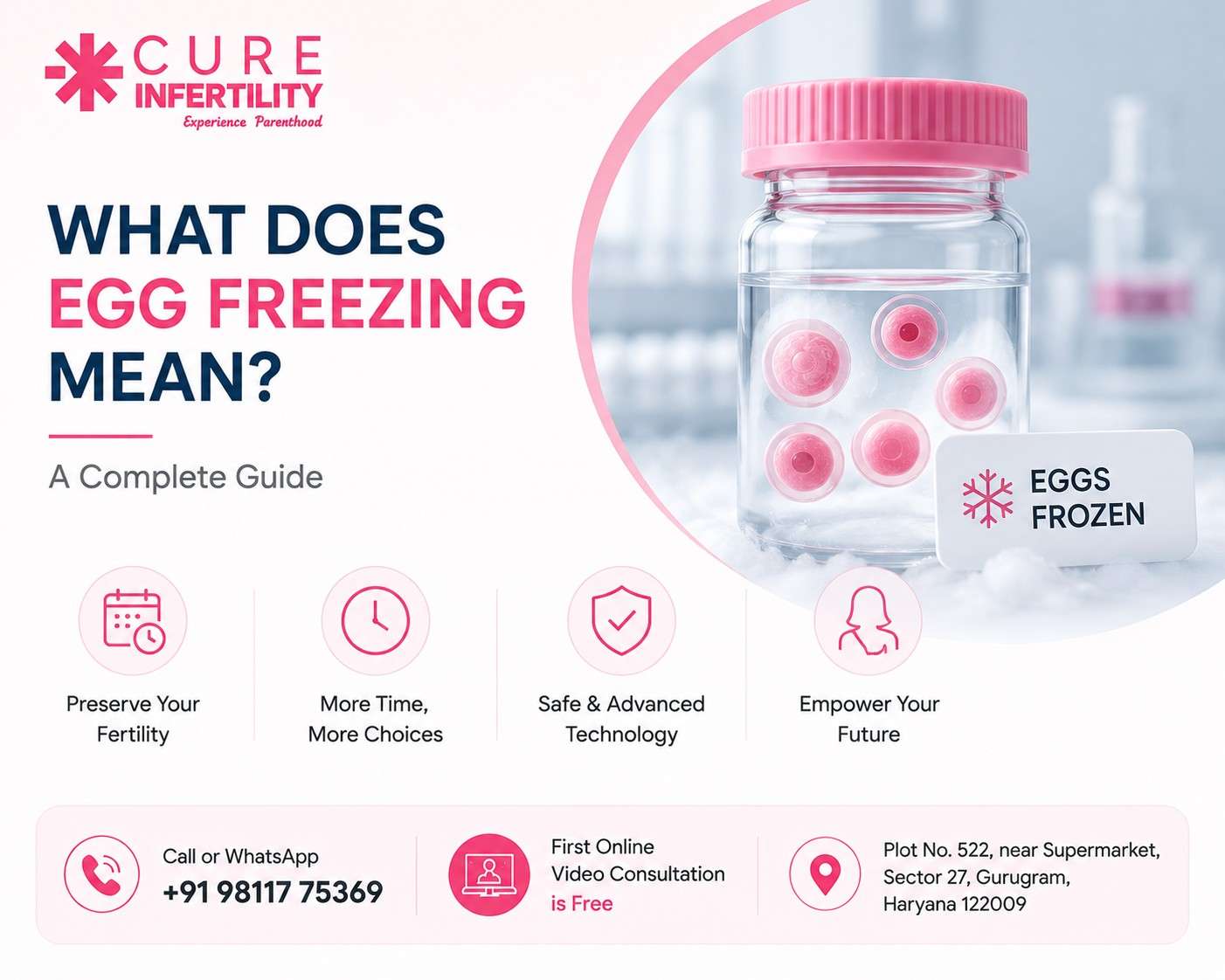
Egg freezing, or oocyte cryopreservation, is the process of stimulating the ovaries to produce multiple mature eggs, retrieving them, and freezing them for use at a later date. The eggs are stored unfertilised, which is the key distinction from embryo freezing, where eggs are fertilised with sperm first and stored as embryos.
The technology that made this viable is vitrification, an ultra-rapid freezing method that prevents ice crystals from forming inside the egg. Egg cells are large and water-rich, which made them particularly vulnerable to damage under older slow-freeze methods. Vitrification changed survival rates substantially, and it's the reason egg freezing became a serious clinical option rather than an experimental one.
Who Considers Egg Freezing?
Elective or social egg freezing is the most common reason. Women who want children but aren't in a position to have them yet, for reasons of relationship, career, health or finances, freeze eggs to preserve the quality associated with their current age.
Medical egg freezing applies where treatment threatens fertility. Chemotherapy and radiotherapy can damage ovarian reserve, so egg freezing before cancer treatment is well established. Certain autoimmune conditions requiring gonadotoxic drugs fall into the same category.
Endometriosis and low ovarian reserve. Women with endometriomas or a declining AMH may freeze eggs while they still have reserve to work with, even if conception is some years away. Our article on endometriosis and fertility covers why the timeline pressure is sharper in this group.
A family history of early menopause, which raises the likelihood of an earlier decline in reserve.
Before certain gynaecological surgeries that carry a risk of reducing ovarian tissue.
How the Process Works
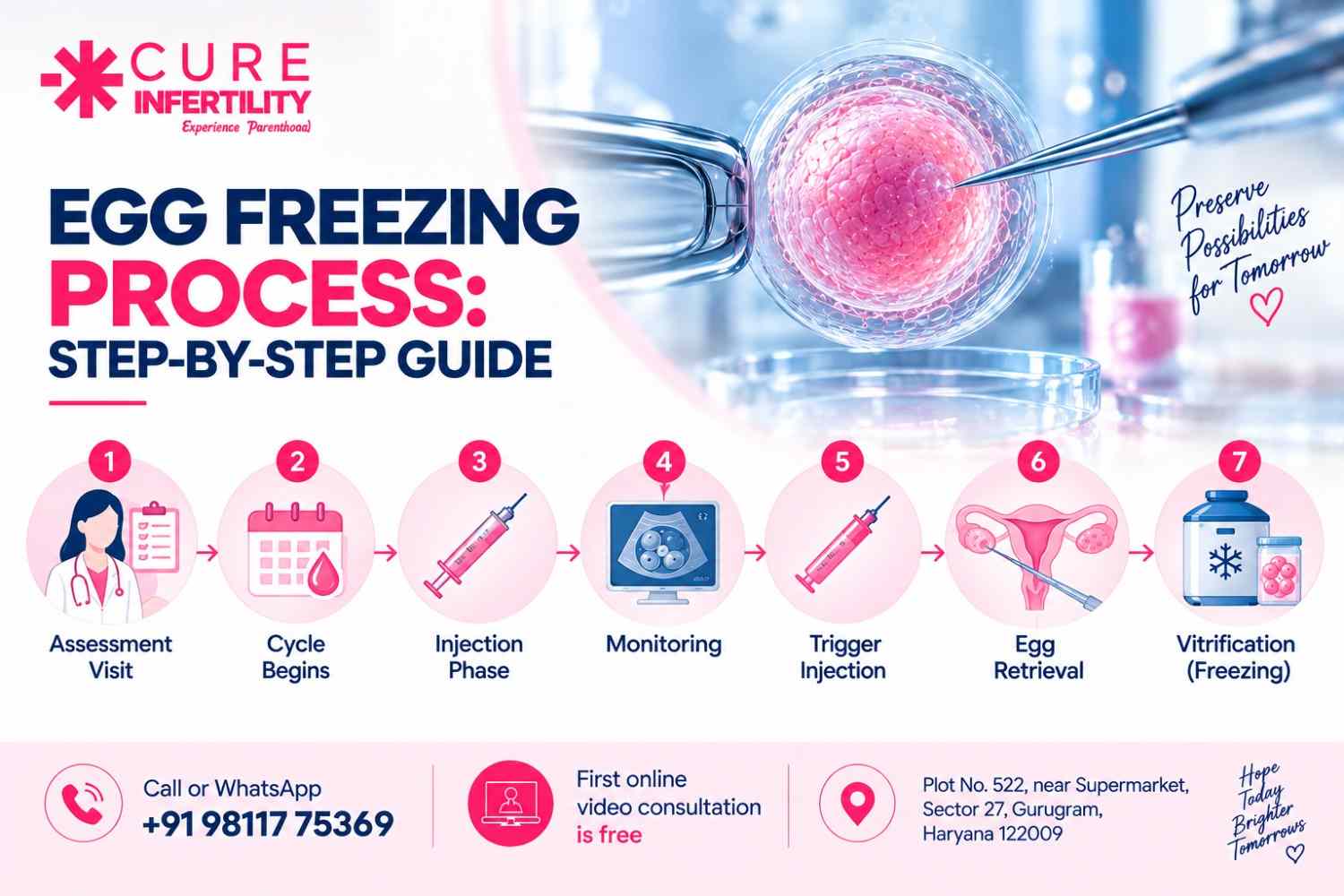
The full cycle typically takes around two to three weeks from the start of stimulation to retrieval.
Initial assessment. Blood tests for AMH, FSH and other hormones, plus an antral follicle count on ultrasound, establish your ovarian reserve. This determines the likely egg yield and the protocol used.
Ovarian stimulation. Around 8 to 12 days of daily hormone injections encourage multiple follicles to mature simultaneously, instead of the single egg a natural cycle produces. This is the same stimulation used in an IVF cycle.
Monitoring. Regular ultrasound scans and blood tests track follicle growth and hormone levels, and the protocol is adjusted as needed.
Trigger injection. Once follicles reach the right size, a trigger shot completes egg maturation. Retrieval is scheduled roughly 34 to 36 hours later.
Egg retrieval. A short procedure under sedation, usually 20 to 30 minutes, in which eggs are collected transvaginally using ultrasound guidance. Most women go home the same day.
Vitrification and storage. Mature eggs are frozen and stored in liquid nitrogen. Immature eggs cannot be frozen usefully, which is one reason the number retrieved is always higher than the number stored.
The Numbers You Actually Need
This is where honest information matters most, because attrition happens at every stage and the final figure is not the retrieval figure.
Of the eggs retrieved, only the mature ones can be frozen. Of those frozen, a proportion survive thawing. Of the survivors, a proportion fertilise. Of those, a proportion develop into viable embryos, and of those, a proportion are chromosomally normal and implant.
The practical consequence is that a single egg does not equal a single chance at a baby. Estimates commonly cited suggest that a woman freezing in her early thirties may need somewhere in the region of 15 to 20 mature eggs for a reasonable chance at one live birth, and that number rises with age at freezing. Many women need more than one stimulation cycle to bank that many.
Two things follow from this. First, ask your clinic for their own thaw survival and fertilisation rates rather than accepting general figures. Second, be sceptical of any clinic that quotes a headline success number without explaining which stage it refers to, the same problem covered in our piece on IVF success rates by age.
Age at Freezing Is the Whole Game
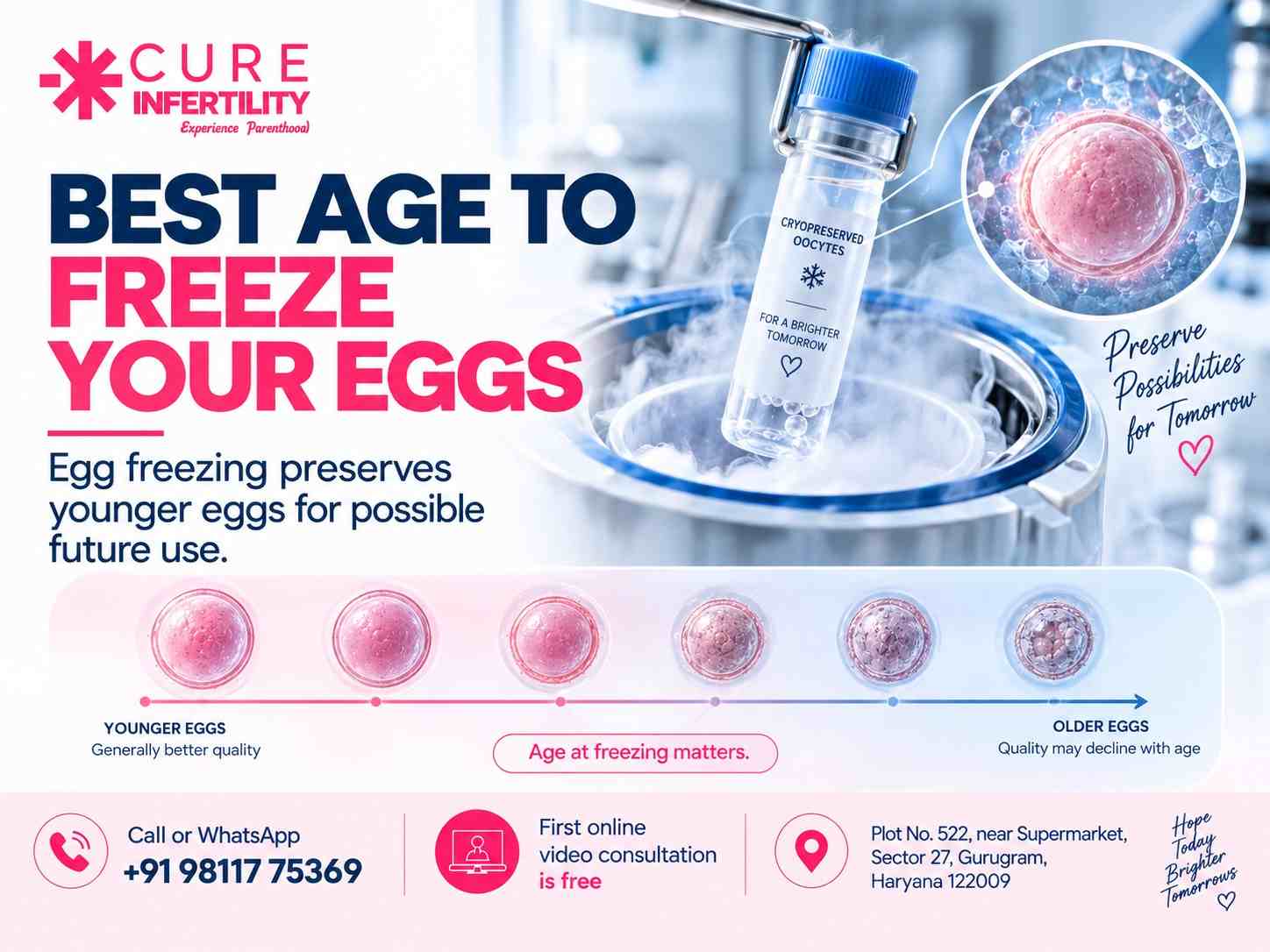
The eggs you freeze retain the quality of the age at which you froze them. That is the entire premise of the procedure, and it's why timing dominates everything else.
Freezing in the late twenties to early thirties gives the best combination of egg quality and yield per cycle. The early to mid thirties still work well. From the late thirties onward, both the number of eggs retrieved per cycle and the proportion that are chromosomally normal drop, meaning more cycles for fewer usable eggs.
The uncomfortable trade-off is that the women most likely to feel ready to spend the money and time on egg freezing are often older than the point at which it works best.
What Happens When You Want to Use Them
Frozen eggs are thawed, fertilised in the lab, and the resulting embryos are transferred to the uterus. Because the eggs have been frozen, ICSI is standard practice at this stage, since the outer layer of the egg hardens slightly during vitrification and conventional fertilisation is less reliable.
The uterus itself ages far more gracefully than the ovaries, so carrying a pregnancy later is generally feasible. What isn't guaranteed is that the eggs will produce a viable pregnancy, which is why the framing of egg freezing as an option rather than a guarantee matters. Where genetic screening of the resulting embryos is appropriate, PGT can be used before transfer.
If a cycle using frozen eggs fails, the diagnostic approach is much the same as any other, covered in our article on what causes failed IVF and repeated implantation failure.
Egg Freezing Versus Embryo Freezing
Embryo freezing generally has better established outcomes, because the embryo has already cleared the fertilisation and early development hurdles, so you know more about what you have.
Egg freezing preserves autonomy. Frozen embryos involve a partner's genetic material and consent, which becomes complicated if the relationship ends. Frozen eggs remain yours alone.
For women with a committed partner and no reason to delay fertilisation, embryo freezing is often the stronger option. For women without a partner, or who want to keep their options open, egg freezing is the appropriate route.
Risks and Realities
The procedure itself is well tolerated by most women. Bloating, mood changes and abdominal discomfort during stimulation are common. Ovarian hyperstimulation syndrome (OHSS) is the main risk, more likely in women with PCOS given their strong response to stimulation, and modern protocols have reduced its incidence considerably. Our article on PCOS covers why this group needs carefully adjusted protocols.
The retrieval carries the usual small risks of bleeding, infection and reaction to sedation.
Beyond the medical side, there are practical realities worth weighing: the cost of the cycle plus ongoing annual storage fees, the possibility of needing multiple cycles, storage duration limits under local regulation, and the fact that a meaningful proportion of women who freeze eggs never end up using them, either because they conceived naturally or because their circumstances changed.
Questions Worth Asking Before You Commit
- What is my AMH and antral follicle count, and what egg yield does that predict for me?
- How many cycles am I likely to need to bank a reasonable number of eggs?
- What are this clinic's own thaw survival and fertilisation rates?
- What are the total costs, including annual storage?
- How long can eggs be stored under current regulation?
You can see the full range of treatment options here and discuss which route fits your situation.
Where to Start
The first step is an ovarian reserve assessment, which tells you what you're actually working with and whether egg freezing makes sense for you now, later or not at all. That conversation is worth having earlier than most women have it.
You can book a free consultation with Dr. Rashmi Agrawal at the Sector 27, Gurugram clinic, read more about her background and approach, or check the FAQ page.
FAQs
What is the best age to freeze your eggs?
Broadly, the late twenties to early thirties gives the best balance of egg quality and yield per cycle. It remains reasonable into the mid thirties, with declining returns after that.
How many eggs do I need to freeze?
It varies with age, but estimates commonly suggest around 15 to 20 mature eggs for a reasonable chance at one live birth when freezing in the early thirties, with higher numbers needed at older ages. Many women need more than one cycle to reach that.
Does egg freezing guarantee a baby later?
No. It preserves eggs at their current quality, which improves your options, but attrition occurs at thawing, fertilisation, embryo development and implantation. It's a meaningful improvement in odds, not a guarantee.
Is egg freezing painful?
The injections cause mild discomfort and bloating for most women. The retrieval is done under sedation, so it isn't painful at the time, with some cramping afterwards.
How long can eggs stay frozen?
Eggs remain viable in storage for many years, since vitrification effectively halts biological activity. Practical limits are set by local regulation rather than by the biology, so check the current rules where you're storing them.
Is egg freezing the same as IVF?
The stimulation and retrieval stages are identical. The difference is what happens next: in IVF the eggs are fertilised immediately, in egg freezing they're vitrified and stored unfertilised for later use.
Can I freeze eggs if I have PCOS?
Yes, and women with PCOS often produce a high number of eggs. The main consideration is a higher risk of ovarian hyperstimulation syndrome, so the stimulation protocol needs careful adjustment.
Medically reviewed
Reviewed by Dr. Rashmi Agrawal — MBBS (Gold Medalist), MS OBGYN, FNB Reproductive Medicine. This article is general information, not a substitute for a consultation about your own reports.
Book Consultation