PGT-A in IVF: Who Needs Genetic Testing of Embryos?
Learn what PGT-A is, how genetic testing of embryos works during IVF, who may benefit from it, and what factors doctors consider before recommending testing.
PGT-A is one of the most useful tools in modern IVF and one of the most oversold. Both statements are true, and which one applies depends entirely on who is being offered it. For some couples it saves months of failed transfers. For others it adds cost, adds risk, and delivers nothing. Here is how to tell which group you are in.
What PGT-A Actually Tests
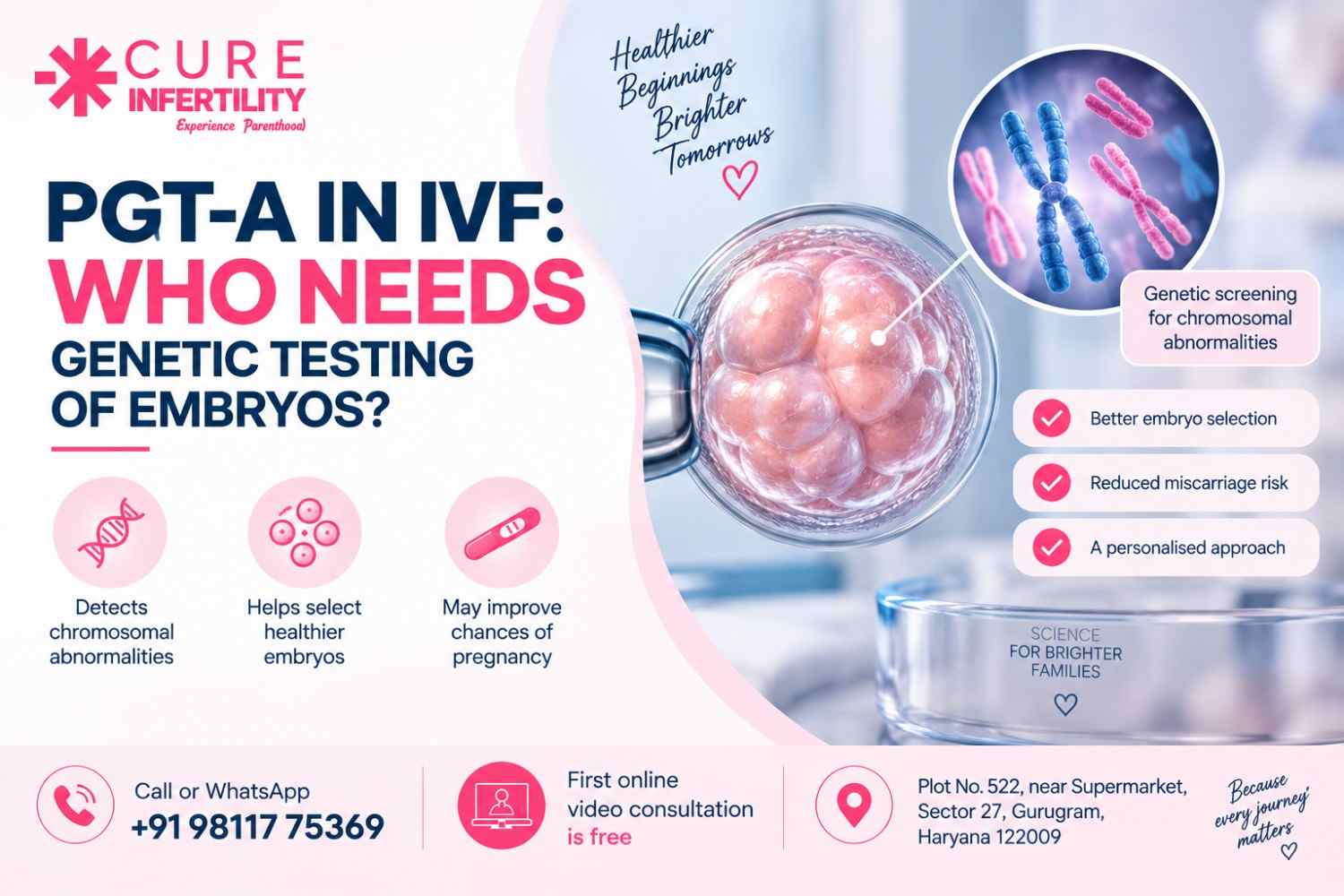
Preimplantation Genetic Testing for Aneuploidy screens embryos for the correct number of chromosomes before transfer.
A normal embryo has 46 chromosomes. An aneuploid embryo has too many or too few, and this is the single most common reason a good-looking embryo fails to implant or results in early miscarriage. Down syndrome, caused by an extra copy of chromosome 21, is one of the few aneuploidies compatible with life. Most are not.
Crucially, aneuploidy is invisible under a microscope. Embryo grading assesses shape, cell number and appearance, and a perfectly graded blastocyst has a meaningful chance of being chromosomally abnormal. That gap between how an embryo looks and what it contains is the entire reason PGT-A exists.
How the Testing Works
The embryo is grown to blastocyst stage, around day five or six. A small number of cells are then biopsied from the trophectoderm, the outer layer that goes on to form the placenta rather than the baby itself. Those cells are sent for chromosomal analysis while the embryo is frozen.
Two practical consequences follow.
First, ICSI is required rather than conventional fertilisation, because stray sperm attached to the outside of the egg would contaminate the genetic sample. Our article on IVF vs ICSI covers the wider distinction.
Second, PGT-A always means a frozen transfer, since results take time to come back. Fresh transfer is not an option in a tested cycle.
The Different Types of PGT
The abbreviations get used loosely, and they mean different things.
PGT-A screens for the number of chromosomes, and is what most people mean when they say "genetic testing of embryos."
PGT-M tests for a specific single gene disorder that the parents are known to carry, such as thalassaemia, cystic fibrosis or sickle cell disease. This is a targeted test, ordered because of a known family or carrier history.
PGT-SR is used where a parent carries a structural chromosomal rearrangement, most commonly a balanced translocation. Such a parent is entirely healthy but produces a high proportion of unbalanced embryos.
PGT-M and PGT-SR have clear, uncontroversial indications. PGT-A is the one where the argument sits.
Who PGT-A Genuinely Helps
Advanced maternal age. This is the strongest indication. The proportion of aneuploid embryos rises steadily with age, so the older the eggs, the more embryos need screening out. From the late thirties onward, PGT-A can substantially reduce time spent on transfers that were never going to succeed. The age relationship is covered in our article on IVF success rates by age.
Repeated implantation failure, particularly where good-quality embryos have repeatedly failed to implant and the uterus has been assessed as normal. This forms part of the workup described in our article on tests to consider after repeated IVF failure.
Recurrent pregnancy loss, where chromosomal abnormality is the most common cause of early miscarriage.
A known parental chromosomal rearrangement, though this is PGT-SR rather than PGT-A.
Where a large number of embryos are available, since the practical benefit of PGT-A is choosing well from a group. With eight or ten blastocysts, screening tells you which to transfer first.
Who Probably Does Not Need It
Being equally clear about the other side.
Young women in a first IVF cycle with no history of failure or loss. At younger ages the majority of embryos are chromosomally normal anyway, so the screening removes fewer and the added value is limited.
Couples with very few embryos. This is the important one, and it is counterintuitive. If you have two blastocysts, PGT-A does not increase how many normal embryos you have. It only tells you what you already had. The biopsy carries a small risk, freezing carries a small risk, and you may end up being told neither is normal, at which point the cycle ends with no transfer. Transferring both sequentially without testing would have given you the same two chances at a lower cost and without the risk.
The honest framing is this: PGT-A is a selection tool, not a treatment. It helps you choose among embryos. It does not create good ones.
What the Evidence Actually Shows
This deserves a straight answer, because clinic marketing often does not give one.
PGT-A reliably improves the implantation rate per transfer. That is well established and not in dispute. Transferring a screened normal embryo is more likely to work than transferring an unscreened one.
What is far less clear is whether it improves the cumulative live birth rate per cycle started, which is the number that actually matters to you. Several large trials have found no significant improvement in overall live birth rates in general IVF populations, particularly in younger women. In older women the picture is more favourable, and this is where most of the genuine benefit sits.
The distinction is worth understanding. Improving success per transfer is not the same as improving your chance of taking home a baby from this cycle. If screening removes embryos that would have failed anyway, your per-transfer statistics improve while your overall outcome is unchanged, and you have spent more to get there.
The Limitations Nobody Mentions Upfront
Mosaicism. Some embryos contain a mixture of normal and abnormal cells. These were once discarded as abnormal, and it is now recognised that some mosaic embryos implant and result in healthy babies. This has caused genuine difficulty, since it means viable embryos were discarded in the past, and it means mosaic results today require careful counselling rather than a simple yes or no.
The biopsy samples the placenta, not the baby. Cells are taken from the trophectoderm, which becomes the placenta. It usually reflects the embryo accurately, but not always.
False results happen in both directions, occasionally leading to a viable embryo being discarded or an abnormal one being transferred.
The biopsy itself carries a small risk to the embryo, as does the additional freeze-thaw cycle.
It does not test for everything. PGT-A checks chromosome number only. It does not screen for single gene disorders unless PGT-M is specifically added, and it does not assess anything else about embryo health.
PGT-A does not improve egg quality. It identifies which embryos are normal. It does not make abnormal ones normal, and no amount of testing changes what the eggs produced.
Cost and Practical Considerations
PGT-A adds laboratory cost on a per-embryo basis, plus the cost of freezing and a separate transfer cycle. It also adds time, since results take weeks and transfer moves to a subsequent cycle.
Where the indication is strong, that cost buys you avoided failed transfers, each of which carries its own emotional and financial weight. Where the indication is weak, it buys you information you did not need.
The Questions to Ask
If PGT-A is being recommended, these are worth asking directly:
- Which specific factor in my case makes this worthwhile, my age, my history of loss, or my previous failures?
- How many blastocysts am I likely to have, and is that enough for screening to be useful?
- What is your laboratory's approach to reporting and counselling mosaic results?
- What happens if no euploid embryo is found?
- What is the total additional cost, including freezing and the separate transfer cycle?
A clear answer tied to your own findings is a good sign. "We recommend it for everyone" is worth questioning.
The Honest Summary
PGT-A is genuinely valuable for older women, for couples with repeated implantation failure or recurrent loss, and where enough embryos exist for selection to mean something. In those situations it can meaningfully shorten the path.
It adds little for younger women in a first cycle, and it can actively work against couples with very few embryos.
Like every other step in IVF, it should have a reason attached to it that relates to you specifically. You can read more on the PGT and IVF treatment pages, and see the full range of treatment options here.
You can book a free consultation with Dr. Rashmi Agrawal at the Sector 27, Gurugram clinic to discuss whether PGT-A fits your situation, read more about her background and approach, or check the FAQ page.
FAQs
Does PGT-A guarantee a healthy baby?
No. It screens for chromosome number only. It does not test for single gene disorders unless PGT-M is added, and it does not detect structural birth defects or other conditions.
Does PGT-A improve IVF success rates?
It improves the chance of success per embryo transfer. Whether it improves the overall chance of a live birth from a cycle is less clear, particularly in younger women, and the benefit is most convincing at older ages.
Is embryo biopsy safe?
It is generally considered safe when performed at blastocyst stage by experienced embryologists, with cells taken from the layer that becomes the placenta. A small risk to the embryo exists, which is part of why the indication should be clear.
Should I do PGT-A if I only have two embryos?
Usually not. Testing does not increase the number of normal embryos you have, and you may be left with no embryo to transfer. Sequential transfer without testing often makes more sense with small numbers.
What is a mosaic embryo?
An embryo containing both normal and abnormal cells. Some mosaic embryos implant and result in healthy babies, so these results require careful counselling rather than automatic exclusion.
Does PGT-A require ICSI?
Yes. Conventional fertilisation leaves sperm attached to the outside of the egg, which can contaminate the genetic sample, so ICSI is used in all PGT cycles.
Can I do a fresh transfer with PGT-A?
No. Results take time, so embryos are frozen while testing is carried out and transfer happens in a later cycle.
Does age affect whether PGT-A is worthwhile?
Considerably. The proportion of chromosomally abnormal embryos rises with age, so the benefit of screening increases with age and is most limited in younger women.
Medically reviewed
Reviewed by Dr. Rashmi Agrawal — MBBS (Gold Medalist), MS OBGYN, FNB Reproductive Medicine, DMC Reg. No. 76953 (2016). This article is general information, not a substitute for a consultation about your own reports.
Book Consultation