When to Take a Pregnancy Test After Embryo Transfer
Wondering when to test after embryo transfer? Learn why the clinic date matters, how home tests differ from beta-hCG blood tests, and why early results can mislead.
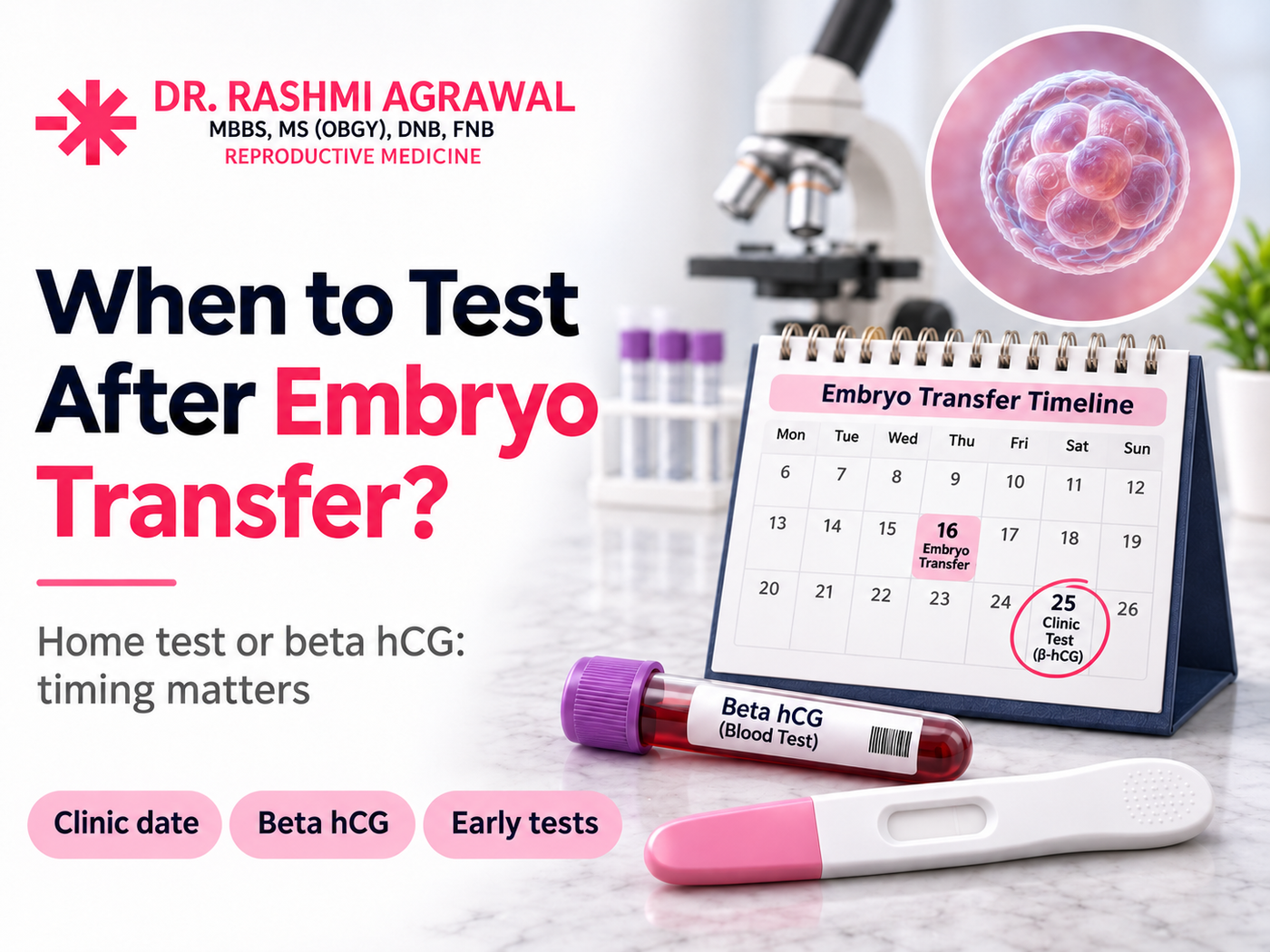
The days after an embryo transfer can make every symptom feel like a clue. A home pregnancy test may be sitting in the drawer, but testing early can give an answer that your clinic cannot yet trust.
Short answer: Take the pregnancy test on the date your fertility clinic gives you. Many clinics schedule it roughly two weeks after embryo transfer, but their exact timing and test method vary. An early negative can miss a pregnancy, and an early positive after a fresh cycle may reflect the hCG trigger injection. Keep taking prescribed support medicines until your clinic tells you what to do, even if you spot or an early home test looks negative.
This article explains why the date matters, how urine tests differ from a beta-hCG blood test, and what to do with the result.
Why is there a wait after embryo transfer?
The embryo needs time to implant before a pregnancy produces enough hCG for a test to detect. Testing too soon can mean hCG is still below the test's detection level. In a fresh IVF cycle, an hCG trigger injection used before egg collection may still affect an early test and produce a misleading positive. Different treatment protocols and test types are why a generic online “day-by-day” chart cannot replace your clinic's date.
The NHS advises using the test on the date provided by your clinic for an accurate result. Some NHS services use a home urine test; others arrange a beta-hCG blood test. Our frozen embryo transfer guide explains where testing fits in the wider FET timeline.
Does a Day 3 or Day 5 transfer change the test date?
It can change how the clinic calculates the testing window because the embryo was at a different developmental stage at transfer. A Day 5 blastocyst and a Day 3 embryo are not identical starting points. Yet there is no reliable universal “test on day X” rule for every clinic and medication protocol. Use the written date your team gave you, whether the transfer was fresh or frozen.
| If you are wondering... | The safer answer |
|---|---|
| “Can I test a week after transfer?” | An early result may mislead. Wait for the clinic date. |
| “Does a Day 5 transfer mean I can test sooner?” | Your clinic may set a different date, but do not calculate one from embryo age alone. |
| “Can I use a home test instead of the scheduled blood test?” | Ask the clinic; it may need a quantitative beta-hCG result for your care plan. |
| “I am spotting before test day. Should I skip testing?” | No. Follow the planned test date and tell the clinic about bleeding. |
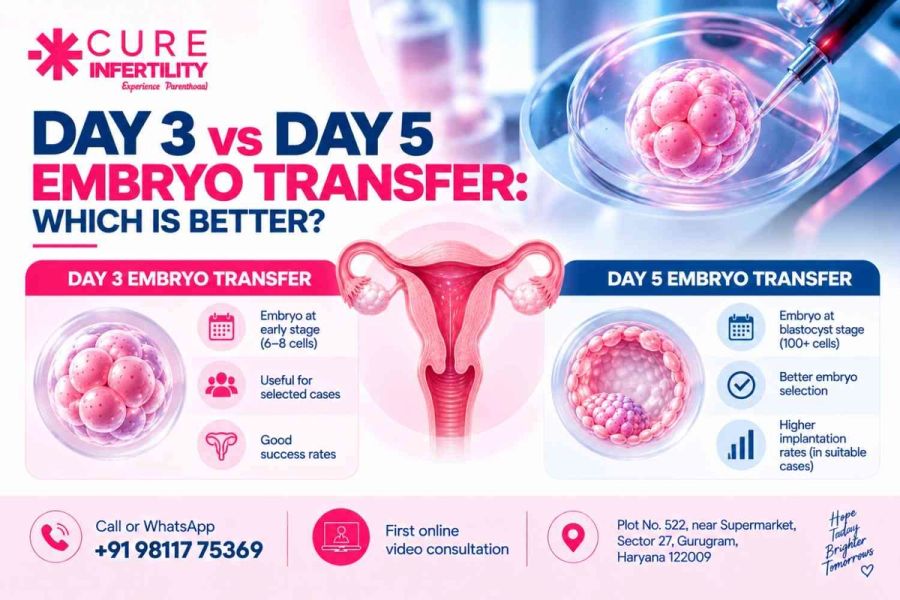
For the differences between embryo stages, read Day 3 versus Day 5 embryo transfer.
Home urine test versus beta-hCG blood test
A home test detects hCG in urine and usually reports positive or negative. A beta-hCG blood test measures the hormone level, so the clinic can interpret it against its protocol and decide whether another blood test is needed. One number alone does not establish that a pregnancy is developing normally; follow-up testing and, later, ultrasound may be needed.
Do not compare your beta-hCG value with an online chart without checking the exact number of days from transfer, embryo stage and your clinic's lab range. A low or uncertain result may lead the team to repeat the test rather than making a final decision immediately.
What can make an early result misleading?
Testing before the advised date is the main problem. A negative urine test can occur before enough hCG is present. After a fresh cycle, an hCG trigger injection can make an early positive hard to interpret. Urine concentration, test sensitivity and how the test is used also matter. A faint line is not a substitute for the result your clinic requested.
Symptoms are unreliable too. Breast tenderness, cramping and nausea may come from progesterone or other treatment medicines, and their absence does not prove failure. Our guide to symptoms after embryo transfer explains why symptoms cannot confirm implantation.
Should you keep taking progesterone if you bleed or test negative early?
Yes, follow the medication plan until the fertility team tells you to change it. Cambridge University Hospitals advises patients to continue prescribed medicines and test on the advised date even if bleeding starts beforehand. Call your clinic for instructions if you have missed a dose or are unsure whether to continue; do not stop treatment based on a social-media timeline or an early home test.
Seek prompt advice for heavy bleeding, severe abdominal pain, fever, feeling faint or otherwise feeling unwell. These symptoms need clinical assessment regardless of what a home test says.
What happens after the scheduled test?
Tell your clinic the result, whether it is positive or negative, and follow its next-step instructions. With a positive result, the team may arrange a repeat blood test or an early pregnancy scan at the appropriate time. With a negative result, the clinic will advise when to stop medicines and whether to plan a review. Do not assume either pathway from an early test.
If you have not been given a test date or you are unsure which test to use, contact Dr. Rashmi Agrawal's clinic for your cycle-specific instructions.
Frequently Asked Questions
How many days after embryo transfer should I test?
Use the date on your clinic's instructions. Many services test around two weeks after transfer, but the exact timing varies by protocol and test type.
Can a test be negative and later positive?
Yes, if the first test was taken too early. That is one reason clinics provide a specific testing date.
Can a fresh-cycle trigger shot cause a false positive?
An hCG trigger injection may still be detectable if you test early. Tell the clinic which medicines you received and use the scheduled test to guide care.
Is a blood test better than a home test?
The blood test gives a quantitative beta-hCG value, while a home urine test usually gives a positive or negative result. Use the method your clinic requests; both need the right timing.
Should I test if I have spotting?
Yes, on the scheduled date. Spotting does not reliably tell you the outcome. Contact the clinic sooner if bleeding is heavy or accompanied by significant pain.
Should I stop progesterone after a negative home test?
Do not stop prescribed support medicines on the basis of an early home test. Follow the clinic's instructions after the scheduled test.
References
- NHS. IVF: finding out if you are pregnant. Advice to test on the date given by the clinic.
- Gateshead Health NHS Foundation Trust. Pregnancy Test (beta-hCG). Timing of blood tests and why an early positive can reflect a trigger injection.
- Cambridge University Hospitals NHS Foundation Trust. Patient information after embryo transfer. Medication, test-date and symptom advice.
- Guy's and St Thomas' NHS Foundation Trust. Results of your pregnancy test. Advice not to test before the clinic date.
Medically reviewed
Reviewed by Dr. Rashmi Agrawal — MBBS (Gold Medalist), MS OBGYN, FNB Reproductive Medicine, DMC Reg. No. 76953 (2016). This article is general information, not a substitute for a consultation about your own reports.
Book Consultation