Why Do Good-Quality Embryos Fail to Implant?
A top grade is no guarantee. Learn why even the best embryos sometimes fail to implant, how ESHRE defines a real pattern of failure, and what to do after 1, 2 or 3 failed transfers.
You were told the embryo was excellent. A top grade, a good blastocyst, maybe even chromosomally tested. And the pregnancy test was still negative. It is one of the most confusing outcomes in IVF, because it seems to contradict everything you were told about your chances.
The most important thing to understand is that a good embryo failing to implant is not unusual, and on its own it does not mean something is wrong. This article explains why even the best embryos sometimes do not implant, how to tell the difference between bad luck and a real problem, and what should happen after one, two or three failed transfers.
If you have already had several failed transfers and want the full investigation, our articles on what causes failed IVF and tests to consider after repeated failure cover that workup in detail.
Even the Best Embryo Is a Probability, Not a Certainty
Human reproduction is surprisingly inefficient, even under ideal conditions. In natural conception among young, fertile couples, the chance of pregnancy in any single month is well below half.
IVF does not change that underlying biology. Even a chromosomally normal blastocyst, transferred into a well-prepared uterus, does not implant every time. Published series of single euploid blastocyst transfers report live birth rates in the region of 60 percent per transfer. That is a very good chance. It also means that roughly four in ten of these best-case transfers do not result in a baby.
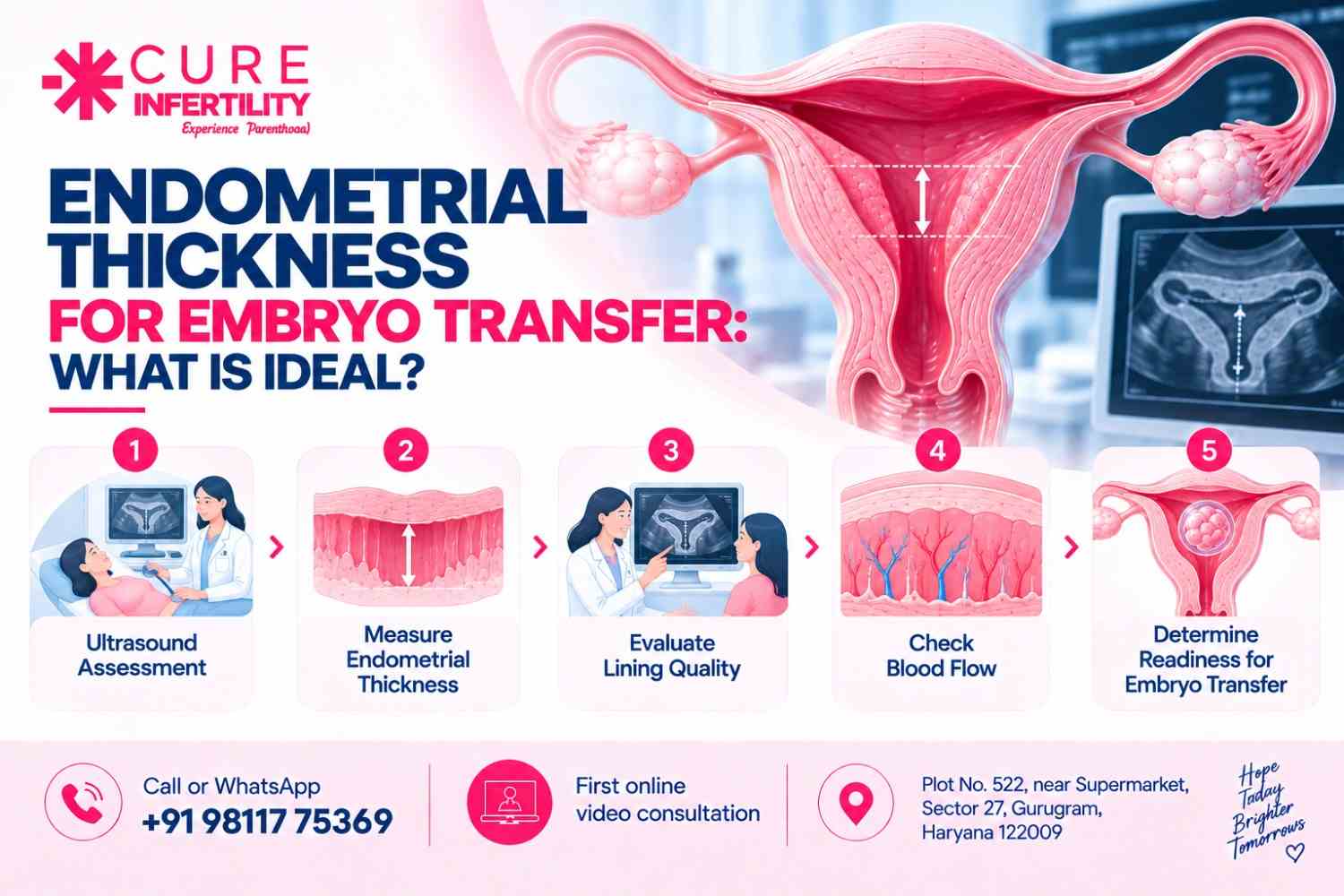
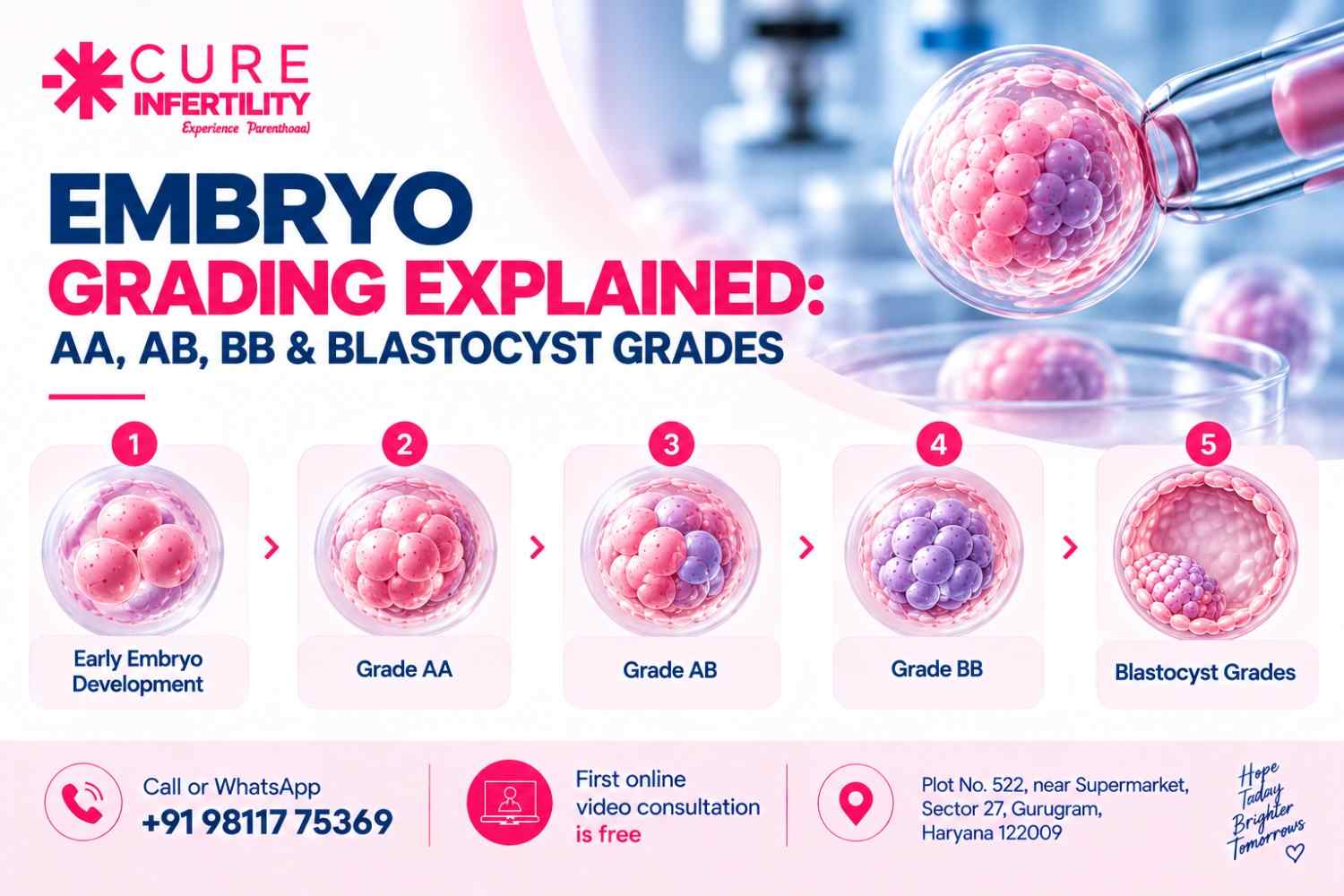
For embryos that have not been genetically tested, the chance per transfer is lower, because some good-looking embryos are chromosomally abnormal, and grading cannot see that. Our article on embryo grading explains why a top grade describes appearance, not chromosomes.
So when a good embryo fails, the most likely explanation, by a wide margin, is simply that this particular embryo was not going to implant. That is frustrating, but it is not a diagnosis.
The Arithmetic of Bad Luck
A simple illustration helps put failed transfers in perspective. These figures are approximate and assume each transfer is independent, but they show the shape of the problem.
If each transfer of a chromosomally normal embryo has roughly a 60 percent chance of success:
- One failed transfer happens about 40 percent of the time, purely by chance
- Two failed transfers in a row happen in roughly one in six couples
- Three failed transfers in a row happen in roughly one in sixteen
With untested embryos, where the chance per transfer is lower, consecutive failures by chance alone are more common still.
This is why a single failed transfer, even with a perfect embryo, is not a reason to change everything. And it is why repeated failures eventually become worth investigating: at some point, chance becomes a less likely explanation than a specific, findable cause.
When Does Bad Luck Become a Pattern?
The European Society of Human Reproduction and Embryology (ESHRE) has addressed exactly this question. Its 2023 recommendations define recurrent implantation failure not by a fixed number of transfers, but by probability: it applies when the embryos already transferred should, together, have given at least a 60 percent chance of implantation, and none has implanted.
In practice, that means the threshold depends on the embryos. For a younger woman transferring good-quality or genetically tested blastocysts, two or three failures may reach it. For an older woman with untested embryos, more transfers would be expected before failure is considered unusual, because each embryo’s individual chance is lower.
This is a much more useful way of thinking than "three strikes". It ties the decision to investigate to how surprising the failures actually are.
Why a Good Embryo Might Not Implant
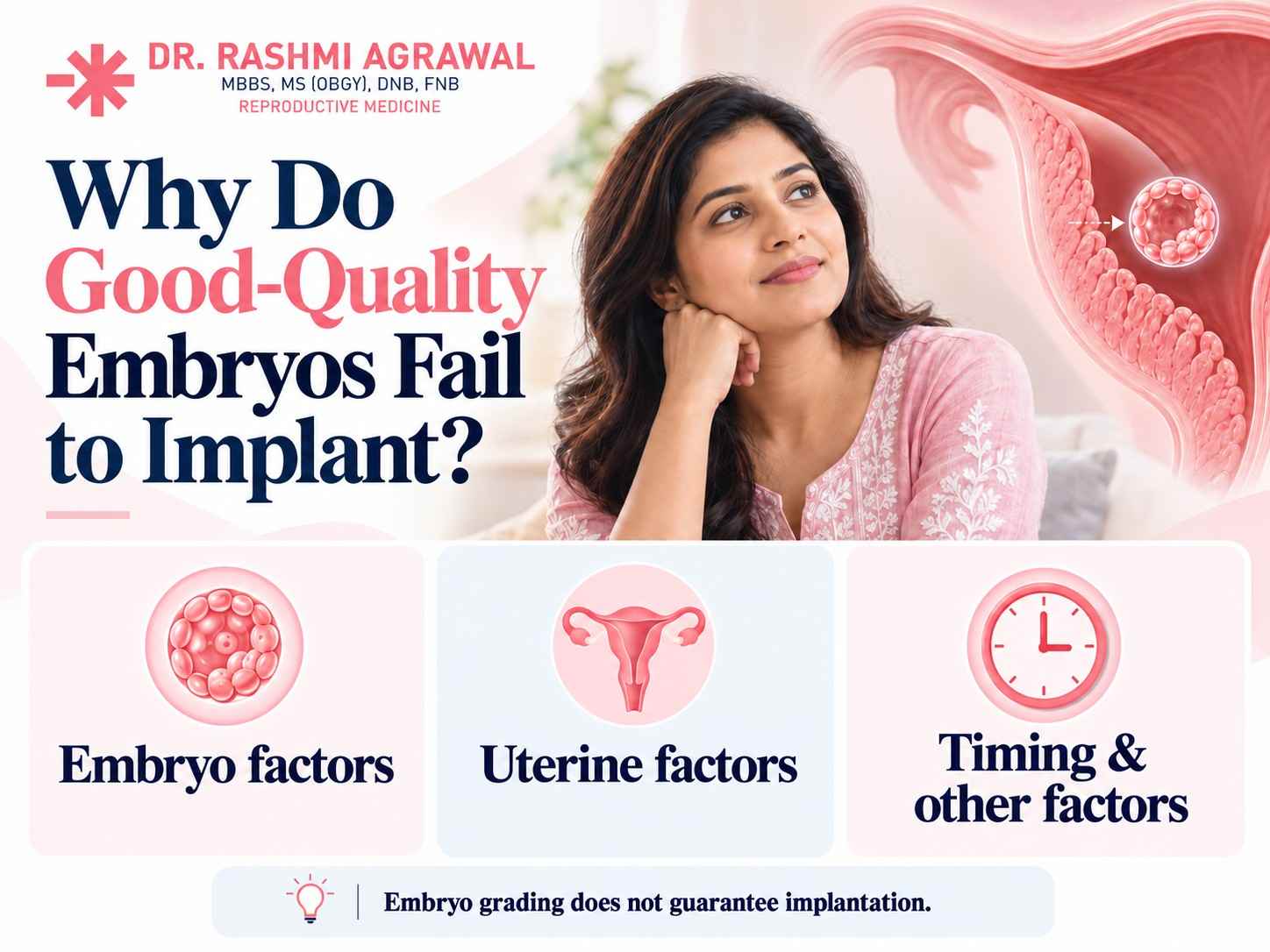
When chance is not the whole explanation, the cause usually falls into one of a few groups. These are covered in depth in our failed IVF article, so this is a summary.
The embryo itself. Chromosomal abnormality is the most common reason by far, which is why a top grade is no guarantee. Where it has been ruled out with PGT-A, the embryo becomes a less likely culprit. Sperm DNA damage can also affect embryo development without showing up in grading. Our article on the sperm DNA fragmentation test explains when it is worth checking.
The uterine cavity. Polyps, fibroids pressing into the cavity, scar tissue or a septum can prevent implantation without causing any symptoms. Our article on hysteroscopy before IVF explains how these are found and treated.
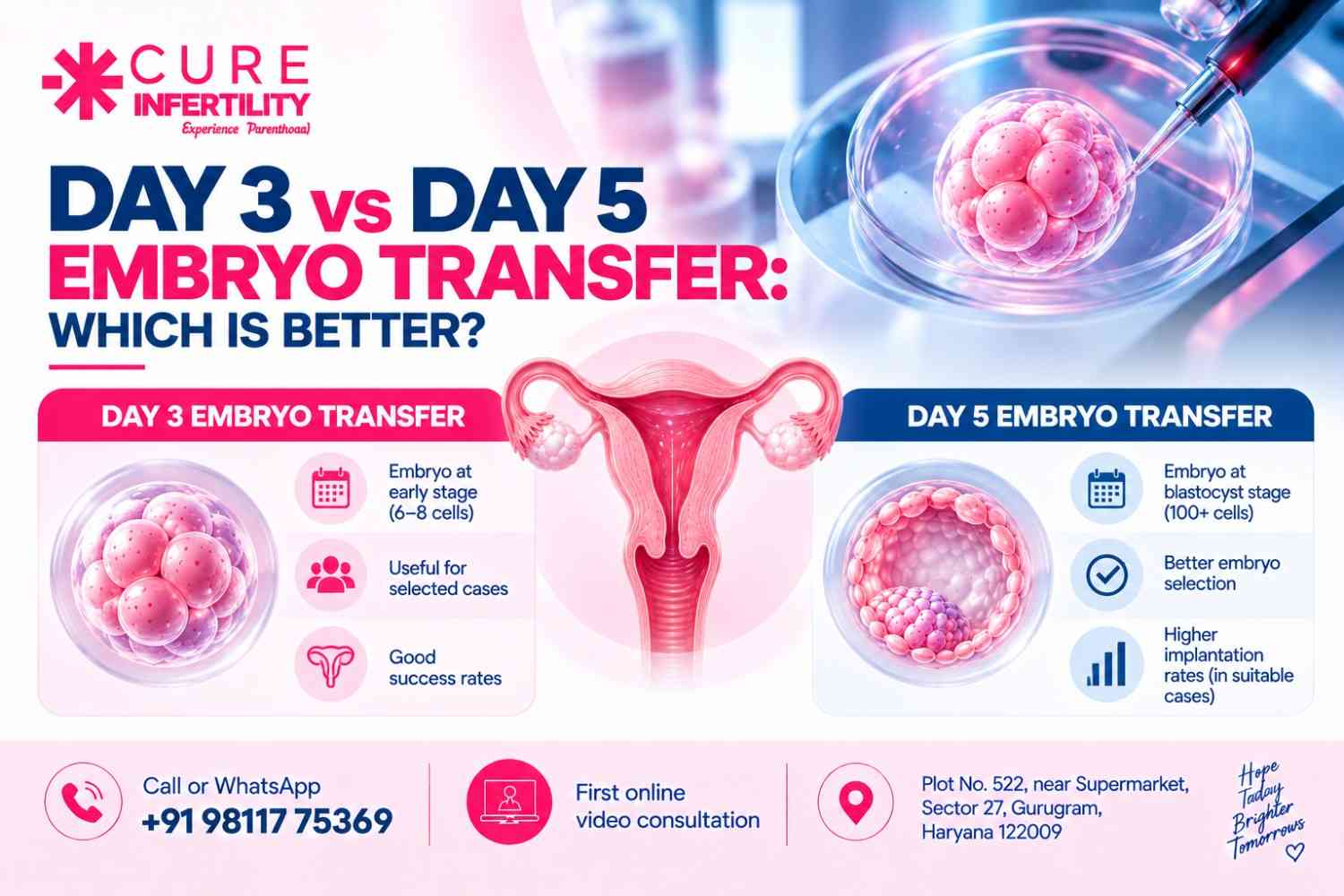
The lining. A thin lining reduces the chance of implantation, and chronic endometritis, a silent inflammation of the lining, can do the same. Our article on endometrial thickness covers this.
Timing. The lining is only receptive for a short window. If the transfer falls outside it, even a perfect embryo can fail. In selected women with repeated failures, an endometrial biopsy and ERA test can check whether that window is displaced.
Fluid from a blocked tube. A hydrosalpinx can leak fluid into the uterus that is toxic to embryos, and treating it improves outcomes.
Other factors such as untreated thyroid disease or antiphospholipid antibodies are less common but worth checking in the right circumstances.
What Should Happen After One Failed Transfer
Usually, not very much needs to change.
A single failed transfer of a good embryo is most often chance. If you have further frozen embryos and your basic workup was complete, it is generally reasonable to proceed with another transfer.
It is worth a brief review, though: was the lining a good thickness and pattern, was the transfer technically straightforward, was the progesterone timing correct, and is there anything in your history that was not fully assessed before? If the uterine cavity has never been properly checked, this is a sensible point to consider it.
What you should not do after one failure is accept a long list of expensive add-ons. Most of them have limited evidence, and after a single failure the odds were always that the next transfer might work anyway.
After Two Failed Transfers
Two failures of good-quality embryos is the point at which a more structured review becomes worthwhile, particularly if the embryos were genetically tested or you are younger.
This review usually includes a careful look at the uterine cavity, often with hysteroscopy, assessment for chronic endometritis, a check for hydrosalpinx, thyroid function, and a review of the male partner’s results. If embryos were not tested and you are older, it may include a discussion about whether genetic testing of future embryos makes sense.
After Three or More Failed Transfers
At this point, especially with good-quality or tested embryos, a full recurrent implantation failure workup is justified. Our article on tests to consider after repeated IVF failure sets out that sequence. It should also include an honest conversation about realistic options, so that decisions are based on evidence rather than on trying something new each time.
Treatments to Be Cautious About
After failed transfers, couples are often offered a range of treatments aimed at "improving implantation": immune treatments such as intralipids and steroids, endometrial scratching, various supplements, and certain other add-ons.
Some of these have a reasonable rationale in specific situations. Many have limited or conflicting evidence and add cost without a clear benefit. Before agreeing to any of them, it is fair to ask what specific finding in your case the treatment addresses, and what evidence supports it.
The Emotional Side
A negative test after a top-grade embryo can feel more devastating than one after a mediocre embryo, because expectations were higher. Many couples also feel the failure must be their fault: something they ate, how much they moved, whether they were stressed. It was not. Implantation is not influenced by ordinary daily activity, and the most common cause is the embryo’s own chromosomes, which nothing you did could change.
It is entirely reasonable to take time before the next transfer to recover emotionally, as long as you are not losing time that matters medically.
Questions Worth Asking After a Failed Transfer
- Given the embryos transferred so far, how unusual is this result?
- Was my lining, transfer and progesterone timing as expected?
- Has my uterine cavity been properly assessed?
- Were the embryos genetically tested, and would testing help in future?
- At what point would you recommend a fuller investigation?
You can read more on the IVF and PGT treatment pages, and see the full range of treatment options here. If you have frozen embryos remaining, our article on frozen embryo transfer explains the next step.
You can book a free consultation with Dr. Rashmi Agrawal at the Sector 27, Gurugram clinic to review your previous cycles in detail, read more about her background and approach, or check the FAQ page.
FAQs
Why did my good-quality embryo fail to implant?
Most often because of a chromosomal abnormality, which grading cannot detect. Even chromosomally normal embryos do not implant every time. A single failure is usually chance rather than a sign of a specific problem.
What is the success rate of a single euploid embryo transfer?
Published series report live birth rates in the region of 60 percent per transfer, which means a substantial minority of even the best embryos do not result in a pregnancy.
How many failed transfers before investigation?
There is no fixed number. ESHRE defines recurrent implantation failure by probability: when the embryos transferred should together have given at least a 60 percent chance of implantation and none has implanted. For many younger women with good embryos, that is around two to three transfers.
Should I change my treatment after one failed transfer?
Usually not significantly. A brief review is sensible, but a single failure is most often chance, and proceeding with another transfer is generally reasonable.
Did something I did cause the embryo to fail?
Almost certainly not. Ordinary activity, diet and daily stress do not prevent implantation, and the most common cause lies in the embryo itself.
Will PGT-A stop my embryos from failing?
It removes chromosomally abnormal embryos from consideration, which is the most common cause of failure. It does not guarantee implantation, since even euploid embryos do not implant every time.
Are immune treatments useful after failed transfers?
Some have a rationale in specific situations, but many have limited or conflicting evidence. Ask what finding in your case a treatment addresses before agreeing to it.
References
- ESHRE Working Group on Recurrent Implantation Failure. ESHRE good practice recommendations on recurrent implantation failure. Human Reproduction Open, 2023. https://academic.oup.com/hropen/article/2023/3/hoad023/7198324
- Live birth rate after transfer of a single euploid blastocyst with and without a multinucleated embryo. https://pmc.ncbi.nlm.nih.gov/articles/PMC12503623/
Medically reviewed
Reviewed by Dr. Rashmi Agrawal — MBBS (Gold Medalist), MS OBGYN, FNB Reproductive Medicine, DMC Reg. No. 76953 (2016). This article is general information, not a substitute for a consultation about your own reports.
Book Consultation