Day 3 vs Day 5 Embryo Transfer: Which Is Better?
Understand the differences between Day 3 and Day 5 embryo transfer in IVF, including embryo development, blastocyst grading, potential benefits, and the factors doctors consider when choosing the transfer day.
Most couples going through IVF are told at some point whether their embryo will be transferred on day 3 or day 5. Many assume day 5 is simply the better, more advanced option. On a per-transfer basis, it usually is. But "better per transfer" and "better for your overall chance of a baby" are not quite the same thing, and the right choice depends heavily on how many embryos you have. This article explains the difference and when each makes sense.
What Day 3 and Day 5 Actually Mean
The day refers to how long the embryo has developed in the laboratory after fertilisation, counting the day of egg retrieval as day 0.
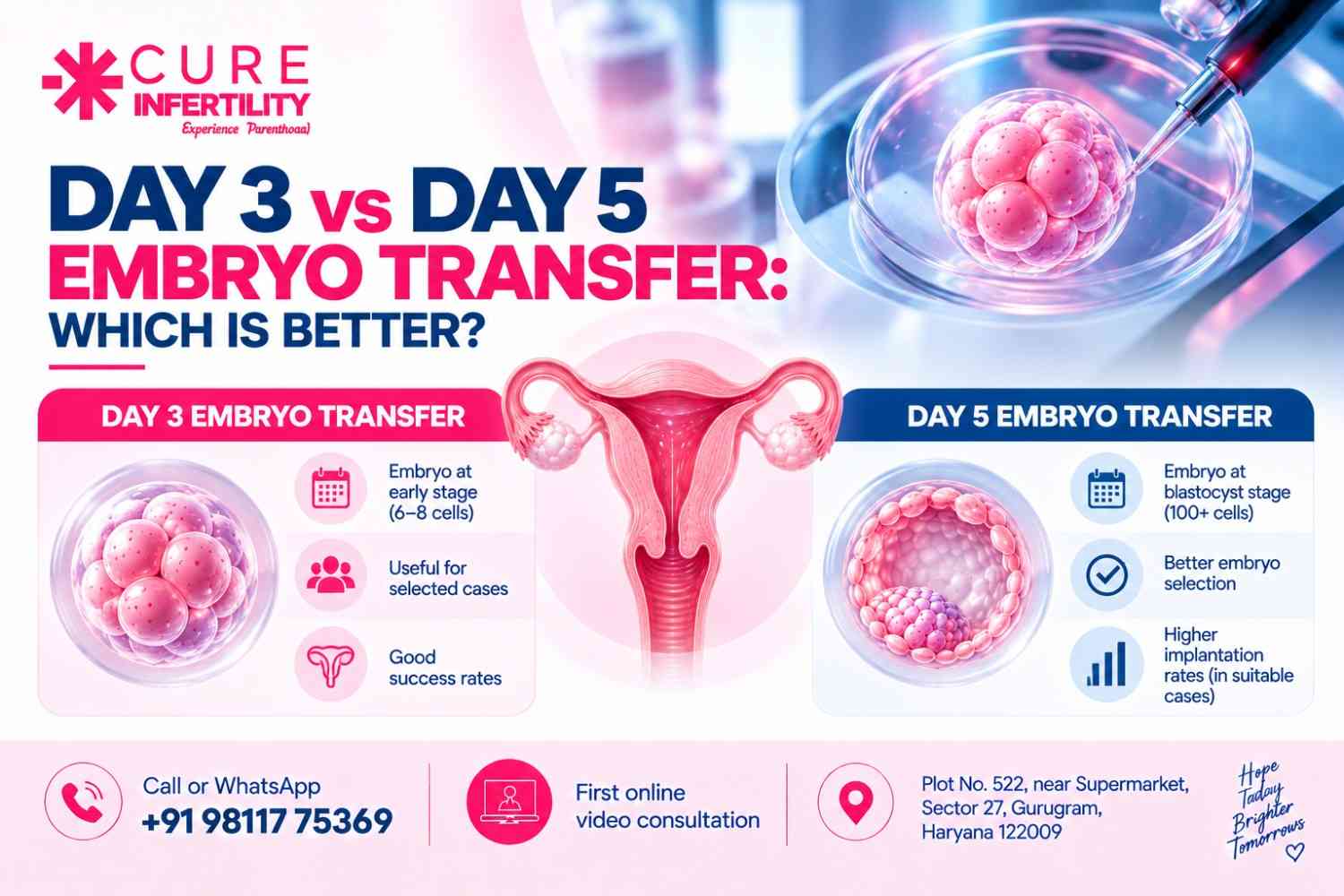
A day 3 embryo is at the cleavage stage, usually six to eight cells. It is still running largely on instructions stored in the egg.
A day 5 embryo is a blastocyst, with a hundred or more cells organised into two distinct groups: the inner cell mass, which becomes the baby, and the trophectoderm, which becomes the placenta. Some embryos reach this stage on day 6 instead.
Between day 3 and day 5, the embryo switches to its own genome. A significant proportion of embryos stop developing at exactly this point, often because of chromosomal abnormalities. Our article on what happens after egg retrieval explains this transition in detail.
Side by Side
| Day 3 transfer | Day 5 transfer | |
|---|---|---|
| Embryo stage | Cleavage, 6 to 8 cells | Blastocyst, 100+ cells |
| Time in the lab | Shorter | Longer |
| Embryo has passed genome activation | No | Yes |
| How much the lab can tell about the embryo | Less | More |
| Live birth rate per transfer | Lower on average | Higher on average |
| Matches natural timing in the uterus | Earlier than natural | Closer to natural |
| Risk of having no embryo to transfer | Lower | Higher, if embryos arrest |
| Suitable for genetic testing (PGT) | Not routinely | Yes |
| Suits single embryo transfer | Less ideal | Well suited |
Why Day 5 Tends to Do Better Per Transfer
Self-selection. Embryos that are going to stop developing usually do so by day 4 or 5. By waiting until day 5, the laboratory sees which embryos are capable of continuing, and transfers one of those. At day 3, it is choosing between embryos that look similar but will not all develop further.
Better synchrony with the uterus. In natural conception, the embryo reaches the uterine cavity at around day 4 to 5. A blastocyst transfer places the embryo into the uterus at roughly the stage it would naturally arrive. A day 3 embryo is placed earlier than it would normally be there.
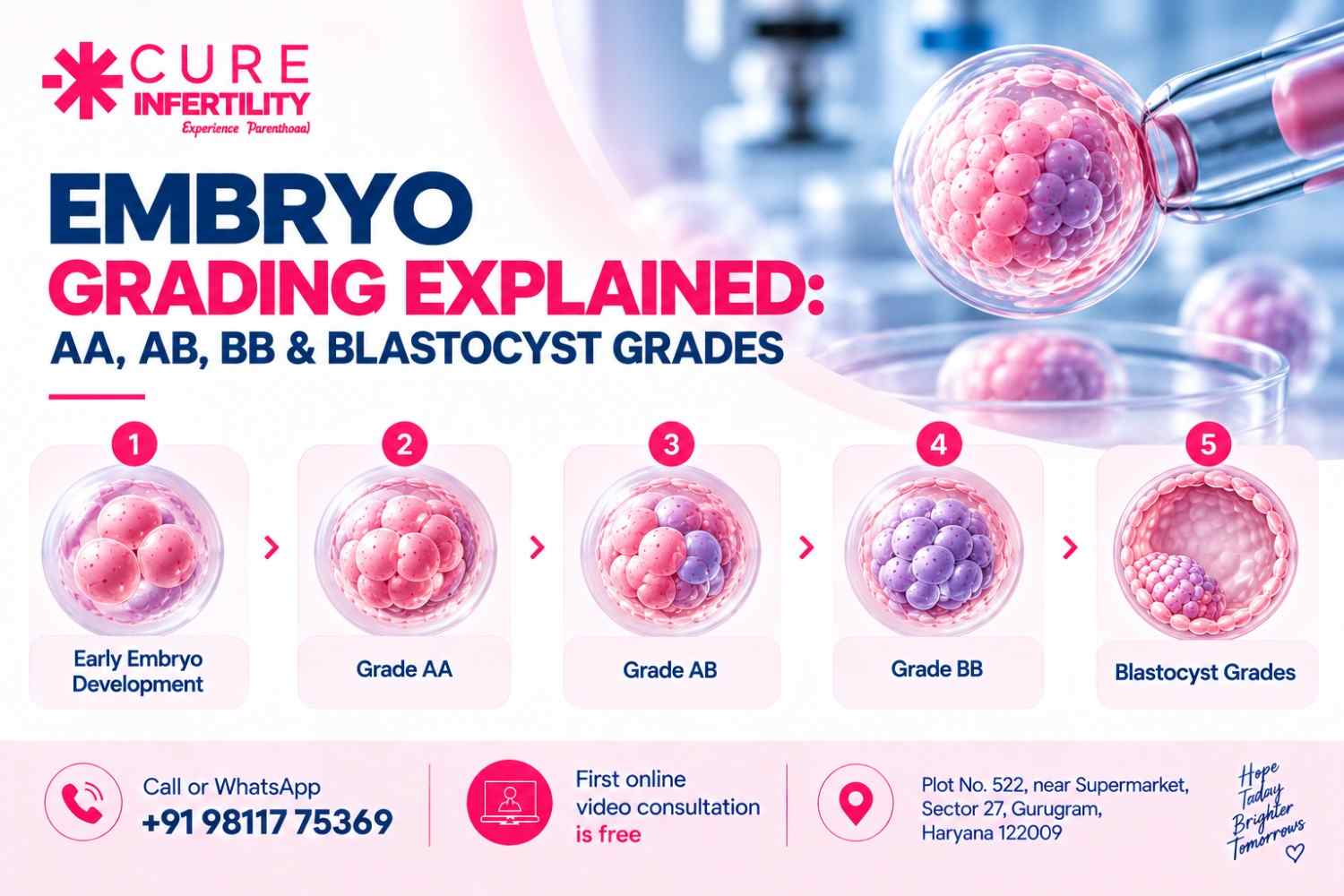
More information for selection. Blastocysts can be graded in more detail, using the expansion stage, inner cell mass and trophectoderm. Our article on embryo grading explains what those grades mean.
A Cochrane review of randomised trials found that fresh blastocyst transfer is associated with a higher live birth rate per transfer than cleavage-stage transfer, though it rated that evidence as low quality.
The Catch: Per Transfer Is Not the Same as Overall
This is the part most clinic pages leave out.
The higher success rate per blastocyst transfer partly reflects the fact that weaker embryos have already been filtered out in the laboratory. Those embryos are not lost because of blastocyst culture. Most of them would not have resulted in a pregnancy anyway. The filtering moves the failure from the uterus to the laboratory dish, which is faster and less emotionally costly, but it does not necessarily create additional pregnancies.
What really matters is the cumulative chance of a baby from one egg retrieval, counting the fresh transfer and every frozen transfer that follows. On that measure, the evidence is less clear. The same Cochrane review was uncertain whether blastocyst culture improves cumulative pregnancy rates, and a large study comparing the two strategies over a full treatment cycle found broadly similar cumulative live birth rates.
The practical meaning is this: day 5 transfer usually gets you to the answer faster, with fewer failed transfers along the way. It does not clearly increase the total number of babies a given set of embryos can produce.
When Day 5 Makes the Most Sense
You have several good-quality embryos on day 3. Extended culture helps the laboratory identify which one to transfer first, and avoids transferring embryos that would not have developed.
Single embryo transfer is the plan. Choosing one blastocyst gives a better chance per transfer while avoiding the risks of twins.
Genetic testing is planned. PGT-A and other forms of testing are performed on cells taken from the blastocyst, so embryos must be cultured to day 5 or 6. Our article comparing PGT-A, PGT-M and PGT-SR explains when testing is appropriate.
A freeze-all approach is being used. Most centres freeze embryos at the blastocyst stage, which allows only developing embryos to be stored and transferred later. Our article on frozen embryo transfer covers that process.
Previous day 3 transfers have failed with apparently good embryos. Extended culture provides more information about whether embryos are developing normally.
When Day 3 May Be Reasonable
Very few embryos. If only one or two embryos are available, extended culture does not create more choice, and there is a risk that neither reaches blastocyst. Some couples and doctors prefer a day 3 transfer in this situation rather than risk a cycle ending with no transfer. This is a genuine judgement call, and the evidence for one approach over the other in this group is mixed.
Previous cycles where no embryo reached blastocyst, depending on the reasons and the laboratory.
Laboratory considerations. Blastocyst culture places greater demands on laboratory conditions. Outcomes with extended culture depend on how consistently a lab achieves good blastocyst development.
The honest framing for couples with very few embryos is that a day 3 transfer does not rescue embryos that would have stopped developing anyway. It does, however, guarantee that a transfer takes place, which some couples value for its own sake.
If No Embryo Reaches Day 5
This is the main risk of extended culture, and it should be discussed before the cycle rather than after.
A cycle where no embryo reaches blastocyst is painful, but it is also informative. It strongly suggests that the embryos in that cycle were not capable of continuing, which would likely have been the case in the uterus too. It points toward egg quality, sperm factors or the stimulation protocol, all of which can be reviewed before the next attempt. Our articles on what causes failed IVF and IVF success rates by age explain those factors.
Multiple Pregnancy and Other Considerations
Because blastocysts implant more efficiently, transferring two blastocysts carries a meaningfully higher chance of twins. The Cochrane review found some evidence that blastocyst transfer probably increases multiple pregnancy when equal numbers of embryos are transferred. This is a strong reason to transfer a single blastocyst in most cases.
Some studies have also linked extended embryo culture to a slightly higher rate of identical twins, though this remains uncommon.
Questions Worth Asking Your Clinic
- How many embryos are developing well on day 3?
- What is your laboratory's typical blastocyst development rate?
- If we culture to day 5 and no embryo reaches blastocyst, what would that tell us?
- Are you planning a fresh transfer or freezing all embryos?
- Will a single embryo be transferred?
Once your transfer is done, our article on what to expect after embryo transfer covers the two-week wait.
You can read more on the IVF and PGT treatment pages, and see the full range of treatment options here.
You can book a free consultation with Dr. Rashmi Agrawal at the Sector 27, Gurugram clinic to discuss which approach suits your cycle, read more about her background and approach, or check the FAQ page.
FAQs
Is day 5 embryo transfer better than day 3?
Per transfer, day 5 blastocyst transfer generally has a higher live birth rate. Over a whole treatment cycle, including frozen transfers, the advantage is less clear, because extended culture mainly filters out embryos that would not have succeeded anyway.
Why do some embryos not reach day 5?
Many embryos stop developing between day 3 and day 5, when the embryo switches to its own genome. Chromosomal abnormalities are a common reason. This would usually also have happened in the uterus.
Should I choose day 3 transfer if I have only one or two embryos?
It is a reasonable option to discuss. Day 3 transfer avoids the risk of having no embryo to transfer, but it does not improve the embryos' underlying potential. The decision depends on your history and your clinic's laboratory.
Is a day 5 blastocyst more likely to cause twins?
If two blastocysts are transferred, yes, because blastocysts implant more efficiently. Transferring a single blastocyst largely avoids this.
Can day 3 embryos be frozen?
Yes, though most centres now prefer to freeze at the blastocyst stage, which allows only developing embryos to be stored.
Do I need day 5 transfer for PGT?
Yes. Genetic testing is performed on cells taken from a blastocyst, so embryos must be cultured to day 5 or 6.
When does a day 5 embryo implant?
Usually within one to five days after transfer, as the blastocyst hatches, attaches and embeds into the lining. A day 3 embryo takes roughly two days longer.
References
- Glujovsky D, et al. Cleavage-stage versus blastocyst-stage embryo transfer in assisted reproductive technology. Cochrane Database of Systematic Reviews, 2022. https://www.cochranelibrary.com/cdsr/doi/10.1002/14651858.CD002118.pub6/abstract
- Cumulative live birth rates after fresh and vitrified cleavage-stage versus blastocyst-stage embryo transfer in the first treatment cycle. Human Reproduction. https://academic.oup.com/humrep/article/31/11/2442/2274323
Medically reviewed
Reviewed by Dr. Rashmi Agrawal — MBBS (Gold Medalist), MS OBGYN, FNB Reproductive Medicine. This article is general information, not a substitute for a consultation about your own reports.
Book Consultation