Frozen embryo transfer has quietly become the standard way many IVF pregnancies happen. A decade ago it was the fallback for spare embryos. Today, at many centres, every embryo is frozen first and transferred in a later cycle by design. If you have embryos in storage, or have been told your clinic plans a freeze-all cycle, this article explains what the transfer cycle actually involves, how long it takes, and what affects your chance of success.
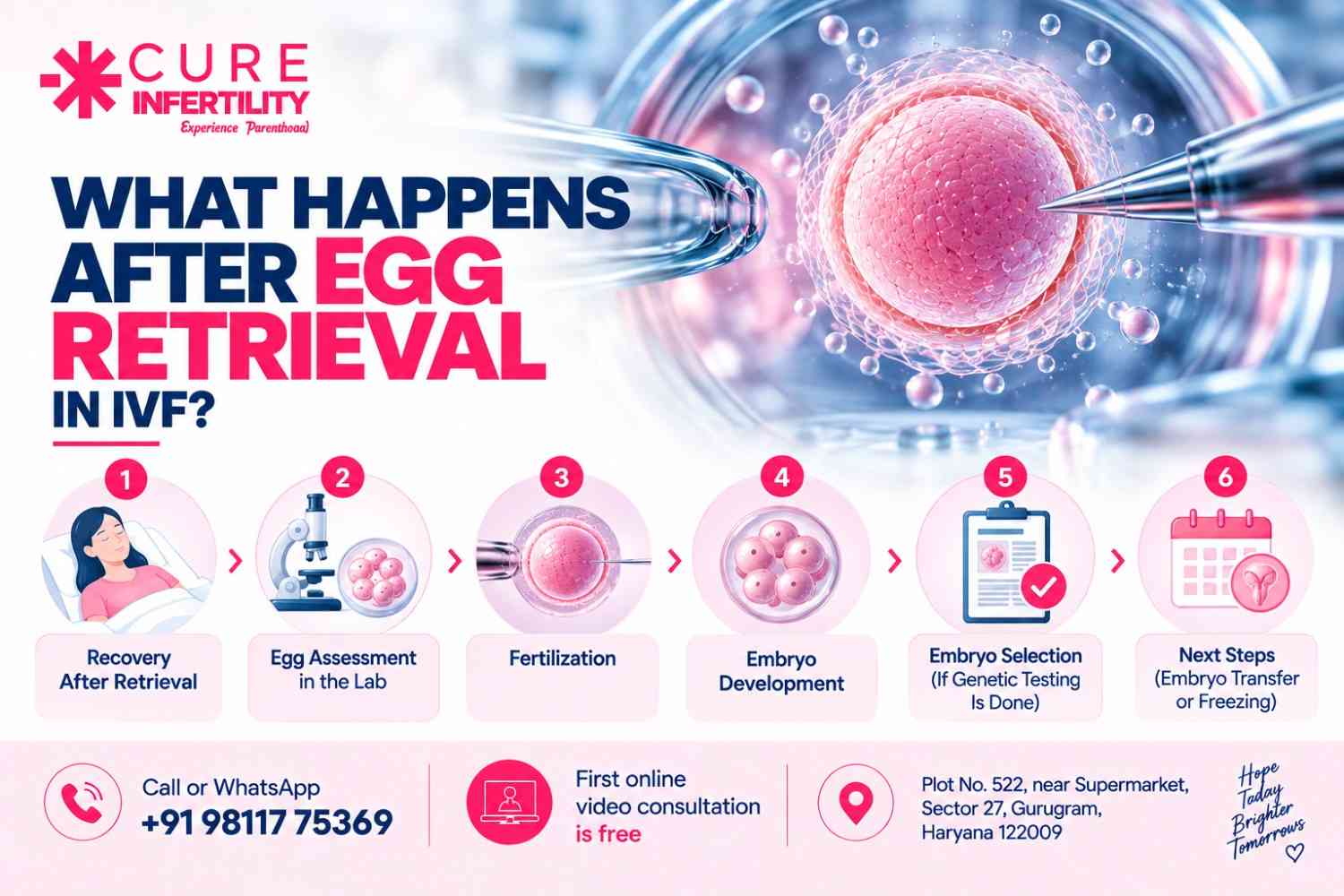
For why embryos are frozen in the first place rather than transferred fresh, our article on what happens after egg retrieval covers that decision.
What a Frozen Embryo Transfer Is
A frozen embryo transfer, or FET, is the process of warming an embryo that was vitrified during an earlier IVF cycle and placing it into the uterus.
The important difference from a fresh transfer is that the egg retrieval has already happened. There is no ovarian stimulation, no daily stimulation injections and no egg collection. The whole cycle is about one thing: getting the uterine lining into exactly the right state to receive the embryo, at exactly the right time.
That makes an FET cycle physically much lighter than a full IVF cycle. Compared with the stimulation phase described in our article on IVF injections, most women find it far easier.
The Central Decision: How the Lining Is Prepared
Everything in an FET cycle depends on synchronising the embryo with a receptive endometrium. There are three ways to do it, and the choice matters more than most patients are told.
Natural cycle FET. Your own ovulation is tracked with scans, sometimes with blood or urine tests for the LH surge. Your body produces its own oestrogen and progesterone, and the transfer is timed to a set number of days after ovulation. A modified version uses a trigger injection to time ovulation precisely. This requires regular ovulation and a little flexibility in scheduling, since the date follows your body rather than a calendar.
Programmed or medicated FET. Also called a hormone replacement cycle. Oestrogen tablets or patches build the lining over roughly two weeks, with ovulation suppressed. Once the lining is ready, progesterone is started, and the transfer date is set by counting days of progesterone. This is predictable and easy to schedule, and it works for women who do not ovulate regularly.
Stimulated or ovulation induction FET. Low-dose medication such as letrozole is used to produce ovulation in women who do not ovulate reliably on their own, and the transfer is then timed as in a natural cycle. Our page on ovulation induction and cycle monitoring covers the medication side.
Why the Corpus Luteum Matters
This is the most important development in FET practice in recent years, and many couples are never told about it.
After ovulation, the follicle that released the egg becomes the corpus luteum, which produces progesterone along with other hormones and vasoactive substances that support early pregnancy and the adaptation of the mother's circulation.
A programmed FET cycle suppresses ovulation, so there is no corpus luteum. Progesterone is replaced with medication, but the other substances the corpus luteum produces are not.
Several large studies have found that pregnancies conceived through programmed FET cycles carry a higher risk of hypertensive disorders, including preeclampsia, than those conceived in natural cycles with a corpus luteum present. Not every study agrees on the size of the effect, and some have found no difference in lower-risk women, so this is an evolving area rather than a settled one.
The practical consequence is that, for women who ovulate regularly, many specialists now favour natural or modified natural cycles where practical. Programmed cycles remain entirely appropriate for women with irregular cycles, including many with PCOS, and where scheduling constraints make a natural cycle unworkable.
If you ovulate regularly and a programmed cycle is planned, it is reasonable to ask why.
FET Timeline: A Programmed Cycle
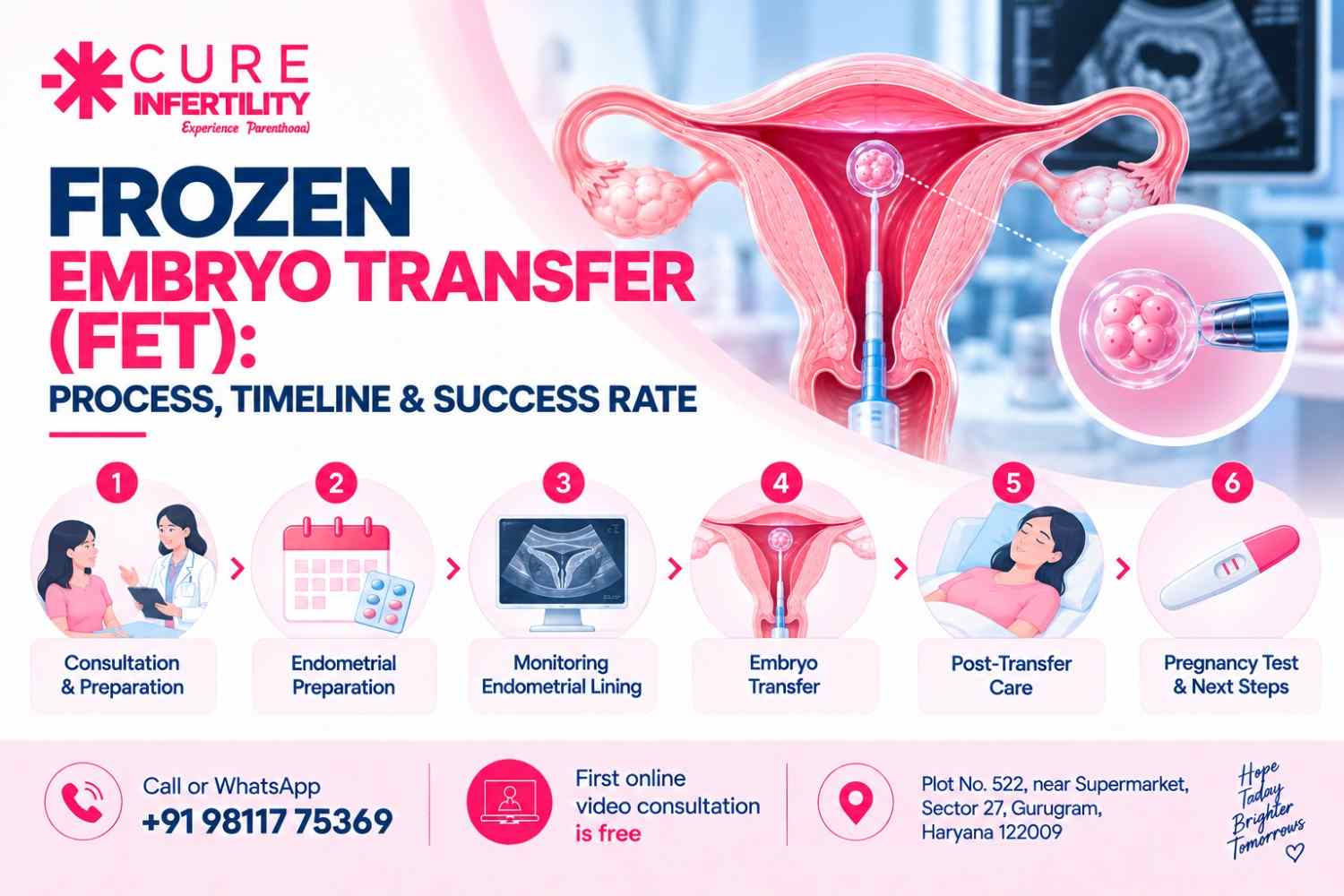
The exact protocol varies between clinics, but a typical programmed cycle runs like this:
Day 1 to 3 of your period. A baseline scan, and oestrogen tablets or patches begin.
Around day 10 to 14. A scan checks lining thickness and pattern. Most clinics want the lining at around 7mm or more with a healthy triple-layer appearance. If it is not ready, oestrogen is continued longer.
Progesterone starts. Usually vaginal pessaries or gel, sometimes injections. The transfer date is fixed by counting from this day.
Transfer day. For a blastocyst, typically on the sixth day of progesterone. The embryo's developmental age must match the number of days the lining has been exposed to progesterone, which is why the counting is exact.
Pregnancy test. A blood beta hCG test roughly 9 to 11 days after a blastocyst transfer.
From the start of the period to transfer is usually around two and a half to three weeks.
FET Timeline: A Natural Cycle
Early in the cycle. A baseline scan may be done.
Around day 10 onward. Scans track the dominant follicle and the lining. Urine or blood tests detect the LH surge, or a trigger injection is given once the follicle is mature.
Ovulation. The transfer is scheduled a set number of days afterwards, typically around five to six days for a blastocyst.
Luteal support. Some clinics add progesterone even in a natural cycle.
Pregnancy test. Again around 9 to 11 days after transfer.
Natural cycles need slightly more monitoring visits, and the transfer date can move by a day or two depending on when you ovulate.
Transfer Day
The embryo is warmed in the laboratory on the morning of the transfer. Vitrified blastocysts survive warming extremely well in experienced laboratories, and the large majority come through intact. The embryologist confirms survival and re-expansion before the transfer goes ahead.
The transfer itself takes around 10 to 15 minutes. You will usually be asked to arrive with a comfortably full bladder, which helps the ultrasound view. A speculum is placed, and a fine soft catheter carrying the embryo is passed through the cervix under ultrasound guidance and the embryo is released into the uterine cavity. No anaesthesia is needed. Most women describe it as similar to a smear test.
You can go home shortly afterwards.
After the Transfer
Normal activity is fine. Bed rest has not been shown to improve implantation, and most women return to work the next day or even the same day.
Do not stop your medication. In a programmed cycle, your body is not producing its own progesterone. Stopping oestrogen or progesterone before you are told to can end an otherwise healthy pregnancy. Continue exactly as prescribed until your clinic advises otherwise, which is often several weeks into a pregnancy.
Avoid home pregnancy tests too early. A trigger injection can cause a false positive, and testing before the scheduled blood test mostly creates anxiety.
Spotting is common and does not on its own mean the cycle has failed.
What Determines FET Success
Age at egg retrieval, not age at transfer. This is the most misunderstood point about frozen embryos. An embryo frozen when you were 32 carries the chromosomal profile of a 32-year-old's egg, even if you transfer it at 36. The uterus ages far more gracefully than eggs do. Our articles on IVF success rates by age and the best age to freeze your eggs explain why.
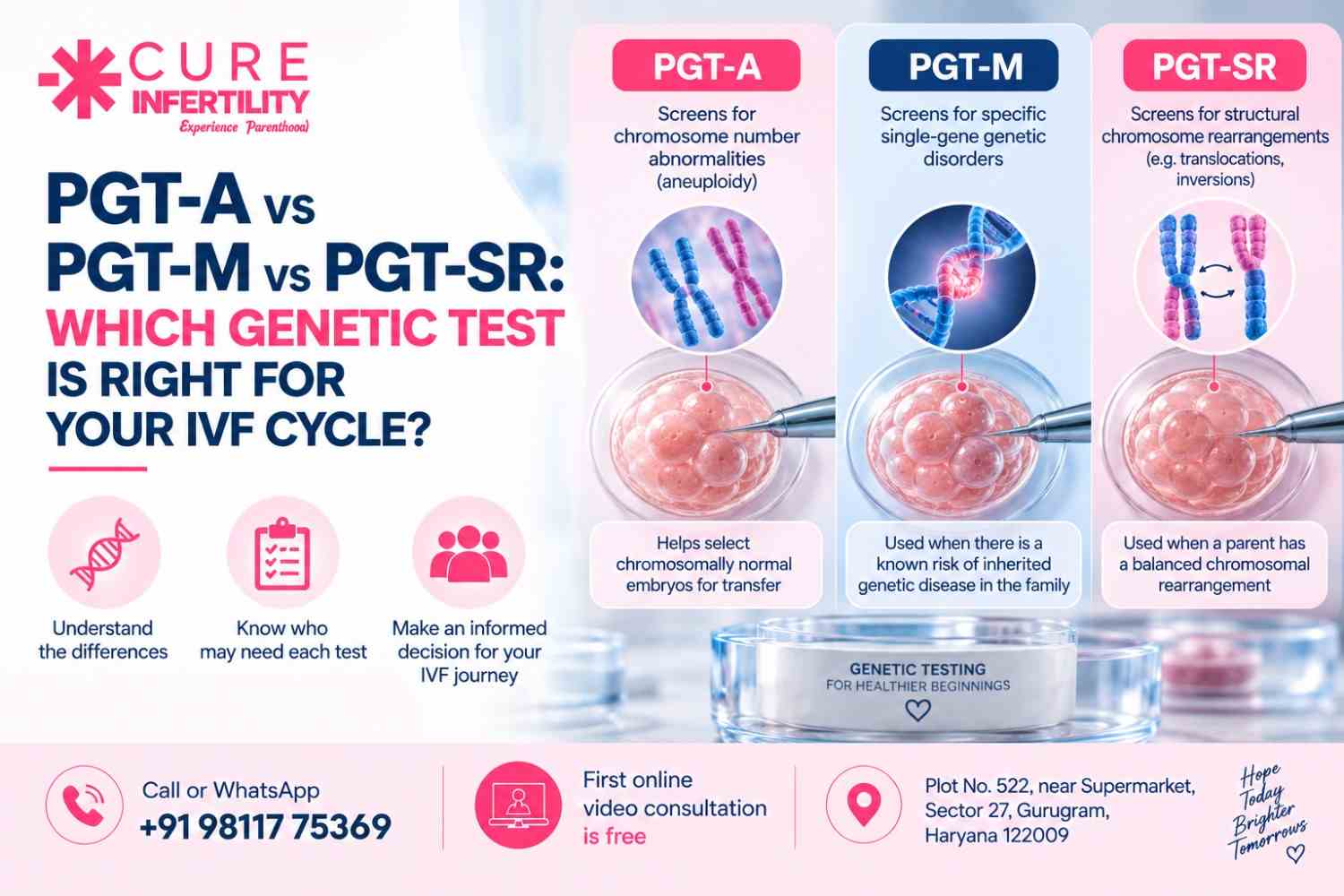
Embryo quality and chromosomal status. A good-quality blastocyst has a better chance than a poorer one, but grading cannot see chromosomes. Where PGT-A has been done, success per transfer is higher because chromosomally abnormal embryos have been excluded.
The lining. A thin or poorly developed lining reduces the chance of implantation, and a cycle may be cancelled rather than proceeding with an inadequate lining.
The uterine cavity. Polyps, fibroids or adhesions can prevent implantation regardless of embryo quality. Our article on hysteroscopy before IVF covers when that needs checking.
Correct timing. Transferring outside the window of implantation reduces success, which is why progesterone counting is exact.
Lab quality. Vitrification and warming are technically demanding, and outcomes depend on the laboratory.
How FET Compares With Fresh Transfer
On the evidence, frozen transfer is at least as successful as fresh transfer in most situations, and a large randomised trial in women who ovulate regularly found a modestly higher live birth rate with frozen single-embryo transfer. Freeze-all is clearly preferable when there is any risk of ovarian hyperstimulation, whenever genetic testing is planned, and when the lining was not ideal during stimulation.
The trade-offs are an extra cycle of time before transfer, and the corpus luteum consideration in programmed cycles described above.
One Embryo at a Time
Transferring a single embryo is the recommended standard for most women. Transferring two raises the twin rate considerably without a proportionate increase in the chance of a baby, and twin pregnancies carry substantially higher risks for both mother and babies. Frozen embryos make single transfer easier to accept, since remaining embryos are safely in storage for the next attempt.
If an FET Does Not Work
A single failed transfer is common and not diagnostic on its own. After two or more failed transfers of good-quality embryos, it is worth stopping to investigate rather than simply repeating. That may include assessment of the uterine cavity, testing for chronic endometritis, and in selected cases an endometrial biopsy and ERA test to check whether the implantation window is displaced.
Our articles on what causes failed IVF and tests to consider after repeated failure cover that workup in detail.
Questions Worth Asking Before Your FET
- Will this be a natural, programmed or stimulated cycle, and why for me?
- If I ovulate regularly, is a natural cycle an option?
- What lining thickness do you need before going ahead?
- On which day of progesterone will the transfer happen?
- How long should I continue my medication if I am pregnant?
- How many embryos will be transferred, and why?
You can read more on the IVF treatment page and see the full range of treatment options here.
You can book a free consultation with Dr. Rashmi Agrawal at the Sector 27, Gurugram clinic to plan a frozen embryo transfer or review a previous one, read more about her background and approach, or check the FAQ page.
FAQs
How long does a frozen embryo transfer cycle take?
A programmed cycle usually takes around two and a half to three weeks from the start of your period to the transfer, followed by roughly 9 to 11 days until the pregnancy blood test.
Is frozen embryo transfer painful?
No. It feels similar to a smear test, takes around 10 to 15 minutes and needs no anaesthesia.
Is frozen embryo transfer more successful than fresh?
In most situations it is at least as successful, and in some groups modestly better. It is clearly preferable where there is hyperstimulation risk or genetic testing is planned.
Do frozen embryos survive thawing?
The large majority of vitrified blastocysts survive warming in experienced laboratories. The embryologist confirms survival before the transfer goes ahead.
Does my age at transfer affect success?
Your age when the eggs were retrieved matters far more. An embryo frozen at 32 carries the chromosomal profile of a 32-year-old's egg, even if transferred years later.
Should I rest after a frozen embryo transfer?
Bed rest has not been shown to help. Normal day-to-day activity is fine.
When can I take a pregnancy test after FET?
Your clinic will usually schedule a blood test around 9 to 11 days after a blastocyst transfer. Home tests taken earlier can be misleading.
What is the difference between a natural and medicated FET?
A natural cycle uses your own ovulation and hormones. A medicated cycle uses oestrogen and progesterone to prepare the lining, with ovulation suppressed. Medicated cycles are easier to schedule, while natural cycles retain the corpus luteum.
How many embryos should be transferred?
For most women, one. Single embryo transfer avoids the significantly higher risks of a twin pregnancy, and remaining embryos stay in storage for future attempts.
References
- von Versen-Höynck F, et al. Increased preeclampsia risk and reduced aortic compliance with in vitro fertilization cycles in the absence of a corpus luteum. Hypertension. https://www.ahajournals.org/doi/10.1161/HYPERTENSIONAHA.118.12043
- Association between programmed frozen embryo transfer and hypertensive disorders of pregnancy. Fertility and Sterility. https://www.fertstert.org/article/S0015-0282(22)00484-8/fulltext
- Preparation of the endometrium for frozen embryo transfer: an update on clinical practices. https://pmc.ncbi.nlm.nih.gov/articles/PMC10249325/