When Should You See a Fertility Specialist?
Most couples wait too long before seeking help. Learn the age-based timelines for seeing a fertility specialist, the warning signs that mean you shouldn't wait, and what to expect at your first visit.

Most couples who eventually need fertility treatment wait too long to ask for help. They give it another few months, try a different home remedy, or are told to relax and keep trying. For younger couples, a short delay rarely matters. For a woman in her late thirties, or a couple with a problem that was never going to resolve on its own, every month of waiting costs something that cannot be recovered. This article sets out when to see a fertility specialist, the warning signs that mean you should not wait at all, and what actually happens at a first visit.
The Standard Rule: How Long to Try First
Infertility is generally defined as not conceiving after 12 months of regular, unprotected intercourse. Professional guidance adjusts that timeline with age:
- Under 35: see a specialist after 12 months of trying
- 35 to 39: see a specialist after 6 months of trying
- 40 and over: see a specialist straight away, or when you start trying
These timelines come from how fertility changes with age. Most couples under 35 who will conceive naturally do so within a year. From the mid-thirties onward, both the number and the quality of eggs fall faster, so the cost of waiting rises. By 40, the window for effective treatment is narrower, and spending a year waiting before even being assessed is difficult to justify. Our article on IVF success rates by age explains why the curve moves as it does.
Signs You Should Not Wait at All
The 12 and 6 month rules apply to couples with no known reason to suspect a problem. If any of the following apply, see a specialist now, regardless of how long you have been trying.
For the woman:
- Irregular or absent periods, which usually mean irregular ovulation. Our article on ovulation disorders explains the causes
- Known PCOS. Our article on PCOS covers why it is so treatable
- Known or suspected endometriosis, including severe period pain or pain during intercourse. See our article on endometriosis and fertility
- Previous pelvic infection, genital tuberculosis, or ectopic pregnancy, all of which can damage the fallopian tubes. Our article on blocked fallopian tubes explains why
- Previous pelvic or abdominal surgery, including surgery on the ovaries
- Two or more miscarriages
- Previous chemotherapy or radiotherapy
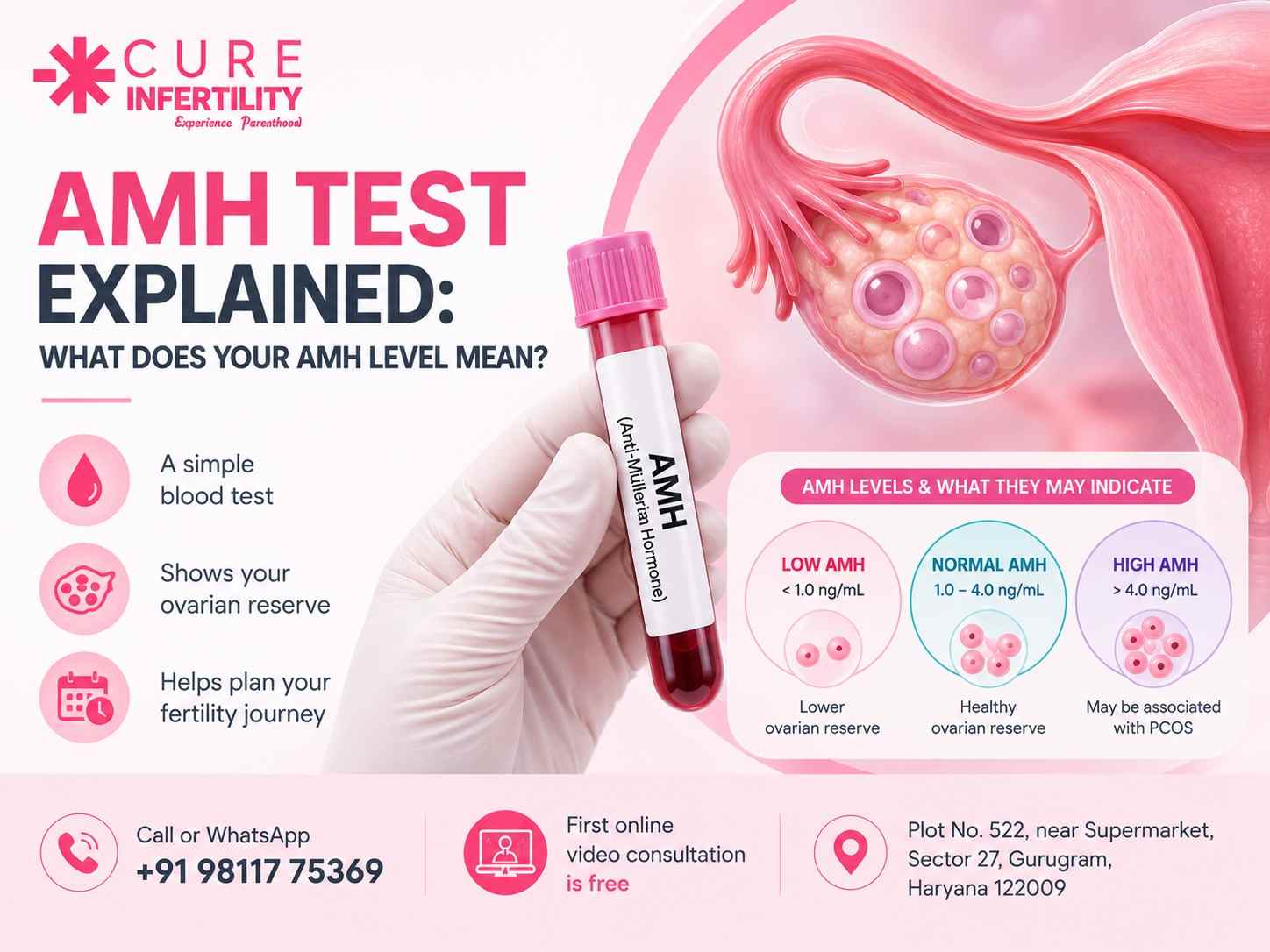
- A known low AMH or early menopause in close female relatives. Our article on the AMH test explains what it means
For the man:
- Previous testicular surgery, undescended testes in childhood, or testicular injury
- Mumps affecting the testes after puberty
- A known varicocele
- Difficulties with erection or ejaculation
- Use of testosterone or anabolic steroids, which suppress sperm production
- Previous chemotherapy or radiotherapy
- An abnormal semen analysis, even from years ago. Our articles on low sperm count and azoospermia explain the options
In these situations, waiting a year does not give the problem a chance to resolve. It only delays finding it.
Both Partners Should Be Assessed Together
Infertility is often assumed to be a woman's problem, and in India in particular, the woman is frequently tested for months or years before anyone suggests a semen analysis. That is a serious and common mistake.
A male factor contributes in a substantial proportion of couples. A semen analysis is simple, inexpensive and non-invasive, and it should be done at the start, alongside the female partner's tests, not after everything else has been ruled out. Where earlier treatment has failed, more detailed male testing may also be worthwhile. Our article on the sperm DNA fragmentation test explains when that applies.
What Counts as "Trying"?
The 12 and 6 month timelines assume regular, unprotected intercourse, roughly every two to three days. Many couples are not in that situation, and that changes the calculation.
If one partner travels frequently, works long rotating shifts, or lives in a different city for much of the time, the number of genuine opportunities in a year may be far lower than twelve. Six months of occasional weekends together is not the same as six months of trying. Couples in that position often benefit from an earlier assessment, partly to confirm everything is normal and partly to time intercourse accurately when they are together.
If You Already Have a Child
Difficulty conceiving a second child, called secondary infertility, is common and deserves the same attention. A previous pregnancy does not guarantee that nothing has changed since. Age has moved on, and new factors such as scarring after a caesarean, infection, or a change in the male partner's parameters can develop. The same timelines apply.
If You Are Not Trying Yet
You do not need to be trying to conceive to see a fertility specialist. Women who want children later, but are unsure what their timeline looks like, can have an ovarian reserve assessment to understand where they stand. For some, that leads to a conversation about egg freezing. Our article on the best age to freeze your eggs covers that decision.
Gynaecologist or Fertility Specialist?
Many general gynaecologists manage the early stages of fertility care well, including basic tests and initial ovulation treatment. A fertility specialist becomes the better choice when:
- Basic tests show a significant problem, such as blocked tubes, very low AMH or a severe male factor
- You have taken ovulation tablets for several cycles without pregnancy, particularly without scan monitoring
- Several cycles of IUI have not worked
- You have had two or more miscarriages
- IVF, ICSI, genetic testing or sperm retrieval may be needed
- You are 38 or over and time is a real constraint
The practical difference is access to the full range of investigations and treatments under one roof, so decisions are not delayed while you move between providers.
What Happens at the First Visit
A first fertility consultation is mostly about understanding your situation, not starting treatment.
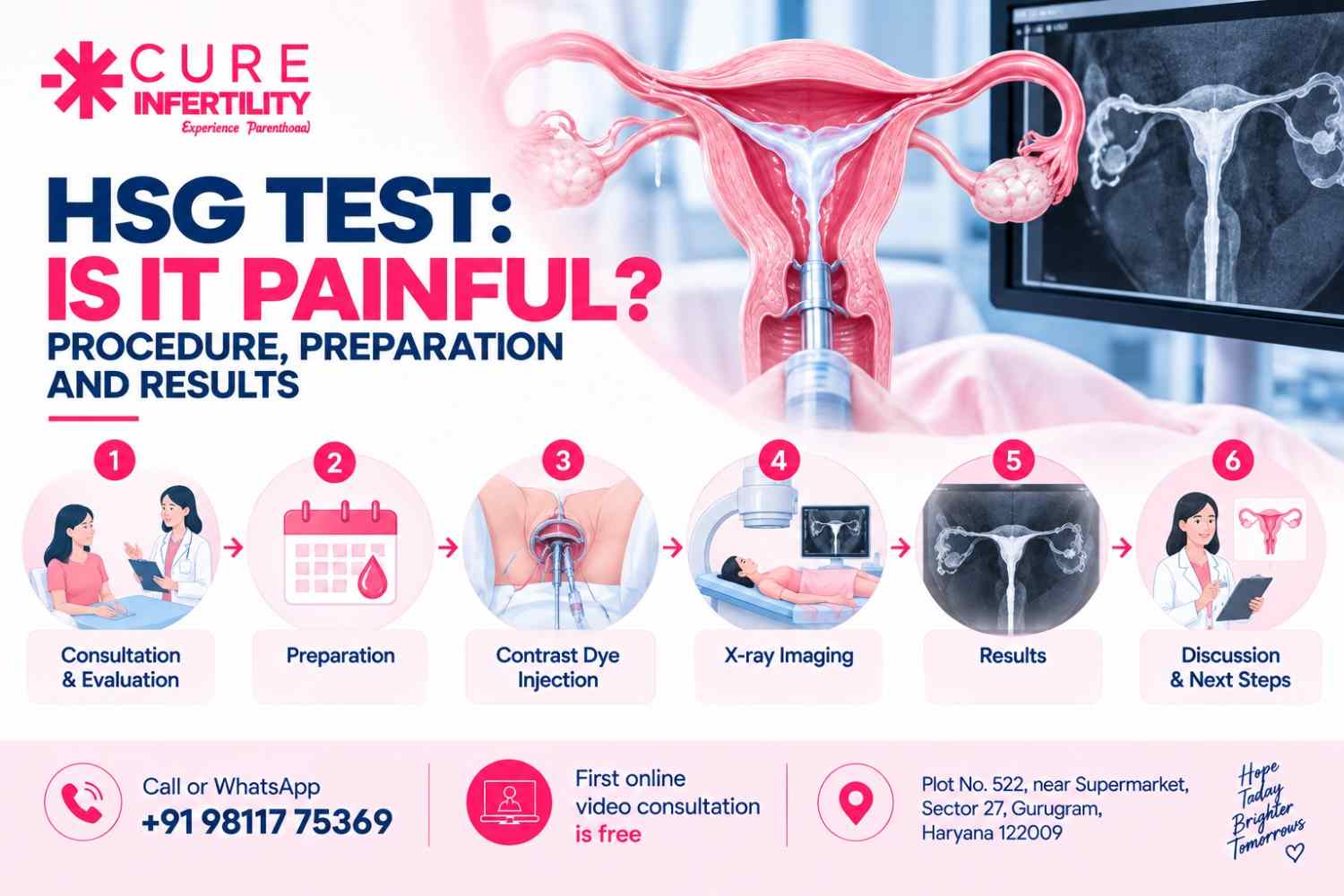
You can expect a detailed history from both partners, covering cycles, previous pregnancies, medical and surgical history, medications and lifestyle. A pelvic ultrasound for the woman checks the uterus and ovaries and counts the antral follicles. Tests are then planned, typically including hormone blood tests and AMH, a tubal assessment such as an HSG, and a semen analysis.
Most of these can be completed within a single menstrual cycle. Once results are in, a plan follows.
Seeing a specialist does not mean you will be pushed into IVF. Many couples need only ovulation induction, a tubal or uterine procedure, treatment of a male factor, or simply reassurance and well-timed intercourse. IVF is recommended when the diagnosis genuinely calls for it.
What to Bring
- All previous test reports, for both partners, however old
- Ultrasound reports and, if available, the images
- Records of any previous fertility treatment, including medication doses and outcomes
- A note of your cycle lengths over the last few months
- A list of current medications and supplements
Previous results can save weeks of repeated testing.
Common Myths That Delay Care
"Just relax and it will happen." Stress management is good for wellbeing, but stress is rarely the reason a couple is not conceiving. Telling someone to relax can delay the diagnosis of a treatable problem by years.
"We are young, so there is no rush." Age reduces the urgency, but a blocked tube or an absent sperm count does not improve with time.
"Only the woman needs testing." Male factors are common and easy to test for.
"Going to a fertility specialist means expensive treatment." A consultation and basic workup are relatively modest, and many couples need nothing more complicated than simple treatment.
"We should try a few more remedies first." Herbal and alternative remedies do not open blocked tubes, raise sperm counts or replace lost ovarian reserve. Time spent on them is time not spent on a diagnosis.
The Bottom Line
Under 35, try for a year. Between 35 and 39, try for six months. At 40 or over, or with any of the warning signs above, do not wait. And whenever the woman is tested, the man should be tested too.
You can see the full range of treatment options here.
You can book a free consultation with Dr. Rashmi Agrawal at the Sector 27, Gurugram clinic, read more about her background and approach, or check the FAQ page.
FAQs
How long should we try before seeing a fertility specialist?
After 12 months of regular unprotected intercourse if the woman is under 35, after 6 months if she is 35 to 39, and straight away if she is 40 or over.
Should I see a specialist sooner if my periods are irregular?
Yes. Irregular or absent periods usually mean irregular ovulation, which is very treatable. There is no benefit in waiting a full year.
Does my husband need to be tested too?
Yes, from the start. A male factor is common, and a semen analysis is simple and non-invasive. It should be done alongside the woman's tests, not after them.
Can I see a fertility specialist if I am not trying yet?
Yes. An ovarian reserve assessment can help you understand your timeline, and may lead to a discussion about egg freezing if you plan to delay pregnancy.
Does seeing a fertility specialist mean we will need IVF?
No. Many couples need only simple treatment such as ovulation induction, correction of a specific problem, or well-timed intercourse. IVF is recommended only when the diagnosis calls for it.
We already have a child. Should we still see a specialist?
Yes, if you have been trying for the recommended time without success. Secondary infertility is common, and new factors can develop after a previous pregnancy.
What tests are done at a first fertility visit?
Typically hormone blood tests including AMH, a pelvic ultrasound, a tubal assessment such as an HSG, and a semen analysis for the male partner. Most can be completed within one menstrual cycle.
Is it too late to see a specialist after 40?
No, but it is important not to delay. At 40 and over, evaluation should start straight away, since time has a significant effect on treatment outcomes.
References
- Practice Committee of the American Society for Reproductive Medicine. Definition of infertility: a committee opinion (2023). https://www.asrm.org/practice-guidance/practice-committee-documents/definition-of-infertility/
- World Health Organization. 1 in 6 people globally affected by infertility (2023). https://www.who.int/news/item/04-04-2023-1-in-6-people-globally-affected-by-infertility
Medically reviewed
Reviewed by Dr. Rashmi Agrawal — MBBS (Gold Medalist), MS OBGYN, FNB Reproductive Medicine, DMC Reg. No. 76953 (2016). This article is general information, not a substitute for a consultation about your own reports.
Book Consultation